

Tested Applications
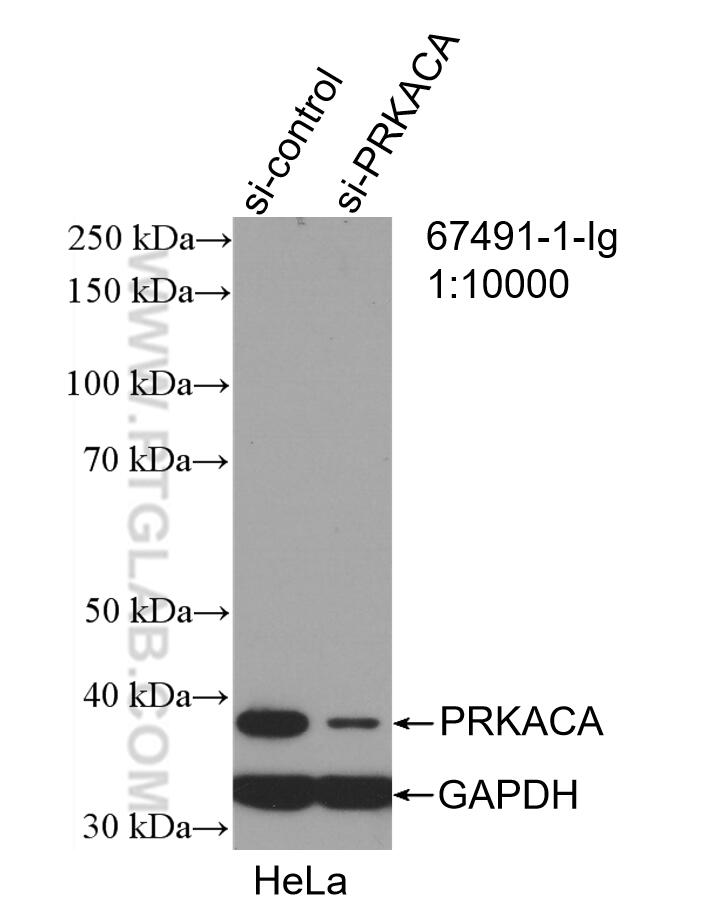
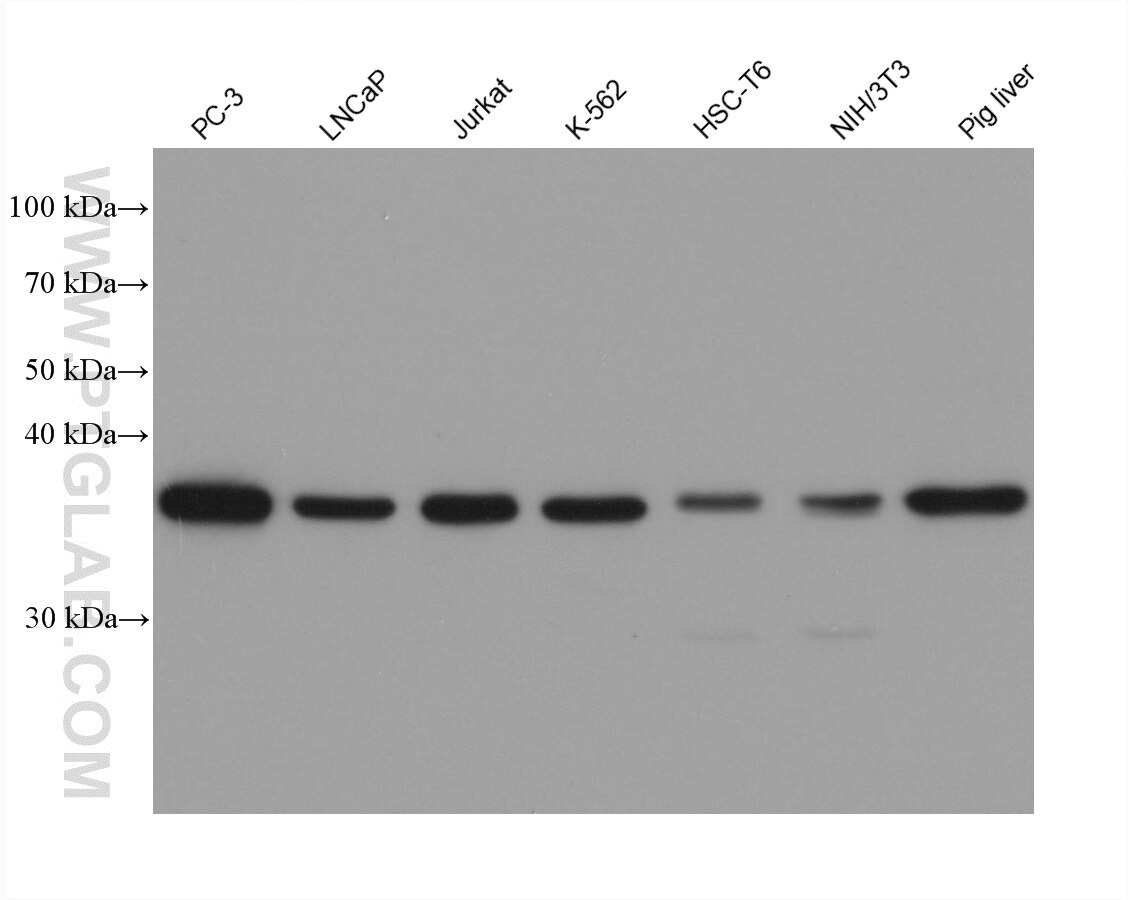
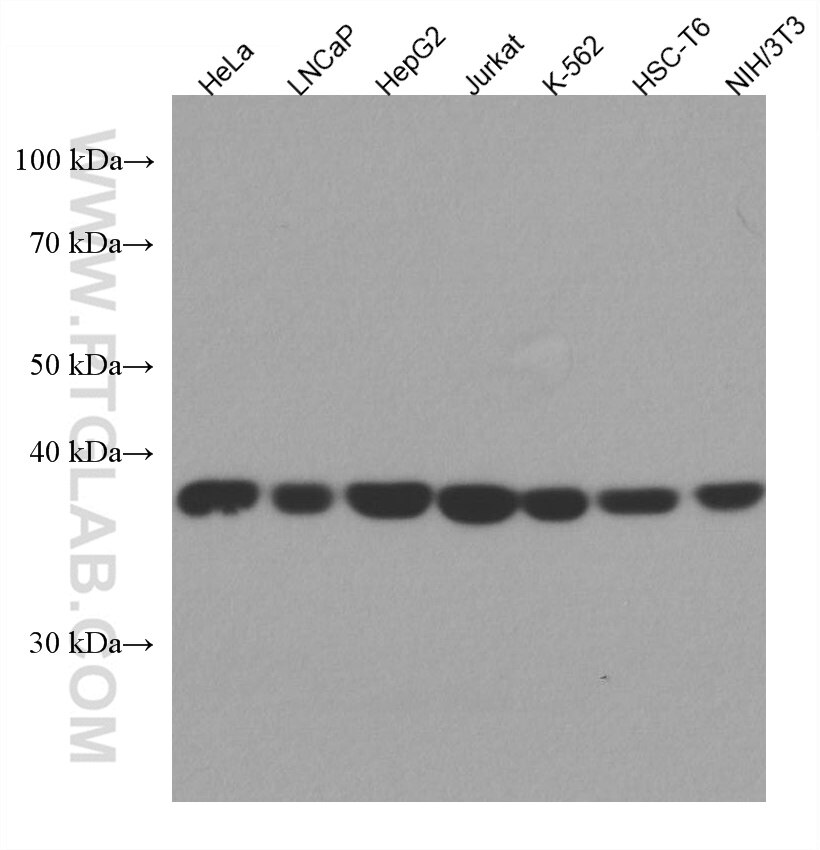
| Positive WB detected in | PC-3 cells, HeLa cells, LNCaP cells, HepG2 cells, Jurkat cells, K-562 cells, HSC-T6 cells, NIH/3T3 cells, Pig liver tissue |
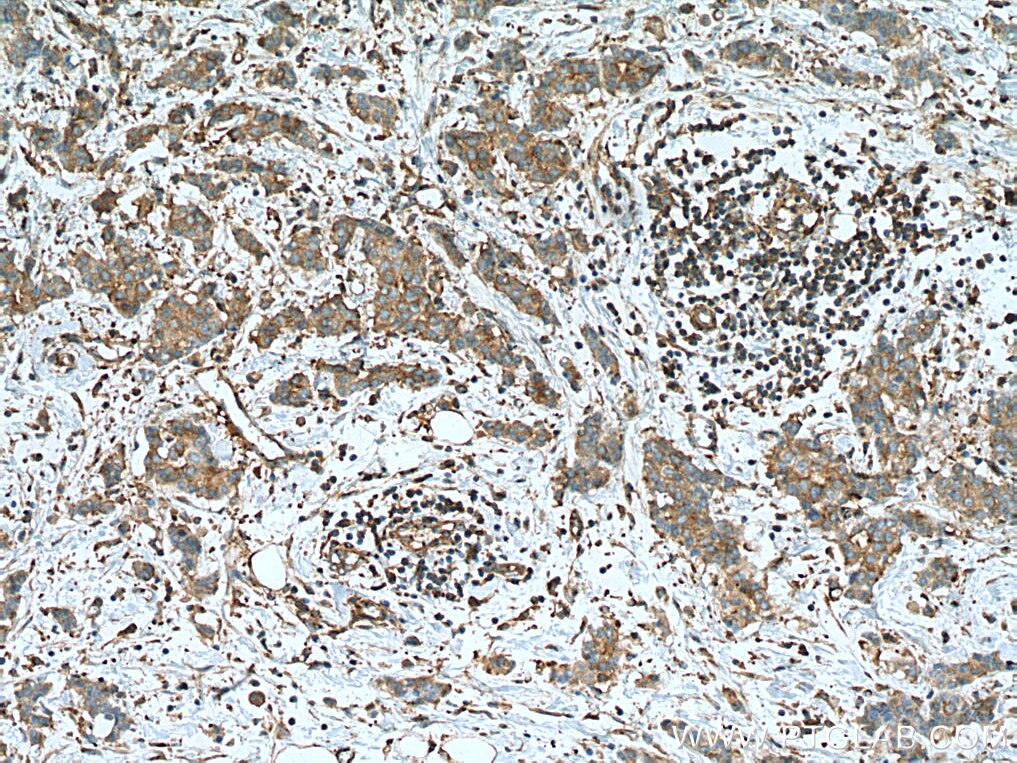
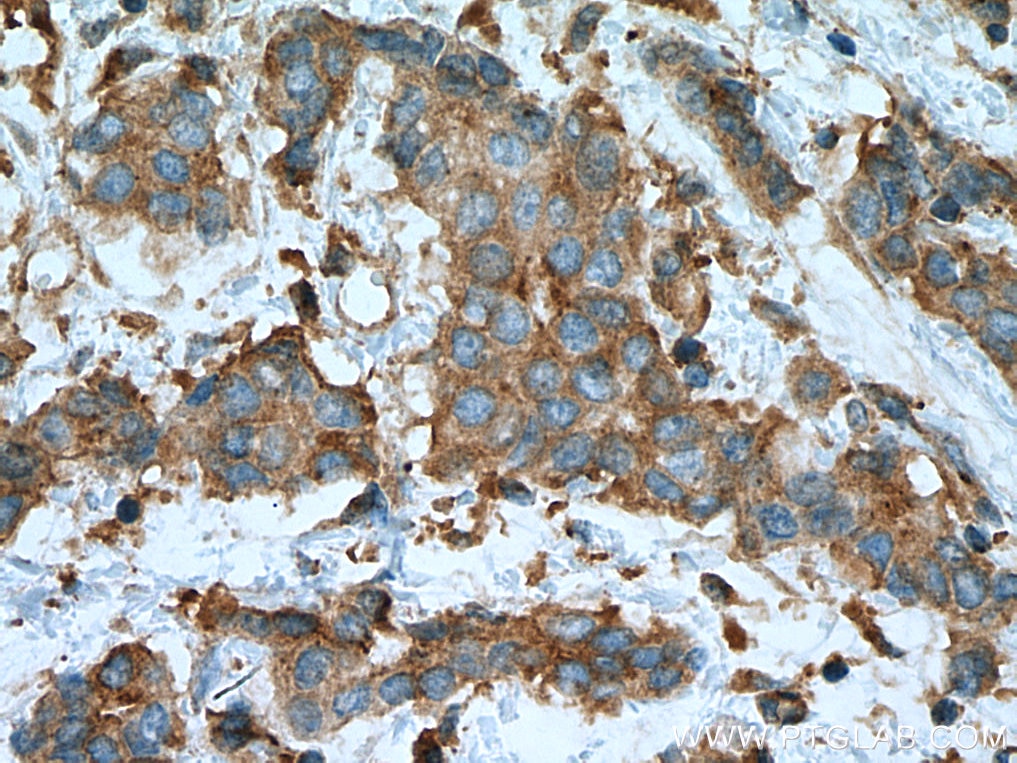
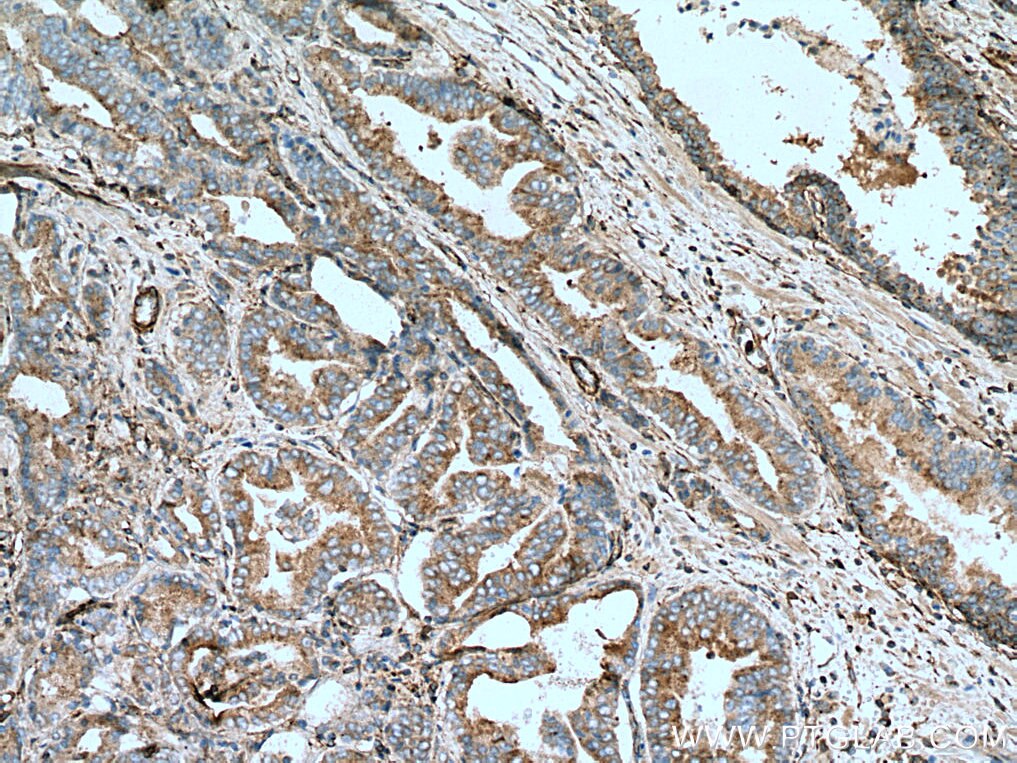
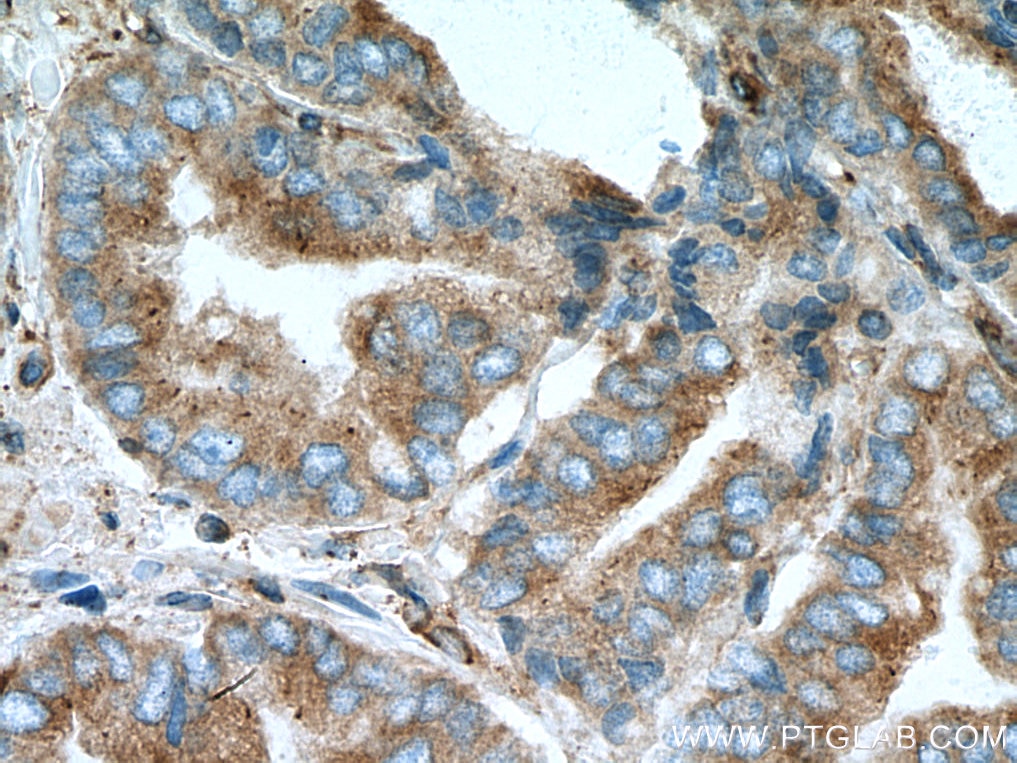
| Positive IHC detected in | human breast cancer tissue, human prostate cancer tissue Note: suggested antigen retrieval with TE buffer pH 9.0; (*) Alternatively, antigen retrieval may be performed with citrate buffer pH 6.0 |
Recommended dilution
| Application | Dilution |
|---|---|
| Western Blot (WB) | WB : 1:5000-1:50000 |
| Immunohistochemistry (IHC) | IHC : 1:500-1:2000 |
| It is recommended that this reagent should be titrated in each testing system to obtain optimal results. | |
| Sample-dependent, Check data in validation data gallery. | |
Product Information
67491-1-Ig targets PRKACA in WB, IHC, ELISA applications and shows reactivity with human, mouse, rat, pig samples.
| Tested Reactivity | human, mouse, rat, pig |
| Cited Reactivity | human, mouse |
| Host / Isotype | Mouse / IgG2a |
| Class | Monoclonal |
| Type | Antibody |
| Immunogen |
CatNo: Ag26400 Product name: Recombinant human PRKACA protein Source: e coli.-derived, PET28a Tag: 6*His Domain: 162-351 aa of BC039846 Sequence: DLIYRDLKPENLLIDQQGYIQVTDFGFAKRVKGRTWTLCGTPEYLAPEIILSKGYNKAVDWWALGVLIYEMAAGYPPFFADQPIQIYEKIVSGKVRFPSHFSSDLKDLLRNLLQVDLTKRFGNLKNGVNDIKNHKWFATTDWIAIYQRKVEAPFIPKFKGPGDTSNFDDYEEEEIRVSINEKCGKEFSEF Predict reactive species |
| Full Name | protein kinase, cAMP-dependent, catalytic, alpha |
| Calculated Molecular Weight | 41 kDa |
| Observed Molecular Weight | 38-43 kDa |
| GenBank Accession Number | BC039846 |
| Gene Symbol | PRKACA |
| Gene ID (NCBI) | 5566 |
| RRID | AB_2882716 |
| Conjugate | Unconjugated |
| Form | Liquid |
| Purification Method | Protein A purification |
| UNIPROT ID | P17612 |
| Storage Buffer | PBS with 0.02% sodium azide and 50% glycerol, pH 7.3. |
| Storage Conditions | Store at -20°C. Stable for one year after shipment. Aliquoting is unnecessary for -20oC storage. 20ul sizes contain 0.1% BSA. |
Background Information
PRKACA (protein kinase cAMP-activated catalytic subunit alpha) is a gene that encodes the catalytic subunit alpha of protein kinase A (PKA), a critical enzyme in the cyclic adenosine monophosphate (cAMP) signaling pathway. Functioning as the primary effector of cAMP, this kinase regulates a vast array of cellular processes, including metabolism, gene expression, cell cycle progression, and synaptic plasticity. Under basal conditions, the catalytic subunit is held inactive by regulatory subunits; upon cAMP binding, it is released and phosphorylates a diverse range of substrate proteins on serine and threonine residues. Beyond its physiological roles, aberrant PRKACA activity, particularly gene fusions and copy number gains, is a well-established driver of specific human diseases, most notably fibrolamellar hepatocellular carcinoma (FLC), where a characteristic DNAJB1-PRKACA fusion acts as the oncogenic driver.
Protocols
| Product Specific Protocols | |
|---|---|
| IHC protocol for PRKACA antibody 67491-1-Ig | Download protocol |
| WB protocol for PRKACA antibody 67491-1-Ig | Download protocol |
| Standard Protocols | |
|---|---|
| Click here to view our Standard Protocols |
Publications
What published studies show
PRKACA Monoclonal antibody (4G10D7), catalog number 67491-1-Ig, has 9 total citations. These appear in journals including J Clin Invest, J Neuroinflammation, Clin Sci (Lond), CNS Neurosci Ther, Int J Mol Sci, Int Immunopharmacol, Mediators Inflamm, Cancer Med, and Eur J Histochem. Research fields span metabolic-associated steatohepatitis, neuroinflammation and synaptic pruning, gestational diabetes, spinal cord injury recovery, microglial inflammation, ovarian cAMP-PKA signaling, intestinal immunity, and cancer progression via Wnt/cAMP pathways.
| Species | Application | Title |
|---|---|---|
J Clin Invest Integrated screening identifies GPR31 as a key driver and druggable target for metabolic dysfunction-associated steatohepatitis | ||
J Neuroinflammation Neural impairments caused by energy storage material NCM811 via aberrated synaptic pruning: role of Th17 cells in microglia polarization. | ||
Clin Sci (Lond) Placental small extracellular vesicles from normal pregnancy and gestational diabetes increase insulin gene transcription and content in β cells. | ||
CNS Neurosci Ther Transcranial iTBS Combined With Trans-Spinal iTBS Targeting PDE1A/cAMP/PKA Axis Regulates Neural Regeneration After Spinal Cord Injury | ||
Int J Mol Sci Adenosine A2A Receptor Contributes to Bidirectional Remodeling of Microglial Inflammatory Responses During Methamphetamine Exposure. | ||
Int Immunopharmacol Melatonin orchestrates cAMP-PKA signaling to alleviate zearalenone-impaired the estradiol synthesis in mammal ovary. |








