
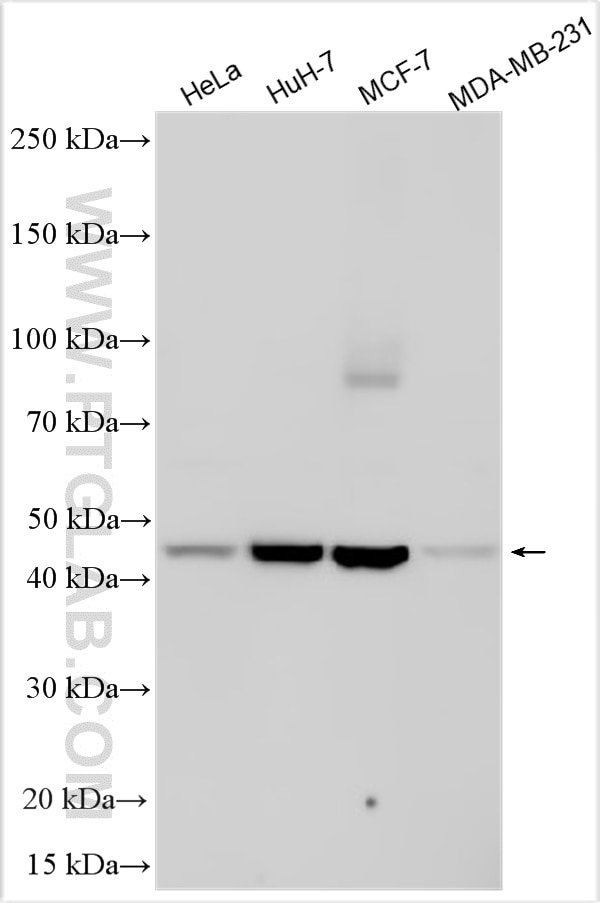
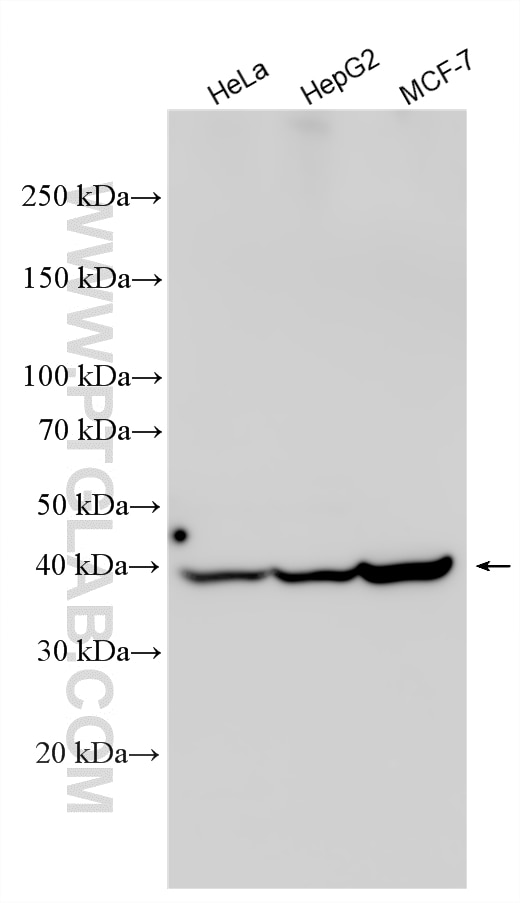
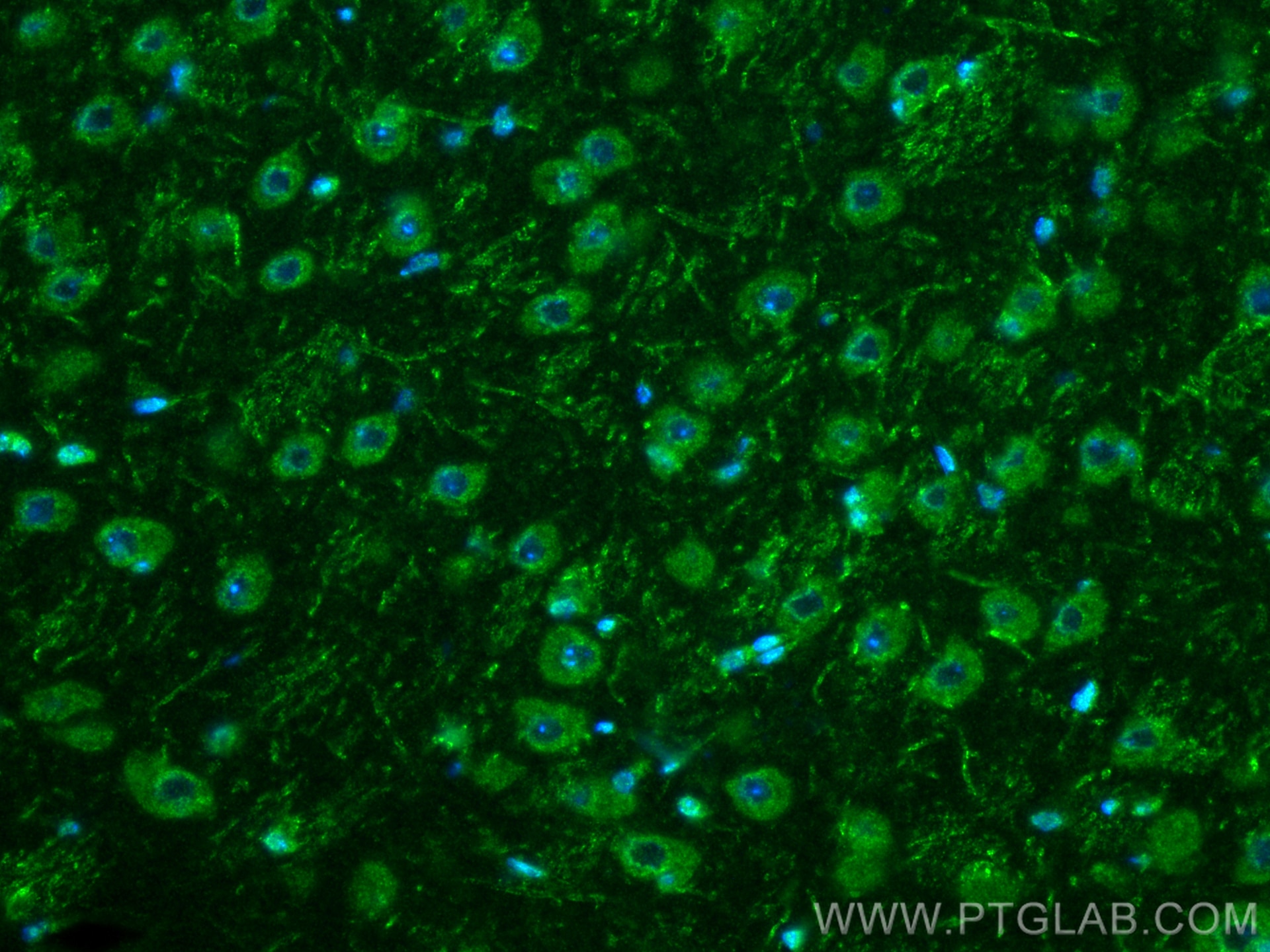
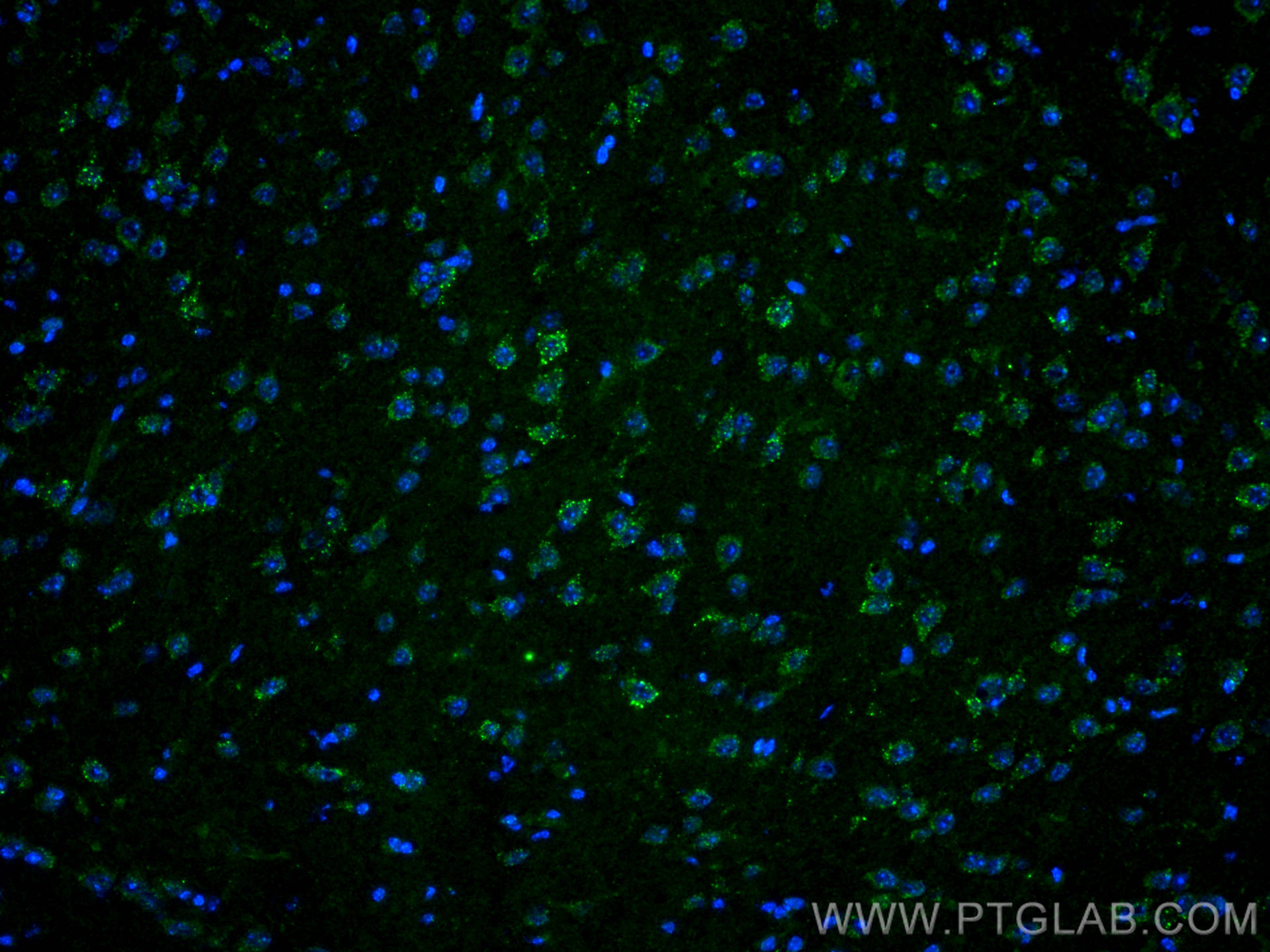

Tested Applications
| Positive WB detected in | HeLa cells, HuH-7 cells, MCF-7 cells, MDA-MB-231 cells, HepG2 cells |
| Positive IF-P detected in | mouse brain tissue |
| Positive IF-Fro detected in | mouse brain tissue |
Recommended dilution
| Application | Dilution |
|---|---|
| Western Blot (WB) | WB : 1:500-1:3000 |
| Immunofluorescence (IF)-P | IF-P : 1:200-1:800 |
| Immunofluorescence (IF)-FRO | IF-FRO : 1:50-1:500 |
| It is recommended that this reagent should be titrated in each testing system to obtain optimal results. | |
| Sample-dependent, Check data in validation data gallery. | |
Product Information
21180-1-AP targets S1PR2 in WB, IHC, IF-P, IF-Fro, IP, ELISA applications and shows reactivity with human samples.
| Tested Reactivity | human |
| Cited Reactivity | human, mouse, rat, pig |
| Host / Isotype | Rabbit / IgG |
| Class | Polyclonal |
| Type | Antibody |
| Immunogen |
CatNo: Ag15470 Product name: Recombinant human S1PR2 protein Source: e coli.-derived, PGEX-4T Tag: GST Domain: 283-353 aa of BC069598 Sequence: LNPVIYTWRSRDLRREVLRPLQCWRPGVGVQGRRRGGTPGHHLLPLRSSSSLERGMHMPTSPTFLEGNTVV Predict reactive species |
| Full Name | sphingosine-1-phosphate receptor 2 |
| Calculated Molecular Weight | 353 aa, 39 kDa |
| Observed Molecular Weight | 40-50 kDa |
| GenBank Accession Number | BC069598 |
| Gene Symbol | S1PR2 |
| Gene ID (NCBI) | 9294 |
| RRID | AB_10694573 |
| Conjugate | Unconjugated |
| Form | Liquid |
| Purification Method | Antigen affinity purification |
| UNIPROT ID | O95136 |
| Storage Buffer | PBS with 0.02% sodium azide and 50% glycerol, pH 7.3. |
| Storage Conditions | Store at -20°C. Stable for one year after shipment. Aliquoting is unnecessary for -20oC storage. 20ul sizes contain 0.1% BSA. |
Background Information
S1PR2 (sphingosine-1-phosphate receptor 2), also known as S1P2 or EDG5, is one of five G-protein-coupled receptors for sphingosine-1-phosphate (S1P), a biologically active metabolic product of sphingolipid (PMID: 18787560). S1P and its receptors have important regulatory functions in normal physiology and disease processes, particularly involving the immune, central nervous, and cardiovascular systems (PMID: 21339489). S1PR2 plays a role in acute vascular inflammation (PMID: 23723450). S1PR2 signaling is implicated in STAT3 activation (PMID: 22606352).
Protocols
| Product Specific Protocols | |
|---|---|
| IF protocol for S1PR2 antibody 21180-1-AP | Download protocol |
| WB protocol for S1PR2 antibody 21180-1-AP | Download protocol |
| Standard Protocols | |
|---|---|
| Click here to view our Standard Protocols |
Publications
What published studies show
The S1PR2 Polyclonal antibody (Cat# 21180-1-AP) has 80 citations published in journals including Nature, Gastroenterology, Nat Commun, Autophagy, Theranostics, Brain, Oncogene, Cell Rep, FASEB J, J Biol Chem, EMBO Mol Med, and Front Immunol, among many others. Research fields encompass sphingolipid signaling, neuroinflammation and stroke, fibrosis (pancreatic, hepatic, peritoneal), cancer biology, cardiovascular disease, diabetic complications, immune regulation, and metabolic disorders. Applications include WB, IF, IHC, and IP across mouse, human, rat, and other species.
| Species | Application | Title |
|---|---|---|
Gastroenterology Pancreatic acinar cells-derived sphingosine-1-phosphate contributes to fibrosis of chronic pancreatitis via inducing autophagy and activation of pancreatic stellate cells | ||
Autophagy Mitophagy-mediated S1P facilitates muscle adaptive responses to endurance exercise through SPHK1-S1PR1/S1PR2 in slow-twitch myofibers | ||
Nat Commun Critical role of sphingosine-1-phosphate receptor-2 in the disruption of cerebrovascular integrity in experimental stroke.
| ||
Theranostics Endothelial S1pr2 regulates post-ischemic angiogenesis via AKT/eNOS signaling pathway.
| ||
J Control Release Fibrotic collagen-targeted delivery system blocks pancreatic intercellular crosstalk to alleviate pancreatic fibrosis. |
Reviews
What customers say
The single review for this antibody rates it 5 stars for Western Blot. The user reports it performed well in WB on A549 cells at a 1:1000 dilution, describing the antibody as "quite nice" for this application. They noted they still needed to test it in other cell types before a full assessment. Overall, the feedback is positive, with no issues reported for the tested conditions.
The reviews below have been submitted by verified Proteintech customers who received an incentive for providing their feedback.
Edma (Verified Customer) (03-03-2025) | The antibody quite nice in western blot, but I have to test it in other cell types
|





