


Tested Applications
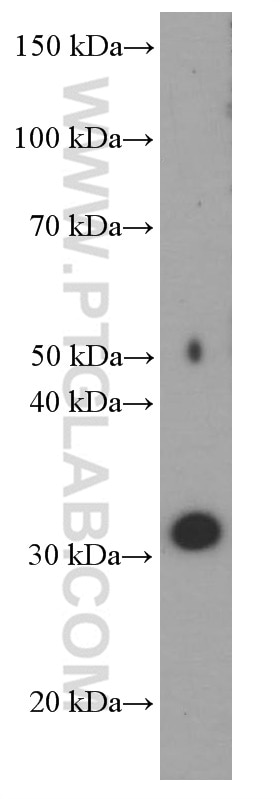
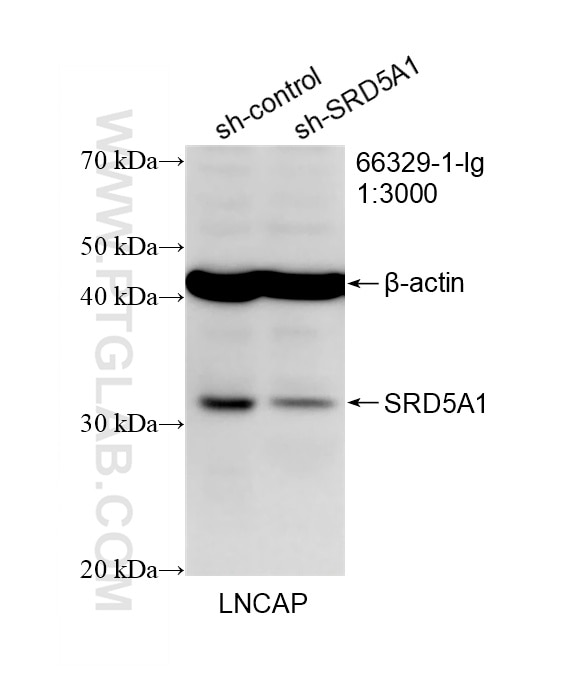
| Positive WB detected in | human testis tissue, LNCaP cells |
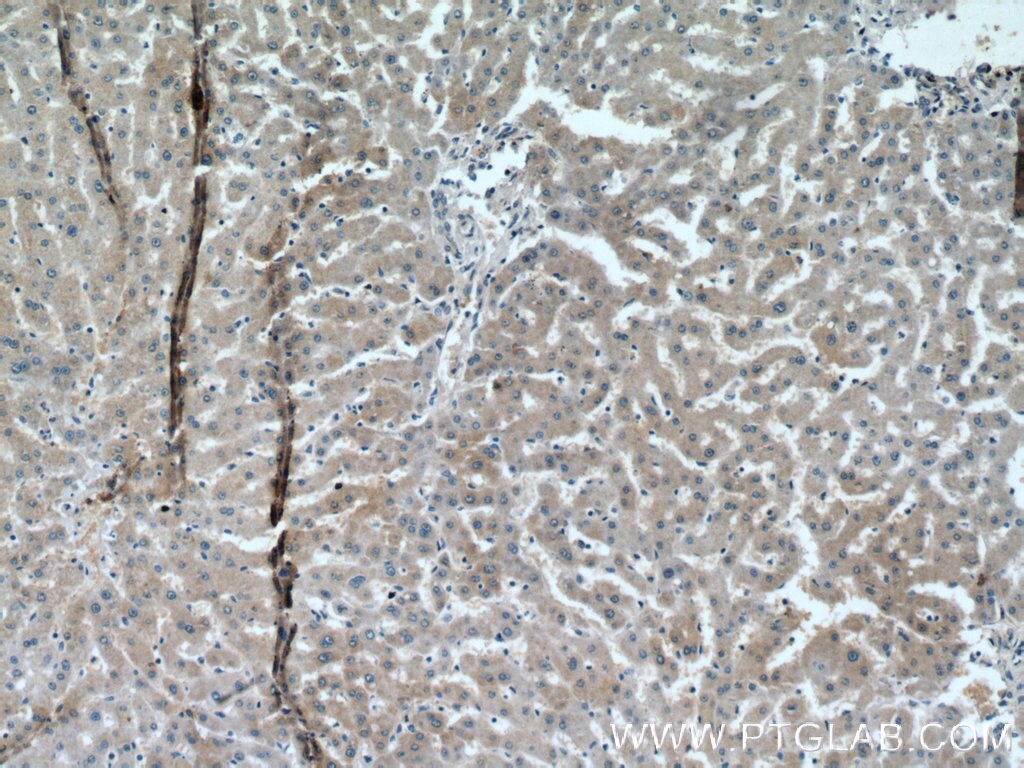
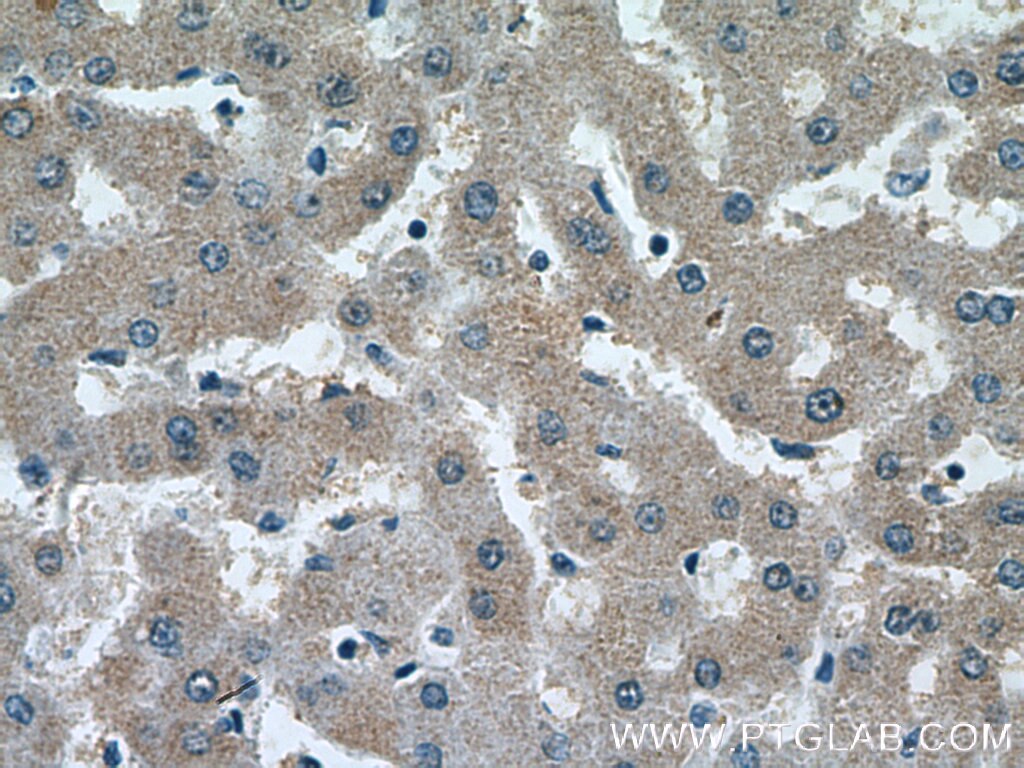
| Positive IHC detected in | human liver tissue Note: suggested antigen retrieval with TE buffer pH 9.0; (*) Alternatively, antigen retrieval may be performed with citrate buffer pH 6.0 |
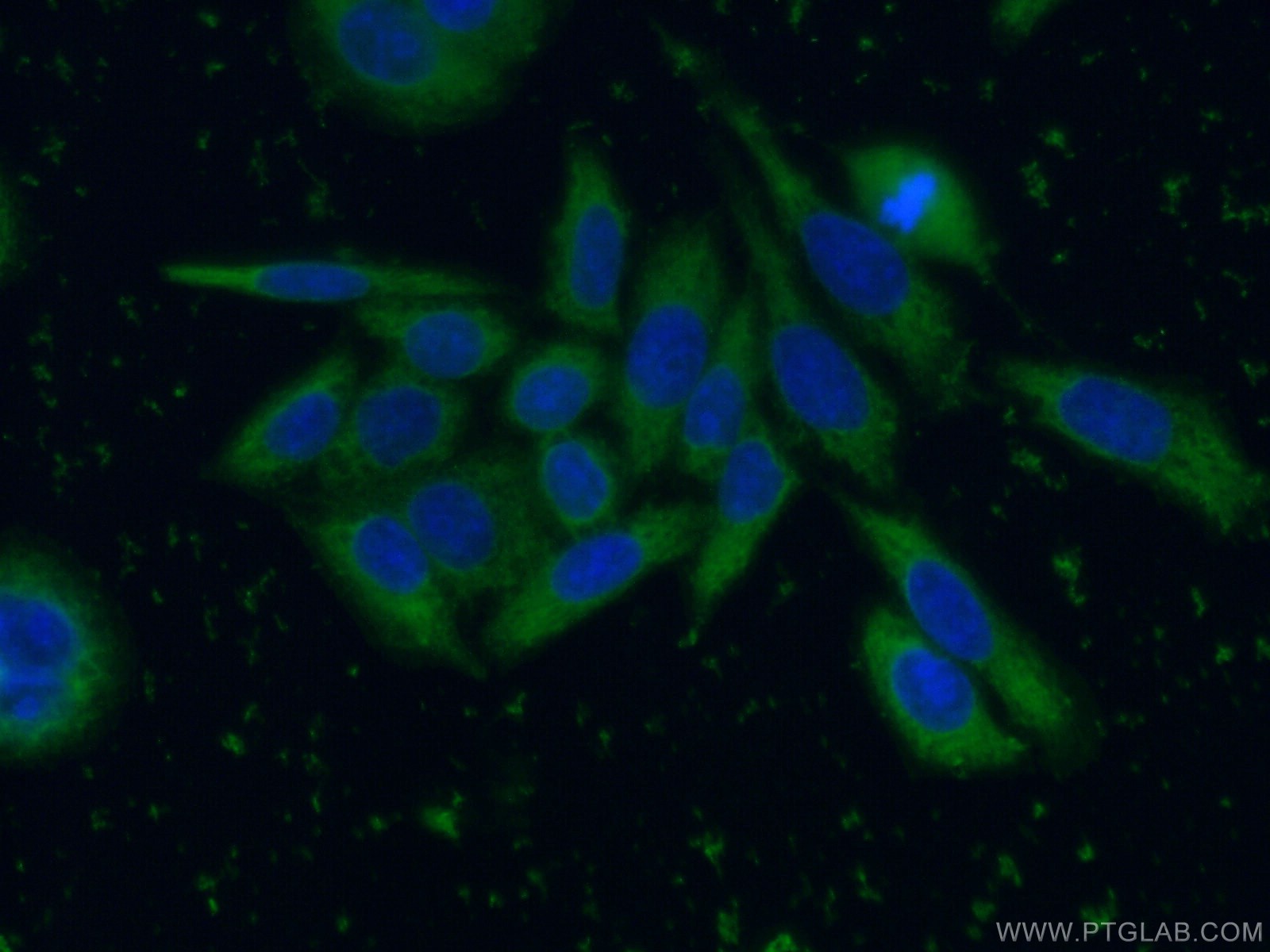
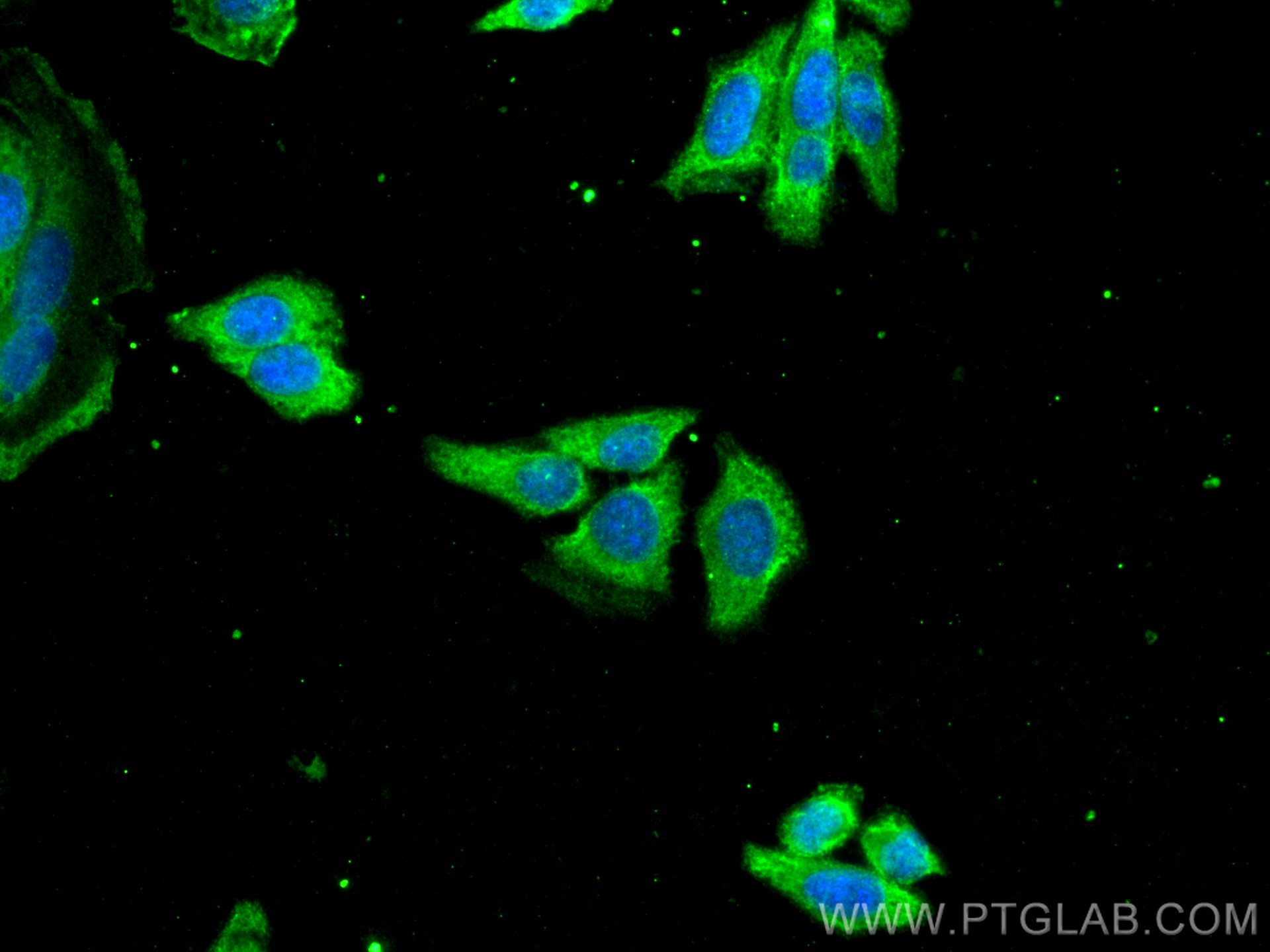
| Positive IF/ICC detected in | HeLa cells, HEPG2 cells |
Recommended dilution
| Application | Dilution |
|---|---|
| Western Blot (WB) | WB : 1:500-1:2000 |
| Immunohistochemistry (IHC) | IHC : 1:50-1:500 |
| Immunofluorescence (IF)/ICC | IF/ICC : 1:50-1:500 |
| It is recommended that this reagent should be titrated in each testing system to obtain optimal results. | |
| Sample-dependent, Check data in validation data gallery. | |
Product Information
66329-1-Ig targets SRD5A1 in WB, IHC, IF/ICC, ELISA applications and shows reactivity with human samples.
| Tested Reactivity | human |
| Cited Reactivity | human, mouse |
| Host / Isotype | Mouse / IgG1 |
| Class | Monoclonal |
| Type | Antibody |
| Immunogen |
CatNo: Ag23351 Product name: Recombinant human SRD5A1 protein Source: e coli.-derived, PET28a Tag: 6*His Domain: 1-163 aa of BC007033 Sequence: MATATGVAEERLLAALAYLQCAVGCAVFARNRQTNSVYGRHALPSHRLRVPARAAWVVQELPSLALPLYQYASESAPRLRSAPNCILLAMFLVHYGHRCLIYPFLMRGGKPMPLLACTMAIMFCTCNGYLQSRYLSHCAVYADDWVTDPRFLIGFGLWLTGML Predict reactive species |
| Full Name | steroid-5-alpha-reductase, alpha polypeptide 1 (3-oxo-5 alpha-steroid delta 4-dehydrogenase alpha 1) |
| Observed Molecular Weight | 32 kDa |
| GenBank Accession Number | BC007033 |
| Gene Symbol | SRD5A1 |
| Gene ID (NCBI) | 6715 |
| RRID | AB_2881710 |
| Conjugate | Unconjugated |
| Form | Liquid |
| Purification Method | Protein G purification |
| UNIPROT ID | P18405 |
| Storage Buffer | PBS with 0.02% sodium azide and 50% glycerol, pH 7.3. |
| Storage Conditions | Store at -20°C. Stable for one year after shipment. Aliquoting is unnecessary for -20oC storage. 20ul sizes contain 0.1% BSA. |
Background Information
Steroid 5-alpha-reductase (SRD5A1) is a minor component of the reductase activity in prostate although the gene was originally cloned from prostate. On the other hand, SRD5A1 appears to be the predominant isozyme of steroid 5-alpha-reductase in the scalp and elsewhere in the skin.
Protocols
| Product Specific Protocols | |
|---|---|
| IF protocol for SRD5A1 antibody 66329-1-Ig | Download protocol |
| IHC protocol for SRD5A1 antibody 66329-1-Ig | Download protocol |
| WB protocol for SRD5A1 antibody 66329-1-Ig | Download protocol |
| Standard Protocols | |
|---|---|
| Click here to view our Standard Protocols |
Publications
What published studies show
I'll search for citations for catalog number 66329-1-Ig.The SRD5A1 monoclonal antibody (catalog 66329-1-Ig) has 12 total citations. They appear in journals including Cancer Discovery, Nature Communications, Cell Death & Disease, International Journal of Biological Macromolecules, Biochemical Pharmacology, Drug Design Development and Therapy, Scientific Reports, Cancer Science, Frontiers in Oncology, Food and Chemical Toxicology, In Vivo, and bioRxiv (preprint). Research fields span oncology (prostate, colorectal, multiple myeloma, lung squamous cell carcinoma), steroid biosynthesis/gluticorticoid homeostasis, hormonal signaling (progesterone), metabolism, and toxicology, using WB and IHC applications in human and mouse samples.
| Species | Application | Title |
|---|---|---|
Cancer Discov Germline-Somatic Liaison Dictates Cancer Subtypes via de novo Steroid Biosynthesis | ||
Nat Commun The estrous cycle modulates early-life adversity effects on mouse avoidance behavior through progesterone signaling | ||
Cell Death Dis Suppression of steroid 5α-reductase type I promotes cellular apoptosis and autophagy via PI3K/Akt/mTOR pathway in multiple myeloma.
| ||
Int J Biol Macromol Restraining SRD5A1 combined with BRD4 inhibitor delaying prostate cancer progression by decreasing AR expression.
| ||
Biochem Pharmacol Eurycomanol alleviates hyperuricemia-induced cortisol disorders by upregulating SRD5A1 via IKKβ-IκBα-NF-κB-DNMT pathway. | ||
Drug Des Devel Ther Inhibition of Colorectal Cancer by Perillaldehyde Through Targeting SRD5A1 to Induce Autophagy via the PI3K/AKT Pathway |








