

Tested Applications
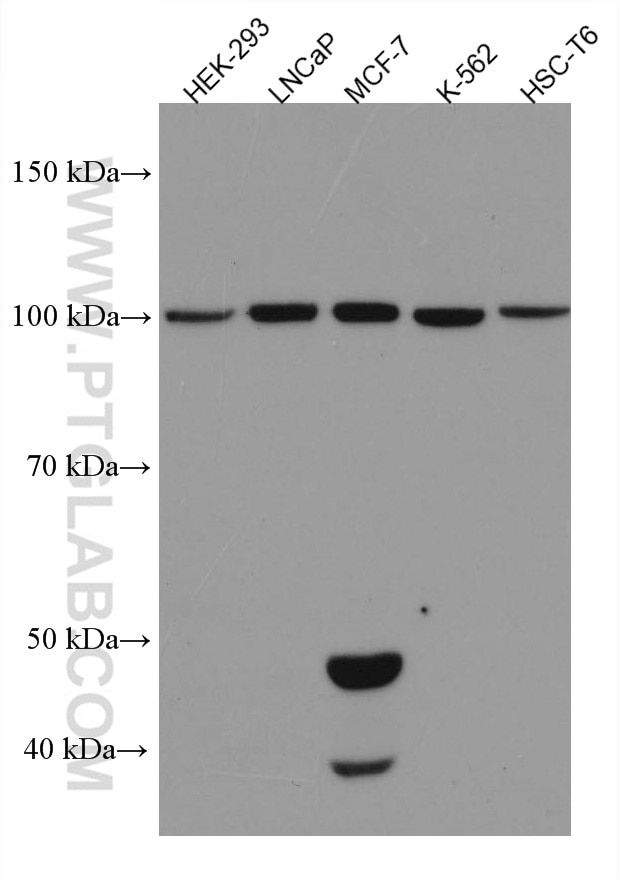
| Positive WB detected in | HEK-293 cells, LNCap cells, MCF-7 cells, K-562 cells, HSC-T6 cells |
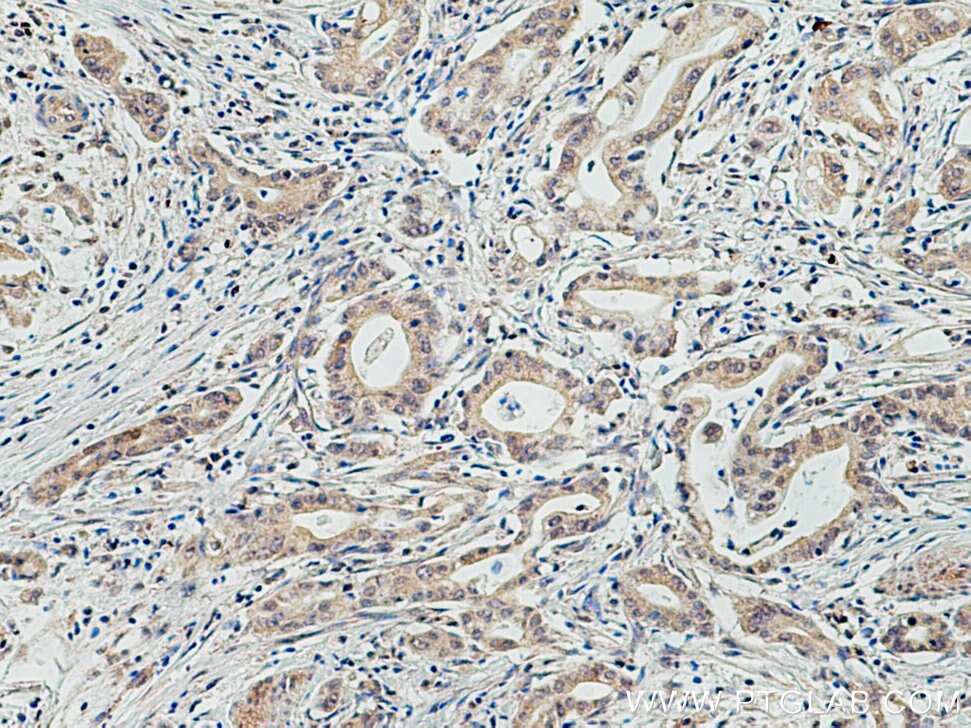
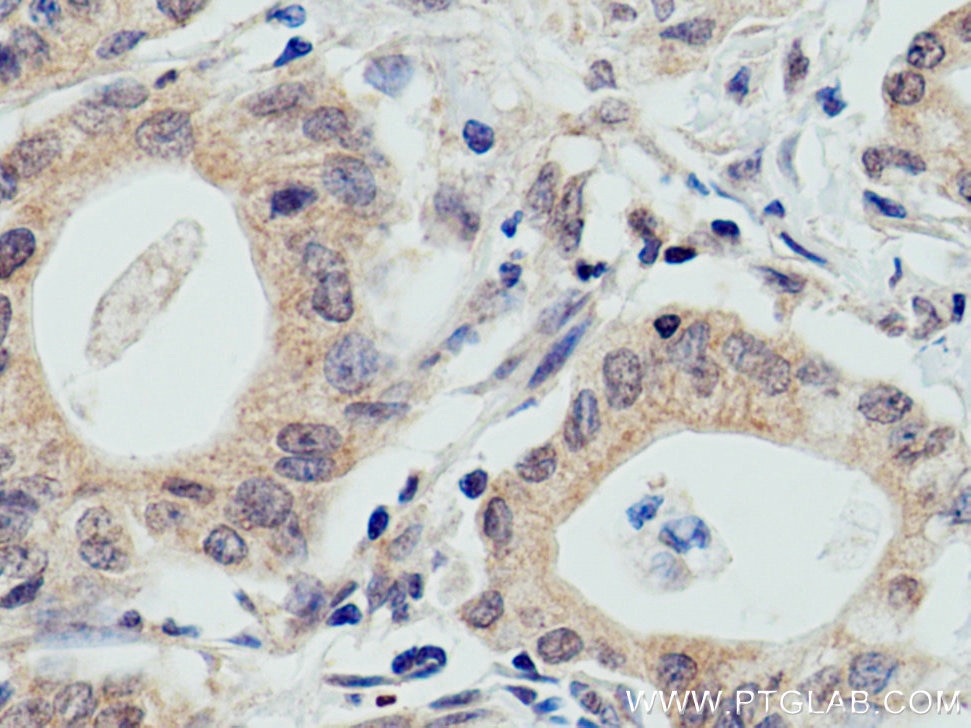
| Positive IHC detected in | human pancreas cancer tissue Note: suggested antigen retrieval with TE buffer pH 9.0; (*) Alternatively, antigen retrieval may be performed with citrate buffer pH 6.0 |
Recommended dilution
| Application | Dilution |
|---|---|
| Western Blot (WB) | WB : 1:500-1:2000 |
| Immunohistochemistry (IHC) | IHC : 1:50-1:500 |
| It is recommended that this reagent should be titrated in each testing system to obtain optimal results. | |
| Sample-dependent, Check data in validation data gallery. | |
Product Information
67274-1-Ig targets WWP2 in WB, IHC, IF, ELISA applications and shows reactivity with Human, Rat samples.
| Tested Reactivity | Human, Rat |
| Cited Reactivity | human |
| Host / Isotype | Mouse / IgG1 |
| Class | Monoclonal |
| Type | Antibody |
| Immunogen |
CatNo: Ag2835 Product name: Recombinant human WWP2 protein Source: e coli.-derived, PGEX-4T Tag: GST Domain: 1-355 aa of BC013645 Sequence: MASASSSRAGVALPFEKSQLTLKVVSAKPKVHNRQPRINSYVEVAVDGLPSETKKTGKRIGSSELLWNEIIILNVTAQSHLDLKVWSCHTLRNELLGTASVNLSNVLKNNGGKMENMQLTLNLQTENKGSVVSGGELTIFLDGPTVDLGNVPNGSALTDGSQLPSRDSSGTAVAPENRHQPPSTNCFGGRSRTHRHSGASARTTPATGEQSPGARSRHRQPVKNSGHSGLANGTVNDEPTTATDPEEPSVVGVTSPPAAPLSVTPNPNTTSLPAPATPAEGEEPSTSGTQQLPAAAQAPDALPAGWEQRELPNGRVYYVDHNTKTTTWERPLPPGWEKRTDPRGRFYYVDHNTRT Predict reactive species |
| Full Name | WW domain containing E3 ubiquitin protein ligase 2 |
| Calculated Molecular Weight | 870 aa, 99 kDa |
| Observed Molecular Weight | 100-115 kDa |
| GenBank Accession Number | BC013645 |
| Gene Symbol | WWP2 |
| Gene ID (NCBI) | 11060 |
| RRID | AB_2882543 |
| Conjugate | Unconjugated |
| Form | Liquid |
| Purification Method | Protein G purification |
| UNIPROT ID | O00308 |
| Storage Buffer | PBS with 0.02% sodium azide and 50% glycerol, pH 7.3. |
| Storage Conditions | Store at -20°C. Aliquoting is unnecessary for -20oC storage. 20ul sizes contain 0.1% BSA. |
Background Information
WWP2 (WW domain-containing protein 2) is also named as AIP2 and belongs to the NEDD4-like protein family. It functions as an E3 ubiquitin ligase for PTEN that plays a vital role in tumour-cell survival and is also involved in regulating transcription, embryonic stem-cell fate, cellular transport and T-cell activation processes (PMID:21532586). WWP2, which specifically interacted with ES cell-specific transcription factor Oct-4 and promoted its ubiquitination both in vitro and in vivo, is a ubiquitously expressed protein and exists in both cytoplasmic and nuclear compartments in ES cells (PMID:15047715).
Protocols
| Product Specific Protocols | |
|---|---|
| IHC protocol for WWP2 antibody 67274-1-Ig | Download protocol |
| WB protocol for WWP2 antibody 67274-1-Ig | Download protocol |
| Standard Protocols | |
|---|---|
| Click here to view our Standard Protocols |
Publications
What published studies show
The WWP2 Monoclonal antibody (Cat# 67274-1-Ig) has 4 citations. These appear in the Journal of Experimental & Clinical Cancer Research, Journal of Translational Medicine, International Journal of Biological Macromolecules, and British Journal of Pharmacology. The research fields span cancer biology, including gastric cancer, lung adenocarcinoma, bladder cancer, and non-small cell lung cancer, with studies focused on ubiquitination, signaling pathways (AKT, Hippo, STAT3), drug resistance, and mitochondrial dysfunction. Applications include Western blot and immunofluorescence.
| Species | Application | Title |
|---|---|---|
J Exp Clin Cancer Res PHB2 promotes SHIP2 ubiquitination via the E3 ligase NEDD4 to regulate AKT signaling in gastric cancer | ||
J Transl Med FAM189A2 activates Hippo signaling pathway by abrogating WWP2-mediated LATS1 ubiquitination, to inhibit the glycolysis and proliferation processes of lung adenocarcinoma. | ||
Int J Biol Macromol Targeting the WWP2-ASPP2 axis overcomes cisplatin resistance by inhibiting the mevalonate pathway in TP53-mutant bladder cancer. | ||
Br J Pharmacol Sculponeatin A induces mitochondrial dysfunction in non-small cell lung cancer through WWP2-mediated degradation of mitochondrial STAT3 |




