
Product Information
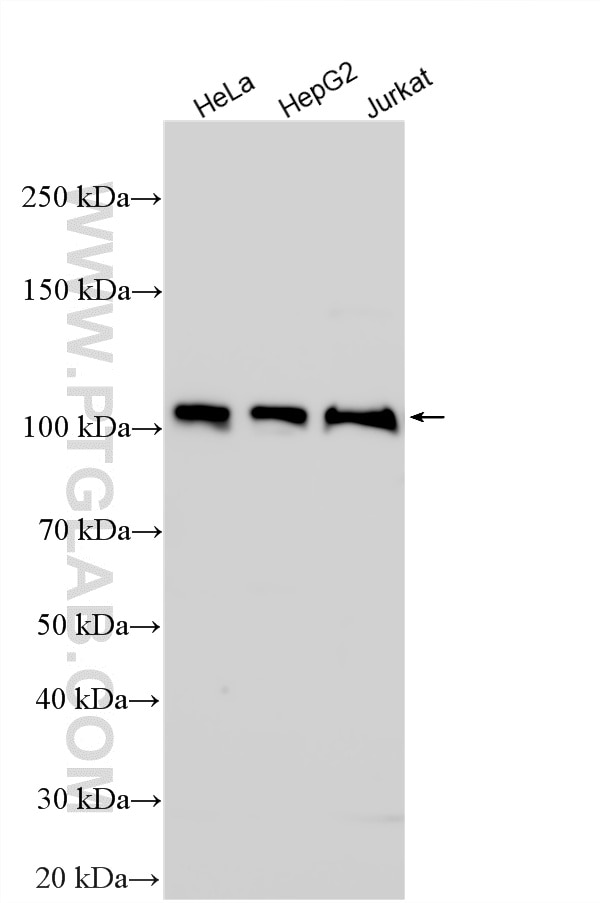
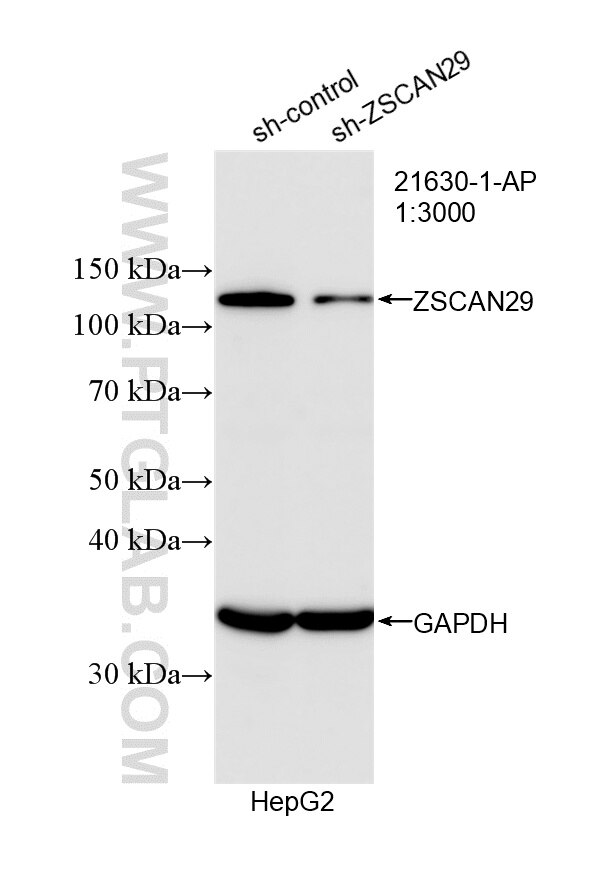
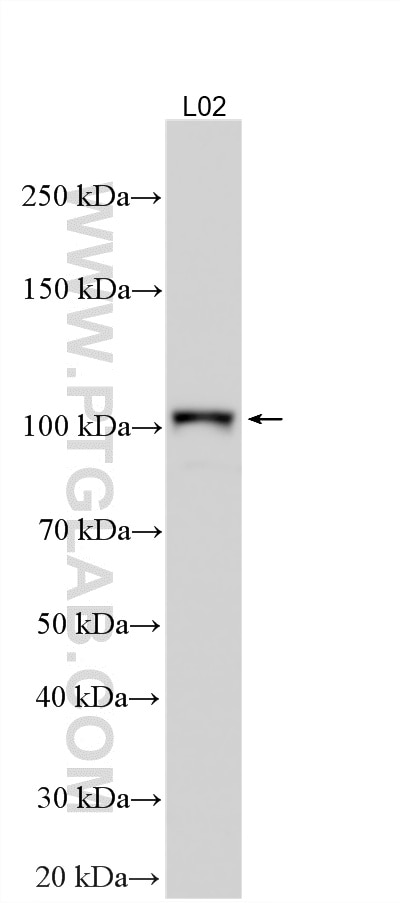
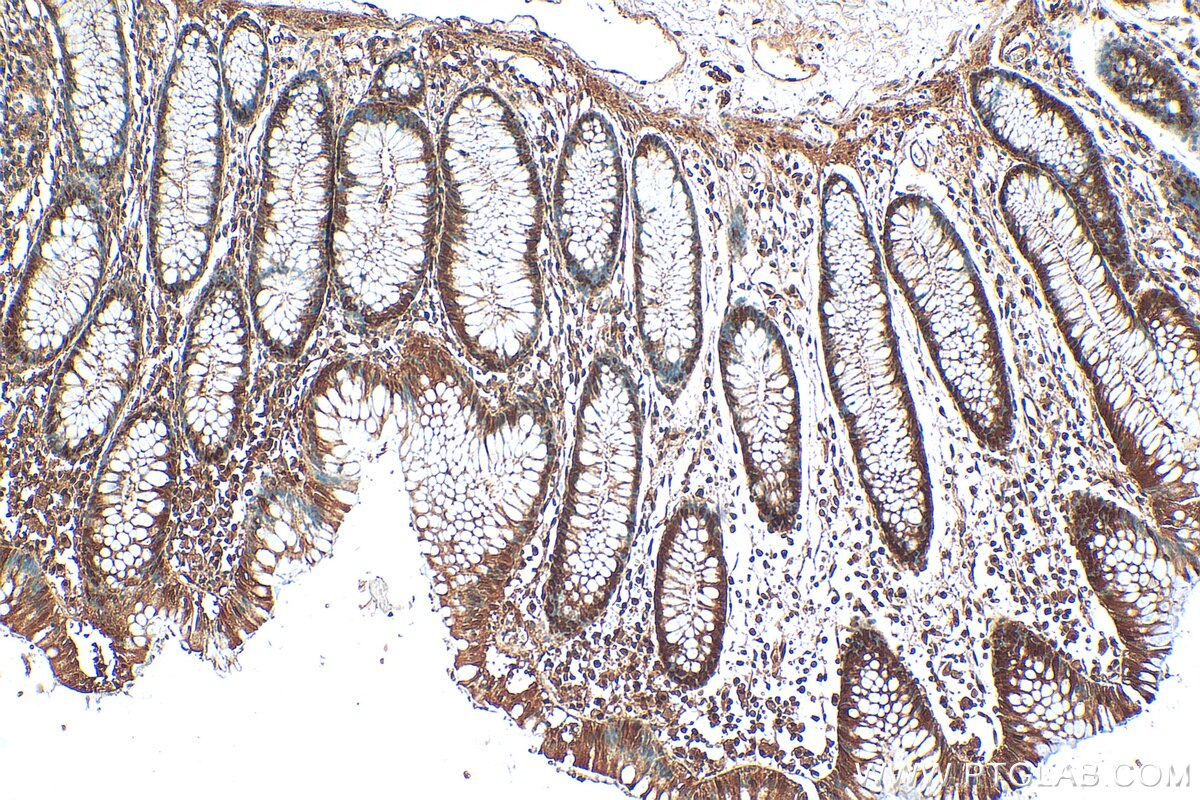
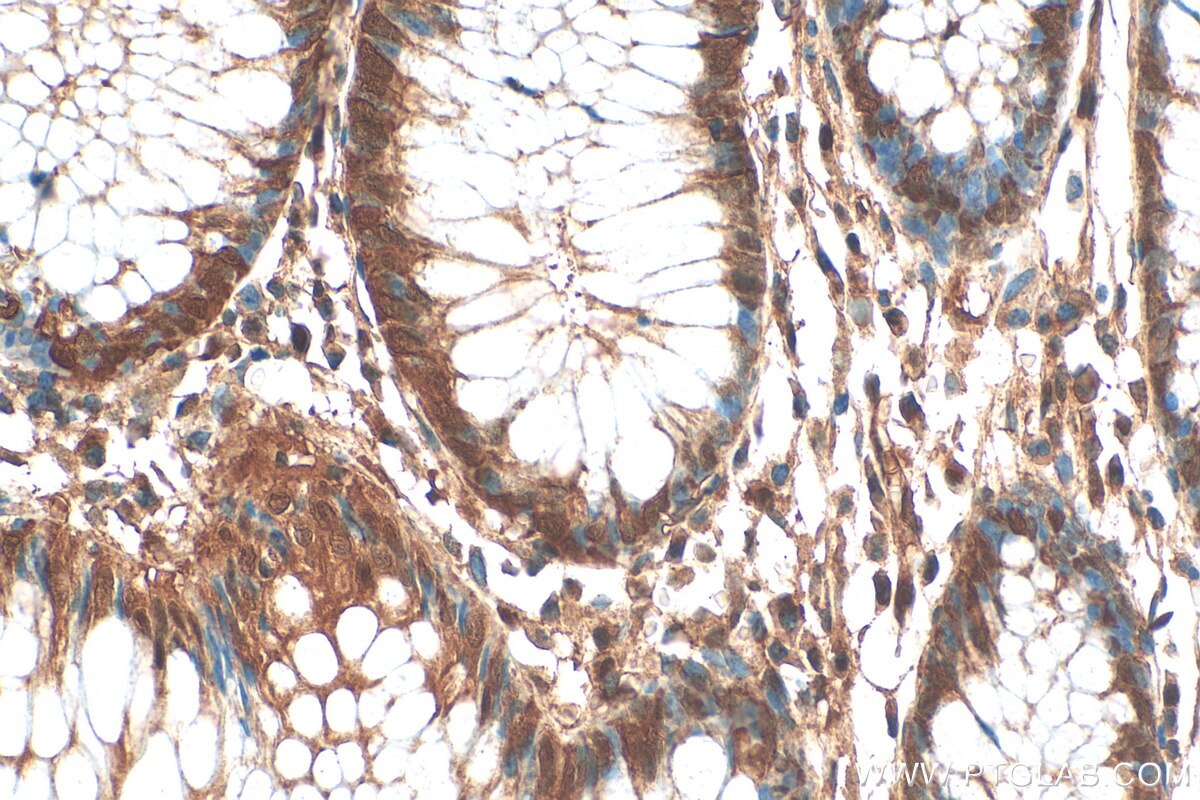
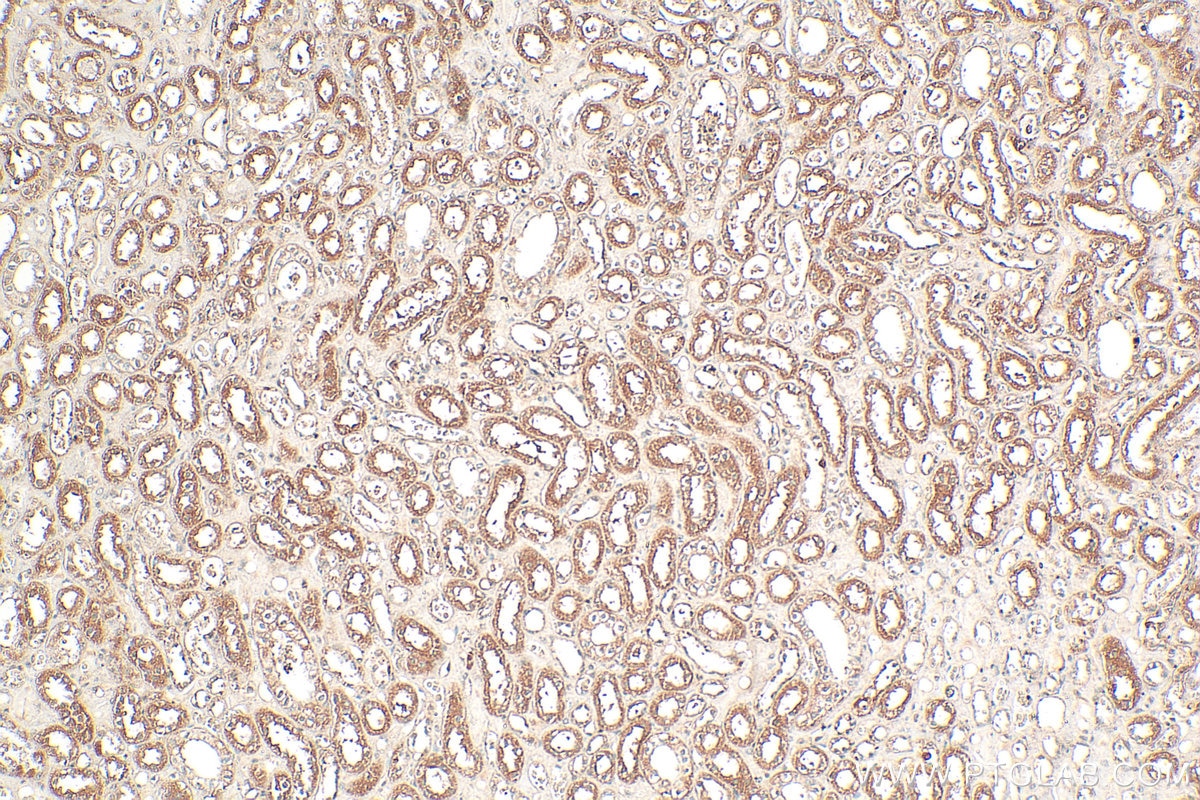
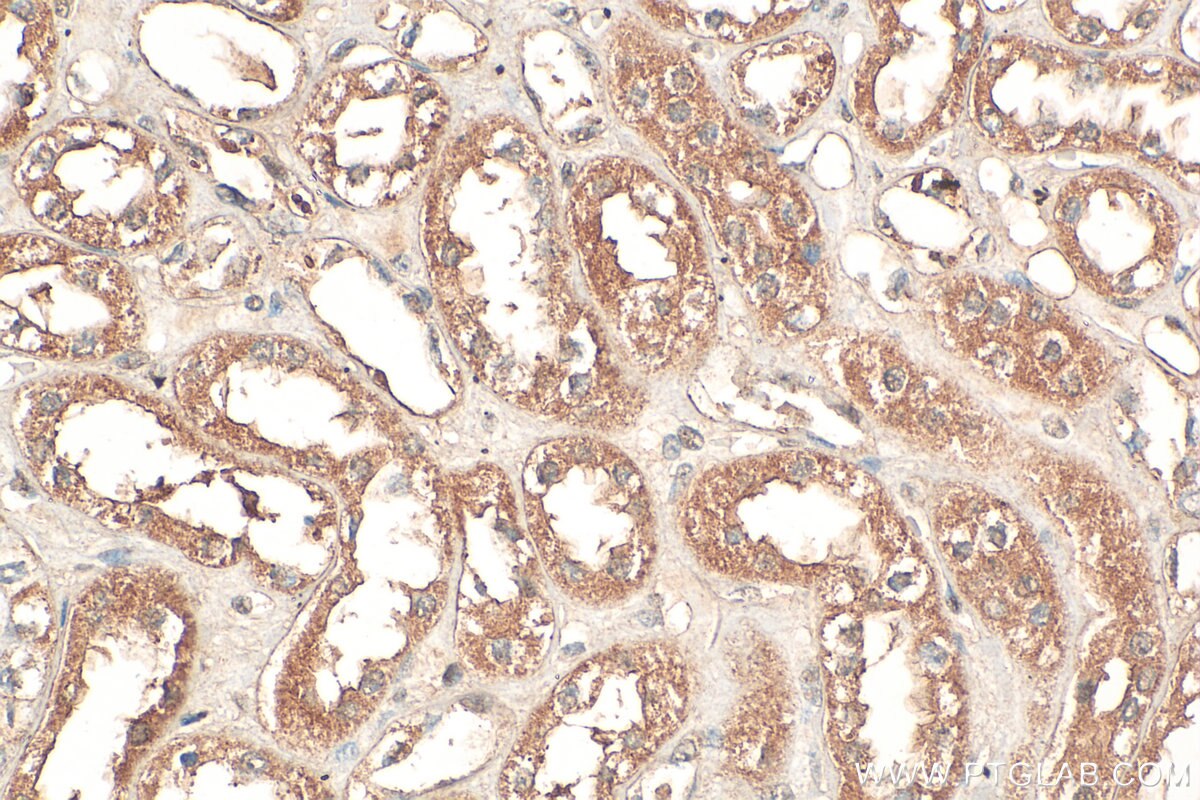
21630-1-PBS targets ZSCAN29 in WB, IHC, Indirect ELISA applications and shows reactivity with human samples.
| Tested Reactivity | human |
| Host / Isotype | Rabbit / IgG |
| Class | Polyclonal |
| Type | Antibody |
| Immunogen |
CatNo: Ag16239 Product name: Recombinant human ZSCAN29 protein Source: e coli.-derived, PGEX-4T Tag: GST Domain: 99-304 aa of BC109271 Sequence: PGRPRSSVTVSVKGQEVRLEKMTPPKSSQELLSVRQESVEPQPRGVPKKERARSPDLGPQEQMNPKEKLKPFQRSGFEAGFENEDNSKRDISEEVQLHRTLLARSERKIPRYLHQGKGNESDCRSGRQWAKTSGEKRGKLTLPEKSLSEVLSQQRPCLGERPYKYLKYSKSFGPNSLLMHQVSHQVENPYKCADCGKSFSRSARLI Predict reactive species |
| Full Name | zinc finger and SCAN domain containing 29 |
| Calculated Molecular Weight | 852 aa, 97 kDa |
| Observed Molecular Weight | 110-120 kDa |
| GenBank Accession Number | BC109271 |
| Gene Symbol | ZSCAN29 |
| Gene ID (NCBI) | 146050 |
| RRID | AB_3085664 |
| Conjugate | Unconjugated |
| Form | Liquid |
| Purification Method | Antigen affinity purification |
| UNIPROT ID | Q8IWY8 |
| Storage Buffer | PBS only, pH 7.3. |
| Storage Conditions | Store at -80°C. |
Background Information
ZSCAN29 (zinc finger and SCAN domain containing 29), also named as ZNF690 or Zfp690. It is predicted to be located in nucleus and ubiquitous expression in testis and lymph node. The genes ZSCAN29 (associated with five disorders: SCZ, BIP, MD, ASD and ADHD) and ZSCAN31 (associated with three disorders: SCZ, BIP and MD) encode zing finger transcription factor proteins that belong to the krueppel C2H2-type zinc-finger protein family. Zinc finger proteins are essential in multiple regulatory mechanisms and some have been associated with psychiatric disorders as reviewed by Squassina et al., 2019 (PMID: 34637873). It also enables sequence-specific double-stranded DNA binding activity and be predicted to be involved in regulation of transcription by RNA polymerase II. This antibody has passed KD/KO validation.








