

Tested Applications
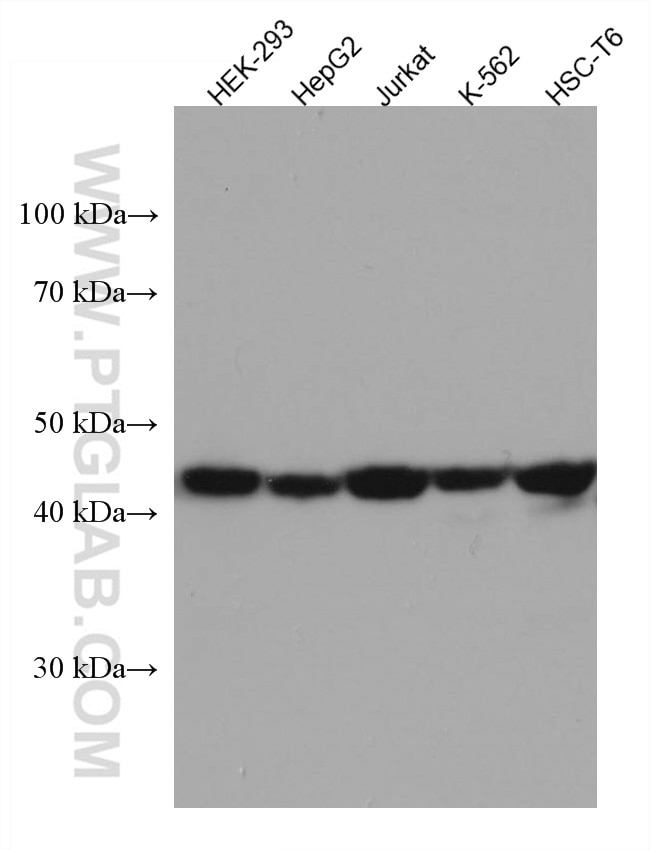
| Positive WB detected in | HEK-293 cells, HepG2 cells, Jurkat cells, K-562 cells, HSC-T6 cells |
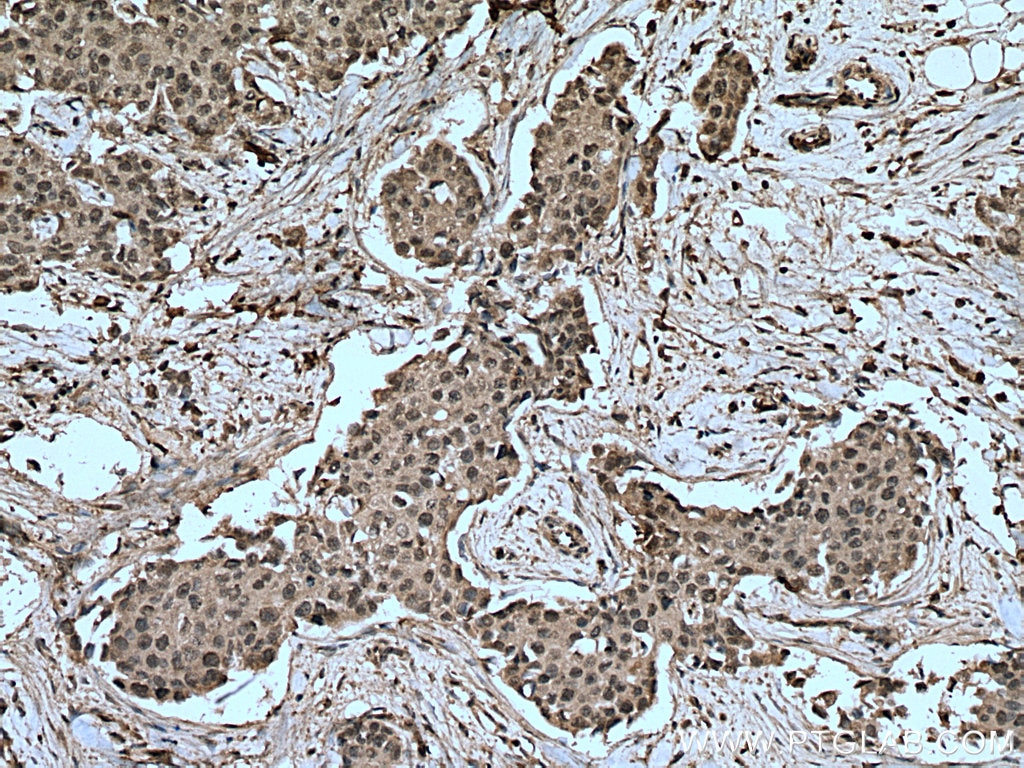
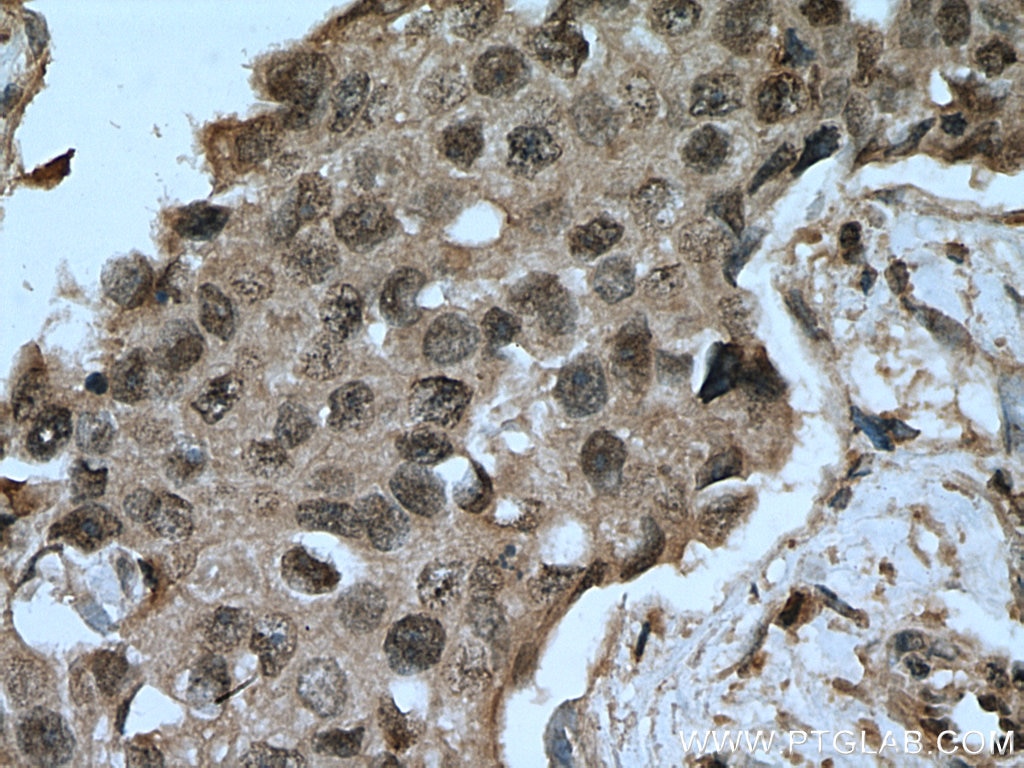
| Positive IHC detected in | human breast cancer tissue Note: suggested antigen retrieval with TE buffer pH 9.0; (*) Alternatively, antigen retrieval may be performed with citrate buffer pH 6.0 |
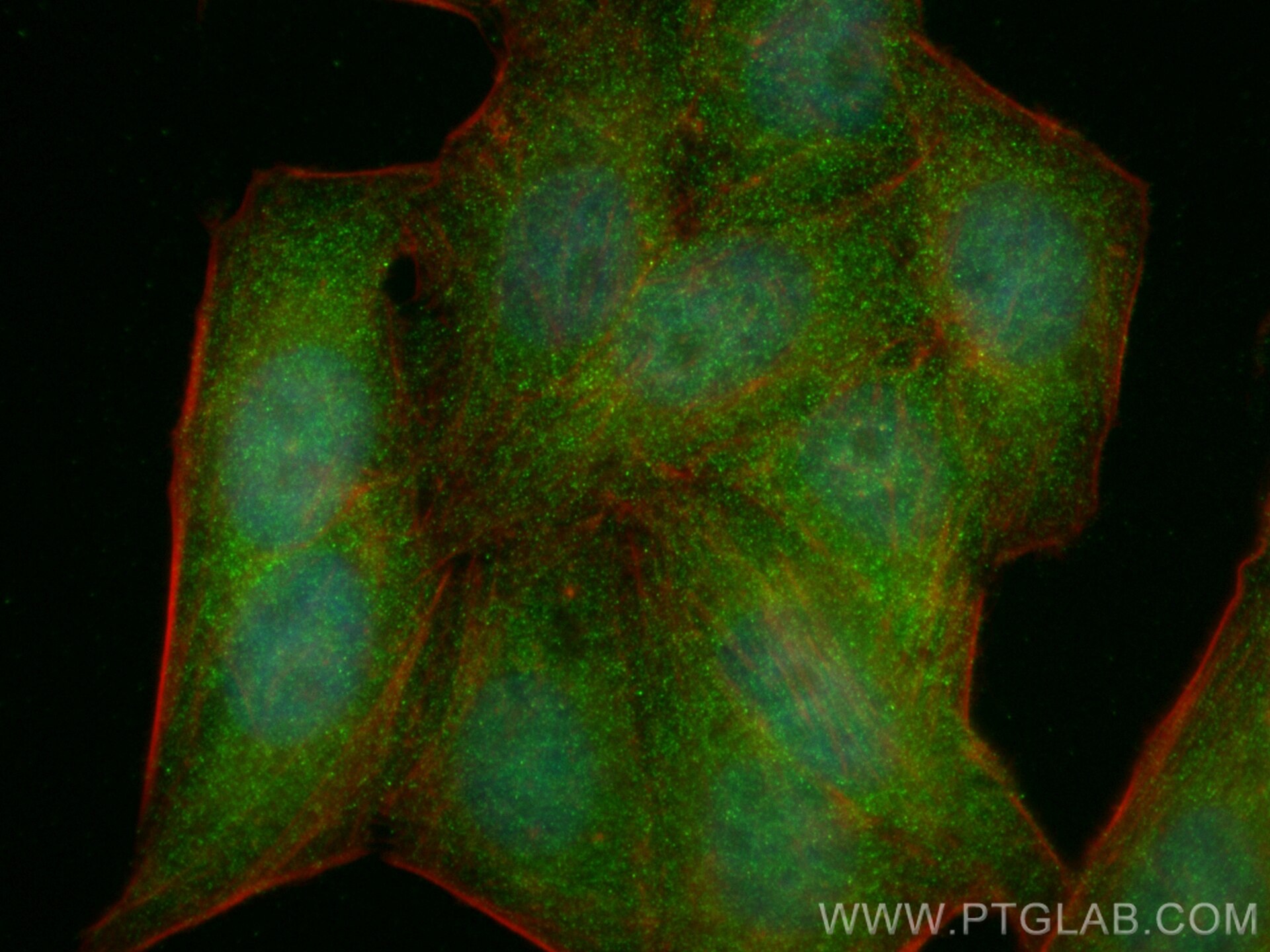
| Positive IF/ICC detected in | HepG2 cells |
Recommended dilution
| Application | Dilution |
|---|---|
| Western Blot (WB) | WB : 1:5000-1:50000 |
| Immunohistochemistry (IHC) | IHC : 1:250-1:1000 |
| Immunofluorescence (IF)/ICC | IF/ICC : 1:400-1:1600 |
| It is recommended that this reagent should be titrated in each testing system to obtain optimal results. | |
| Sample-dependent, Check data in validation data gallery. | |
Product Information
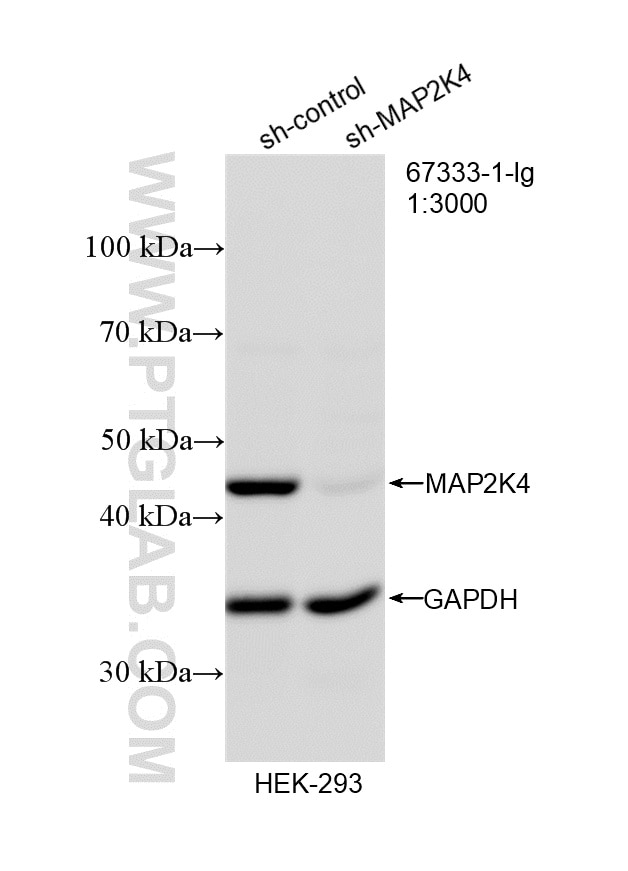
67333-1-Ig targets MAP2K4 in WB, IHC, IF/ICC, ELISA applications and shows reactivity with human, rat samples.
| Tested Reactivity | human, rat |
| Cited Reactivity | human, mouse |
| Host / Isotype | Mouse / IgG2b |
| Class | Monoclonal |
| Type | Antibody |
| Immunogen |
CatNo: Ag11348 Product name: Recombinant human MAP2K4 protein Source: e coli.-derived, PET28a Tag: 6*His Domain: 50-399 aa of BC036032 Sequence: NPPFKSTARFTLNPNPTGVQNPHIERLRTHSIESSGKLKISPEQHWDFTAEDLKDLGEIGRGAYGSVNKMVHKPSGQIMAVKRIRSTVDEKEQKQLLMDLDVVMRSSDCPYIVQFYGALFREGDCWICMELMSTSFDKFYKYVYSVLDDVIPEEILGKITLATVKALNHLKENLKIIHRDIKPSNILLDRSGNIKLCDFGISGQLVDSIAKTRDAGCRPYMAPERIDPSASRQGYDVRSDVWSLGITLYELATGRFPYPKWNSVFDQLTQVVKGDPPQLSNSEEREFSPSFINFVNLCLTKDESKRPKYKELLKHPFILMYEERAVEVACYVCKILDQMPATPSSPMYVD Predict reactive species |
| Full Name | mitogen-activated protein kinase kinase 4 |
| Calculated Molecular Weight | 399 aa, 44 kDa |
| Observed Molecular Weight | 44-50 kDa |
| GenBank Accession Number | BC036032 |
| Gene Symbol | MAP2K4 |
| Gene ID (NCBI) | 6416 |
| RRID | AB_2882591 |
| Conjugate | Unconjugated |
| Form | Liquid |
| Purification Method | Protein A purification |
| UNIPROT ID | P45985 |
| Storage Buffer | PBS with 0.02% sodium azide and 50% glycerol, pH 7.3. |
| Storage Conditions | Store at -20°C. Stable for one year after shipment. Aliquoting is unnecessary for -20oC storage. 20ul sizes contain 0.1% BSA. |
Background Information
MEK4 is also named as JNKK1, MAP2K4 , MKK4, PRKMK4, SEK1, SERK1, SKK1 and belongs to the protein kinase superfamily. MEK4 is a member of the mitogen-activated protein kinase family, originally identified as a kinase involved in the stress-activated protein kinase pathway by directly phosphorylating c-Jun NH 2-terminal kinase. This protein has 2 isoforms produced by alternative splicing.
Protocols
| Product Specific Protocols | |
|---|---|
| IF protocol for MAP2K4 antibody 67333-1-Ig | Download protocol |
| IHC protocol for MAP2K4 antibody 67333-1-Ig | Download protocol |
| WB protocol for MAP2K4 antibody 67333-1-Ig | Download protocol |
| Standard Protocols | |
|---|---|
| Click here to view our Standard Protocols |
Publications
What published studies show
The MAP2K4 Monoclonal antibody (2E4C1), catalog number 67333-1-Ig, has 6 total citations. These appear in journals including Phytomedicine, Materials Today Bio, Biochemical Pharmacology, Scientific Reports, PNAS Nexus, and Translational Breast Cancer Research. The cited research spans nephrotoxicity signaling, liver regeneration via gene delivery, osteoarthritis cartilage fibrosis, breast cancer cell phenotype regulation, tumor-selective ERK pathway inhibition, and triple-negative breast cancer biology.
| Species | Application | Title |
|---|---|---|
Phytomedicine Differences in p38-STAT3-S100A11 signaling after the administration of aristolochic acid I and IVa may account for the disparity in their nephrotoxicity | ||
Mater Today Bio Dual targeted gene delivery strategy mediated by GalNAc-modified lipid nanoparticles enhances liver regeneration through specific knockdown of MKK4.
| ||
Biochem Pharmacol HRX-215 attenuates cartilage fibrosis in osteoarthritis progression and microfracture repair by targeting MKK4. | ||
Sci Rep Effect of miR-6767-5p on breast cancer cell phenotype and its regulatory mechanism. | ||
Transl Breast Cancer Res The impact and mechanisms of CRIP2 on the biological behavior of triple-negative breast cancer cells. |






