
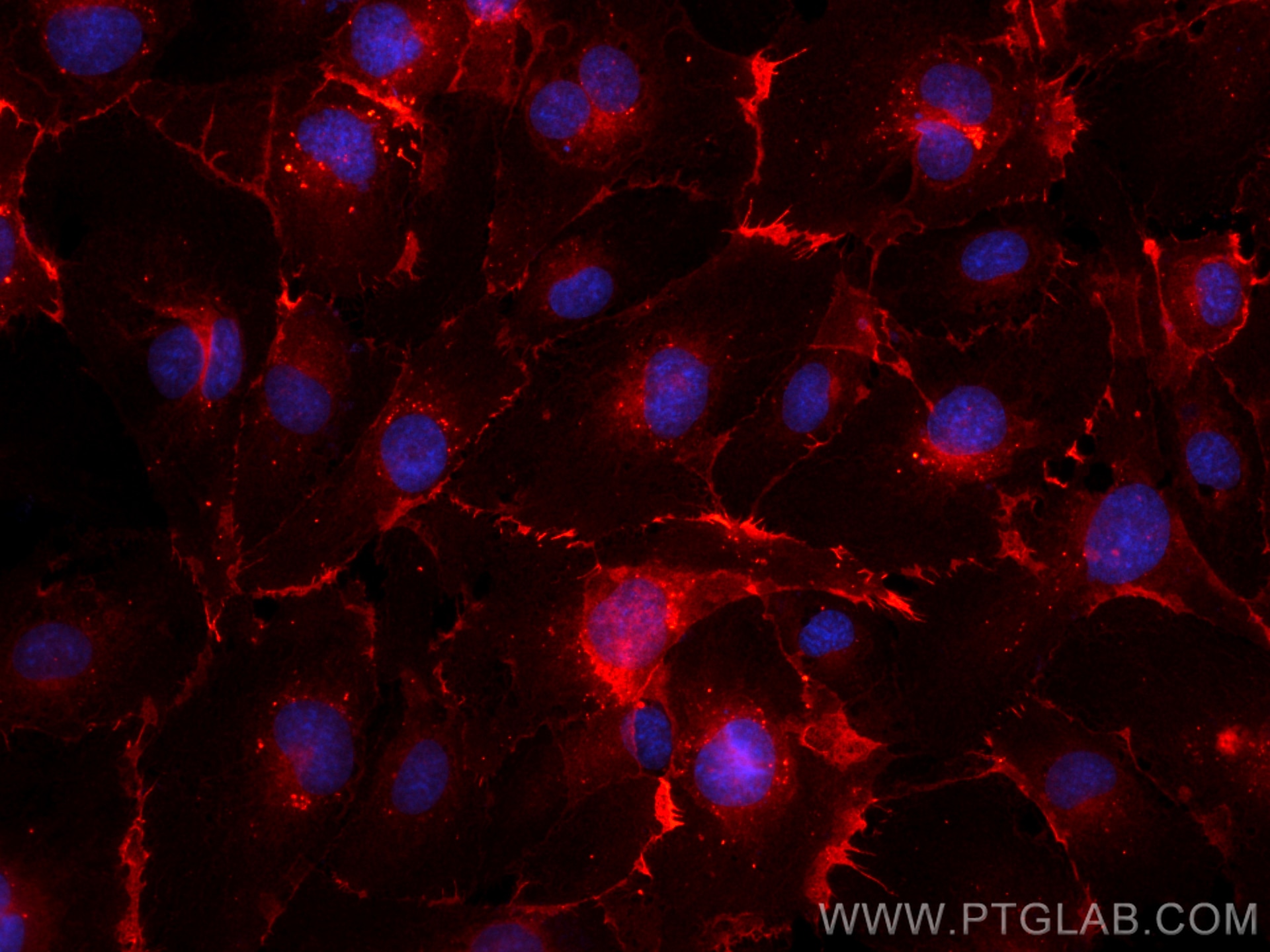

Tested Applications
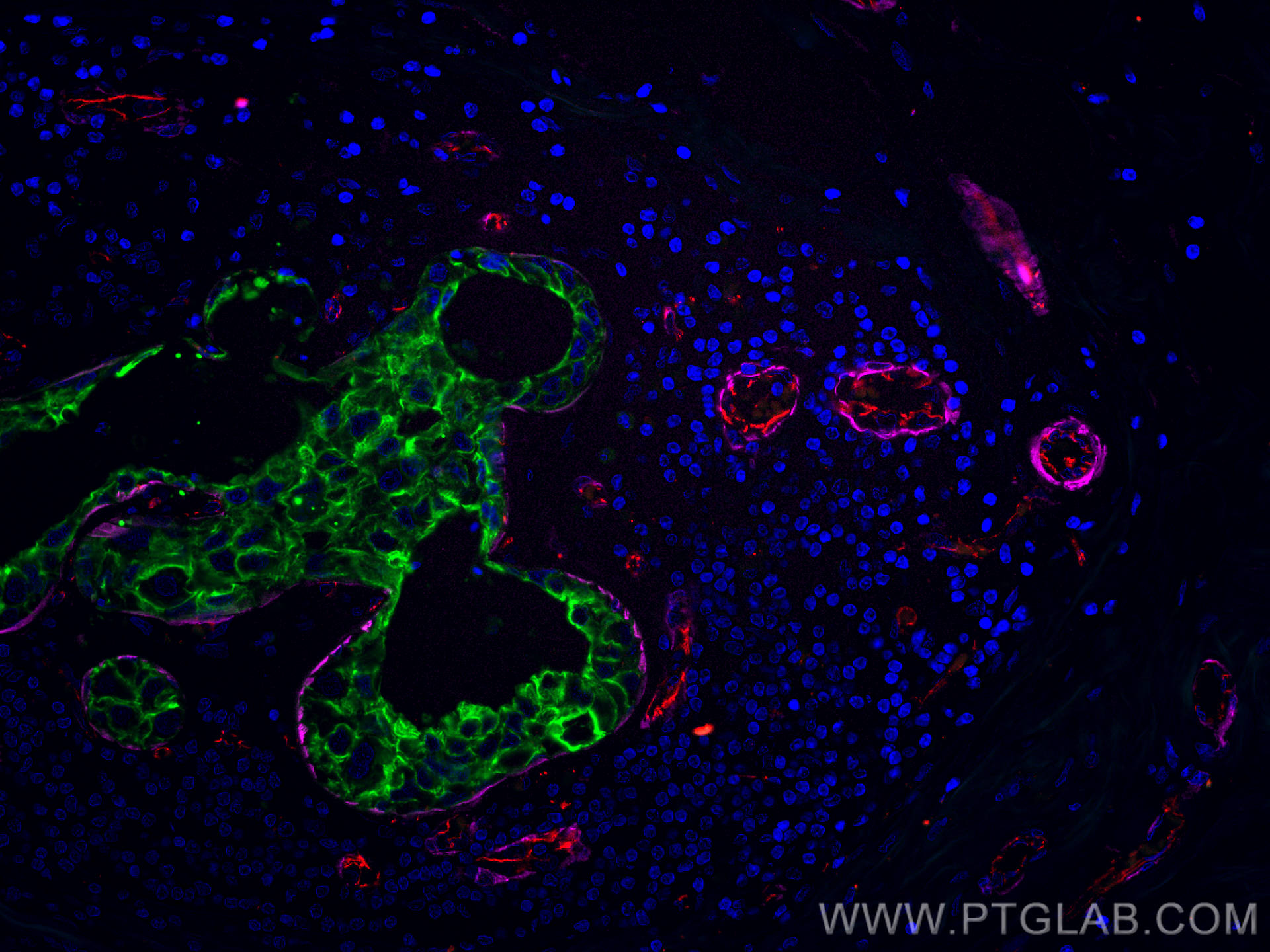
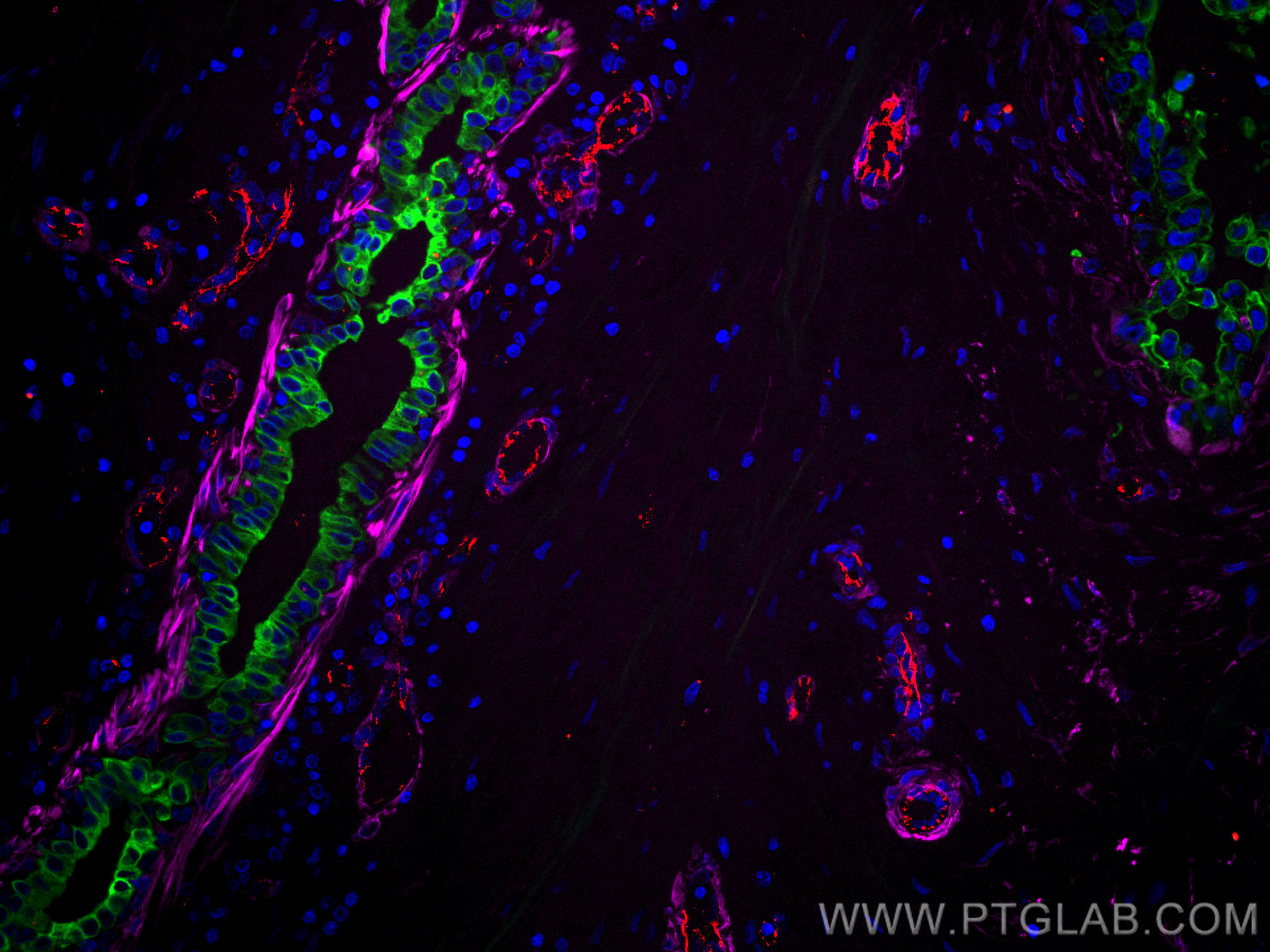
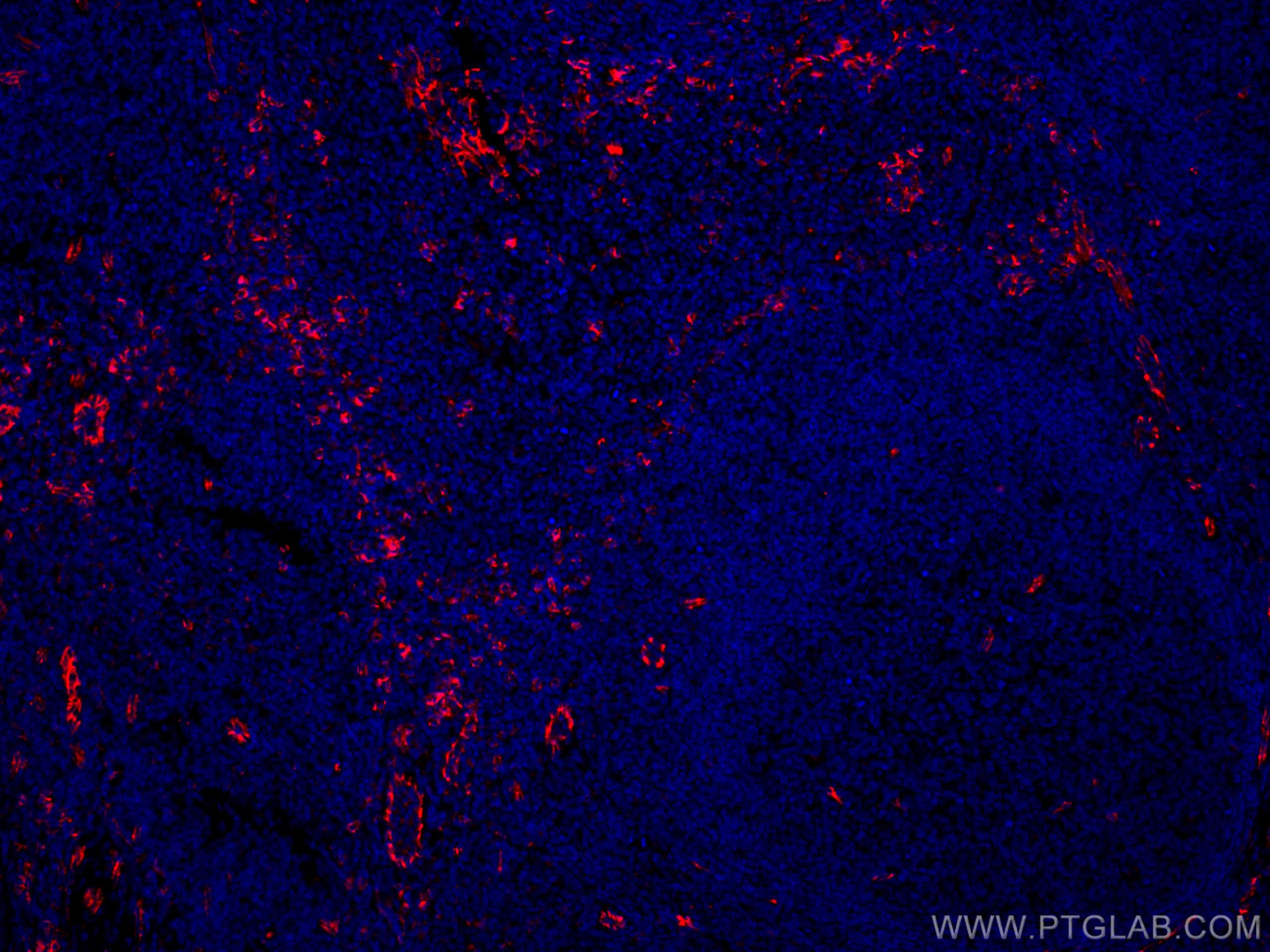
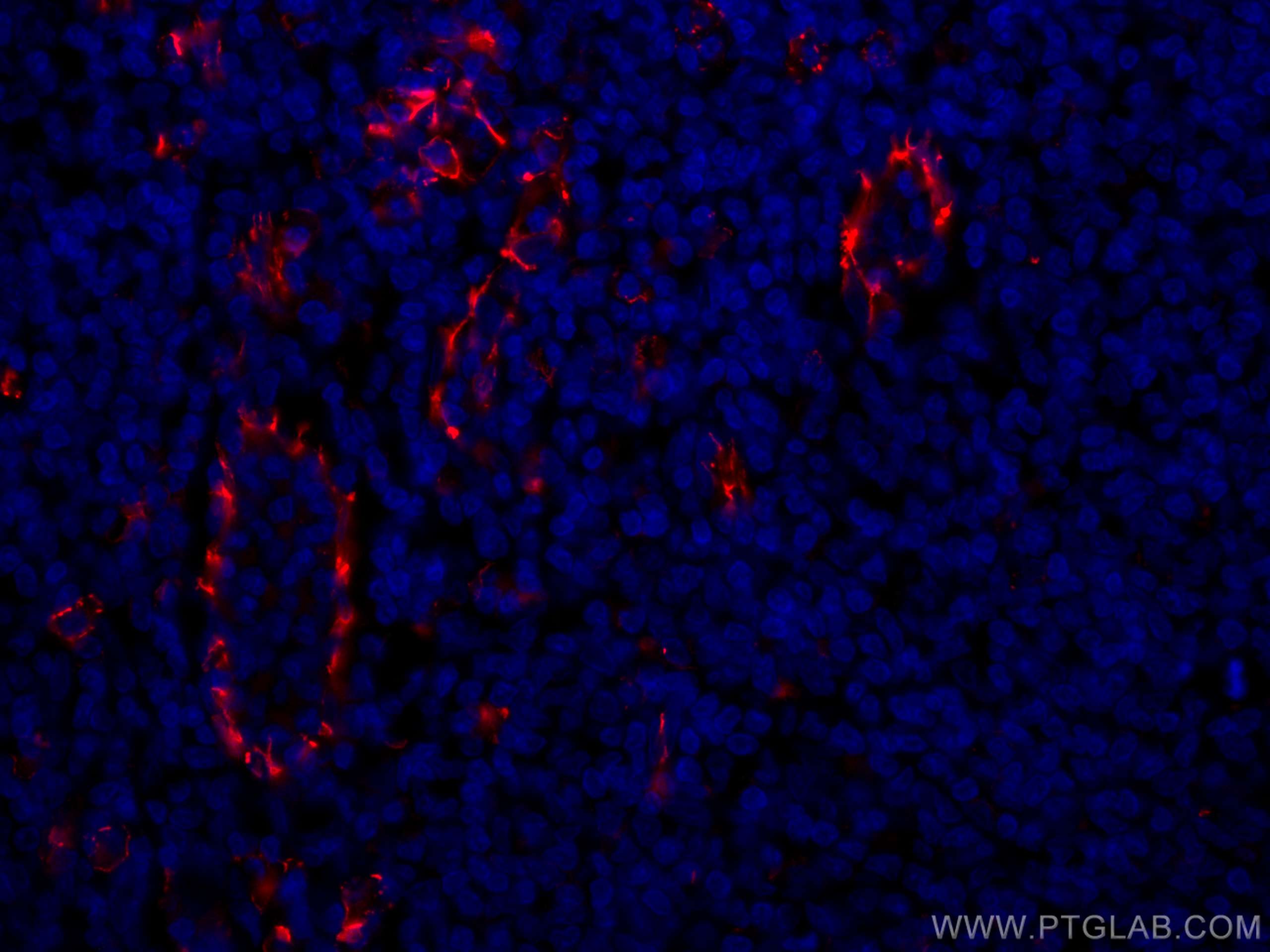
| Positive IF-P detected in | human breast cancer tissue, human tonsillitis tissue |
| Positive IF/ICC detected in | HUVEC cells |
Recommended dilution
| Application | Dilution |
|---|---|
| Immunofluorescence (IF)-P | IF-P : 1:50-1:500 |
| Immunofluorescence (IF)/ICC | IF/ICC : 1:50-1:500 |
| It is recommended that this reagent should be titrated in each testing system to obtain optimal results. | |
| Sample-dependent, Check data in validation data gallery. | |
Product Information
CL594-11265 targets CD31 in IF/ICC, IF-P applications and shows reactivity with human samples.
| Tested Reactivity | human |
| Cited Reactivity | human |
| Host / Isotype | Rabbit / IgG |
| Class | Polyclonal |
| Type | Antibody |
| Immunogen |
CatNo: Ag1787 Product name: Recombinant human CD31 protein Source: e coli.-derived, PGEX-4T Tag: GST Domain: 428-738 aa of BC022512 Sequence: EVRCESISGTLPISYQLLKTSKVLENSTKNSNDPAVFKDNPTEDVEYQCVADNCHSHAKMLSEVLRVKVIAPVDEVQISILSSKVVESGEDIVLQCAVNEGSGPITYKFYREKEGKPFYQMTSNATQAFWTKQKANKEQEGEYYCTAFNRANHASSVPRSKILTVRVILAPWKKGLIAVVIIGVIIALLIIAAKCYFLRKAKAKQMPVEMSRPAVPLLNSNNEKMSDPNMEANSHYGHNDDVGNHAMKPINDNKEPLNSDVQYTEVQVSSAESHKDLGKKDTETVYSEVRKAVPDAVESRYSRTEGSLDGT Predict reactive species |
| Full Name | platelet/endothelial cell adhesion molecule |
| Calculated Molecular Weight | 83 kDa |
| GenBank Accession Number | BC022512 |
| Gene Symbol | CD31 |
| Gene ID (NCBI) | 5175 |
| ENSEMBL Gene ID | ENSG00000261371 |
| RRID | AB_2919762 |
| Conjugate | CoraLite®594 Fluorescent Dye |
| Excitation/Emission Maxima Wavelengths | 588 nm / 604 nm |
| Excitation Laser | Yellow-Green Laser (561 nm) |
| Form | Liquid |
| Purification Method | Antigen affinity purification |
| UNIPROT ID | P16284 |
| Storage Buffer | PBS with 50% glycerol, 0.05% Proclin300, 0.5% BSA, pH 7.3. |
| Storage Conditions | Store at -20°C. Avoid exposure to light. Stable for one year after shipment. Aliquoting is unnecessary for -20oC storage. |
Background Information
Platelet endothelial cell adhesion molecule-1 (PECAM-1, CD31) is a member of the immunoglobulin gene superfamily of cell adhesion molecules. CD31 is a transmembrane glycoprotein that is highly expressed on the surface of the endothelium, making up a large portion of its intracellular junctions. PECAM-1 is also present on the surface of hematopoietic cells and immune cells including platelets, monocytes, neutrophils, natural killer cells, megakaryocytes and some types of T-cell (PMID: 9011572). As well as its role in cell-cell adhesion, PECAM-1 functions as a signaling receptor, and is involved in important physiological events such as nitric oxide production, regulation of T-cell immunity and tolerance, leukocyte transendothelial migration and inflammation and angiogenesis (PMID: 21183735; 20978210; 17872453; 20634489).
Protocols
| Product Specific Protocols | |
|---|---|
| IF protocol for CL594 CD31 antibody CL594-11265 | Download protocol |
| Standard Protocols | |
|---|---|
| Click here to view our Standard Protocols |
Publications
What published studies show
CD31 Polyclonal antibody (CL594-11265) has 4 citations appearing in Stem Cell Research & Therapy, Communications Biology, bioRxiv, and the American Journal of Transplantation. The associated research fields span mesenchymal stem cell biology, prostate cancer bone metastasis modeling via microphysiological systems, Kaposi's sarcoma immunology with viral-driven cellular reprogramming, and vascular remodeling in post-lung transplantation obliterative bronchiolitis.
| Species | Application | Title |
|---|---|---|
Stem Cell Res Ther Cell heterogeneity, rather than the cell storage solution, affects the behavior of mesenchymal stem cells in vitro and in vivo. | ||
Commun Biol Engineering the bone metastatic prostate cancer niche through a microphysiological system to report patient-specific treatment response. | ||
bioRxiv Spatial Single-Cell Atlas Reveals KSHV-Driven Broad Cellular Reprogramming, Progenitor Expansion, Immune and Vascular Remodeling in Kaposi's Sarcoma | ||
Am J Transplant Multi-modal analysis of vascular remodelling in human obliterative bronchiolitis after lung transplantation. |






