
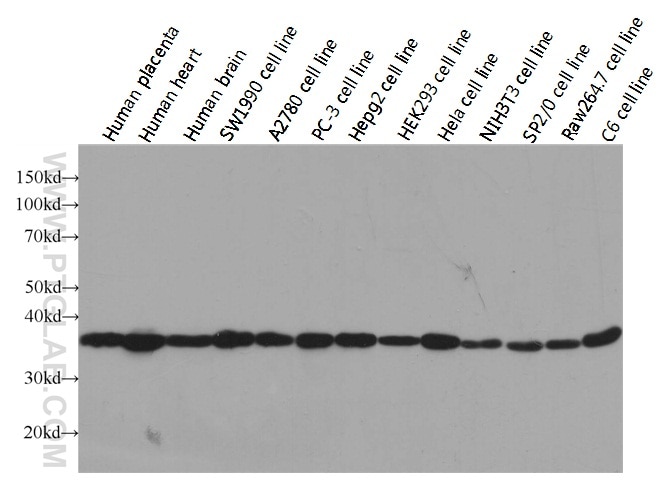
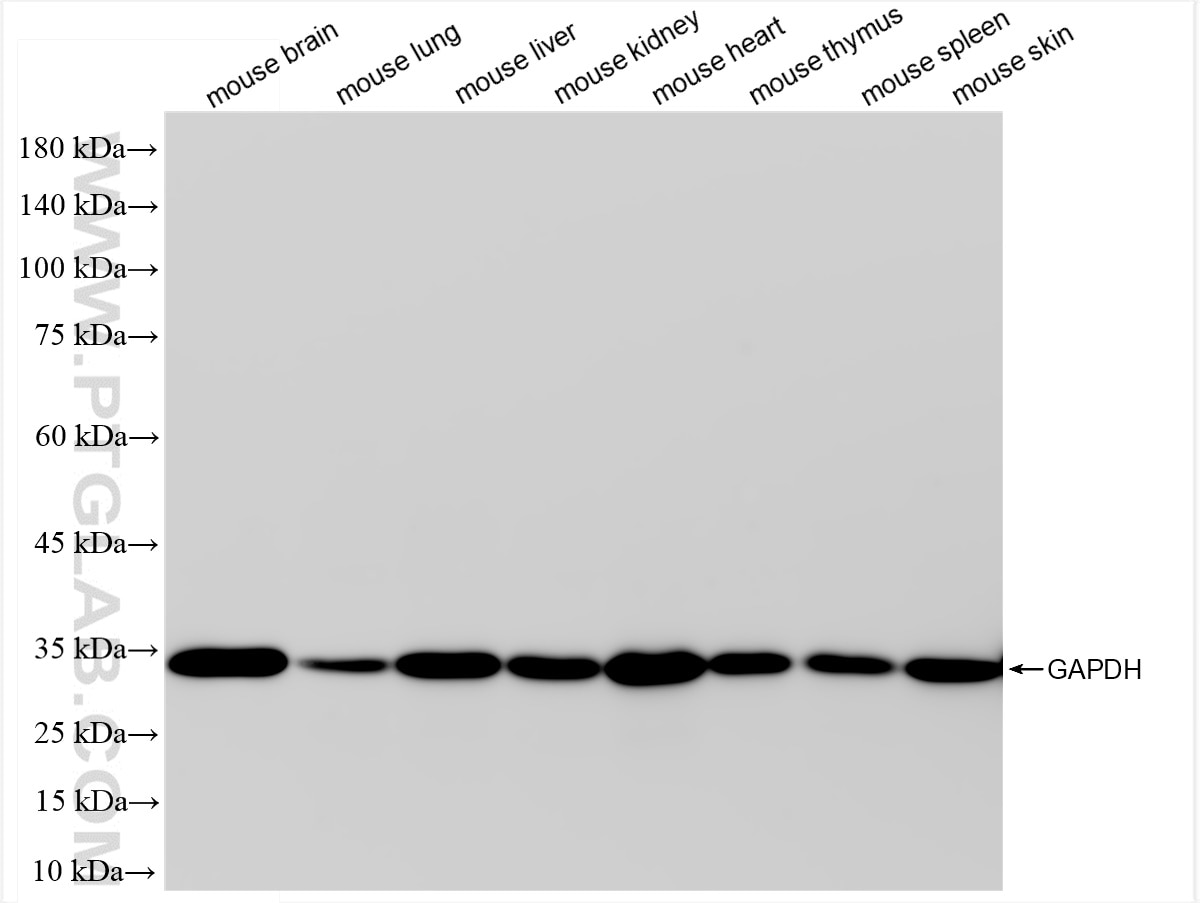
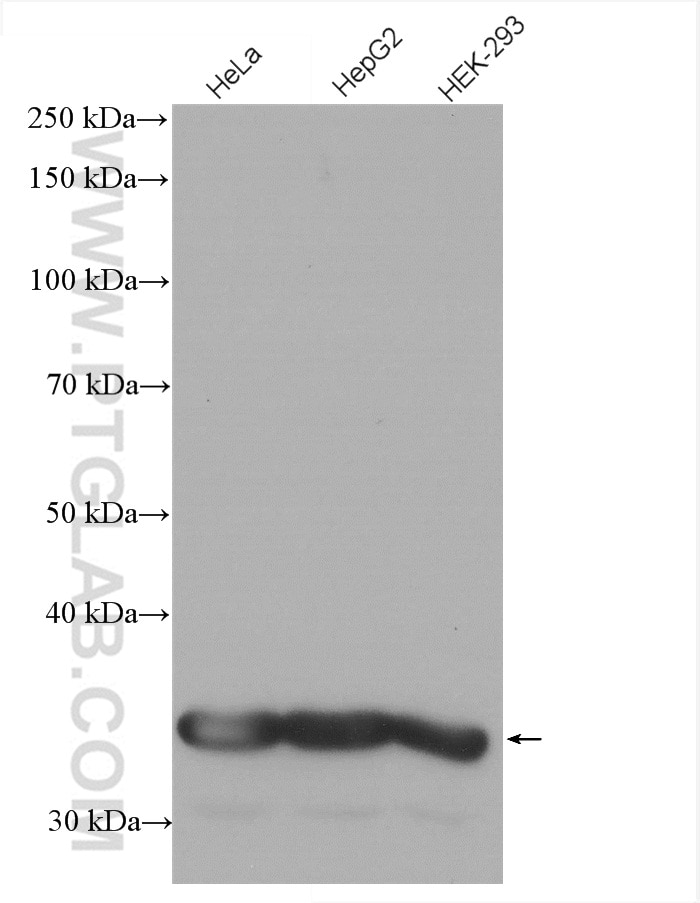
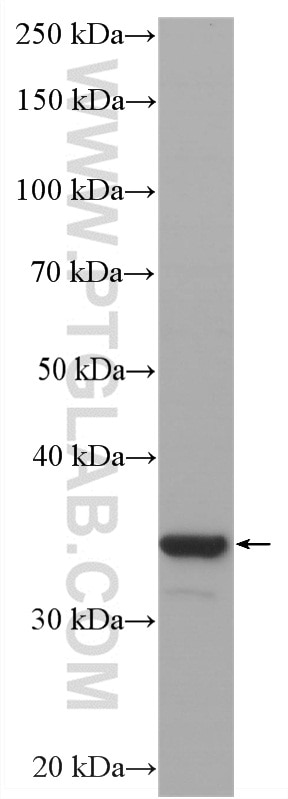

Tested Applications
| Positive WB detected in | HeLa cells, mouse brain tissue, HepG2 cells, HEK-293 cells, mouse lung tissue, mouse liver tissue, mouse kidney tissue, mouse heart tissue, mouse thymus tissue, mouse spleen tissue. mouse skin tissue |
Recommended dilution
| Application | Dilution |
|---|---|
| Western Blot (WB) | WB : 1:5000-1:50000 |
| It is recommended that this reagent should be titrated in each testing system to obtain optimal results. | |
| Sample-dependent, Check data in validation data gallery. | |
Product Information
HRP-60004 targets GAPDH in WB, IHC, IF, IP, CoIP, RIP applications and shows reactivity with human, mouse, rat, zebrafish samples.
| Tested Reactivity | human, mouse, rat, zebrafish |
| Cited Reactivity | human, mouse, rat, monkey, chicken, goat, sheep, yeast, honey bees |
| Host / Isotype | Mouse / IgG2b |
| Class | Monoclonal |
| Type | Antibody |
| Immunogen |
Recombinant protein Predict reactive species |
| Full Name | glyceraldehyde-3-phosphate dehydrogenase |
| Calculated Molecular Weight | 36 kDa |
| Observed Molecular Weight | 36 kDa |
| GenBank Accession Number | BC004109 |
| Gene Symbol | GAPDH |
| Gene ID (NCBI) | 2597 |
| RRID | AB_2737588 |
| Conjugate | HRP |
| Form | Liquid |
| Purification Method | Antigen affinity purification |
| UNIPROT ID | P04406 |
| Storage Buffer | PBS with 50% glycerol, 0.05% Proclin300, 0.5% BSA, pH 7.3. |
| Storage Conditions | Store at -20°C. Avoid exposure to light. Stable for one year after shipment. Aliquoting is unnecessary for -20oC storage. |
Background Information
What is the molecular weight of GAPDH?
The molecular weight of GAPDH is 36 kD.
What is GAPDH?
GAPDH stands for glyceraldehyde-3-phosphate dehydrogenase and is often referred to as a "housekeeping"
protein. It is recognized as an important enzyme involved in metabolic pathways, aiding in the glycolytic
production of ATP and pyruvate (PMID: 21895736).
What is the function of GAPDH?
GAPDH is responsible for catalyzing the phosphorylation of glyceraldehyde-3-phosphate into D-glycerate-1,3-biphosphate. While this function of GAPDH is considered its primary function, GAPDH is also involved, even
critical, in other cell functions, some of which are still being studied. Recent studies have suggested that GAPDH
is a key factor in regulating apoptosis, translocating to the nucleus under certain stressful conditions and acting
as a signaling factor in oxidative stress-induced apoptosis. Other studies indicate that GAPDH plays a role in
transporting vesicles from the endoplasmic reticulum to the Golgi body (PMIDs: 21895736, 12829261, 25859407,
11035021).
Where in the cell is GAPDH localized?
GAPDH is expressed primarily in the cytosolic and membrane regions, with minimal expression in the nucleus
(PMIDs: 21895736, 12829261).
Is there a reason to use an antibody targeting GAPDH if my research is not concerned with glycolysis or nuclear
functions?
Yes! Because GAPDH is often highly expressed throughout different tissues and cell types, GAPDH expression is
useful as a control for Western blots and RT-PCR.
What are the known protein-protein interactions of GAPDH?
GAPDH interacts with other proteins to regulate nuclear translocation and GAPDH catalytic activity. Some of
these proteins include TPPP, SIAH1, CHP1, RILPL1/GOSPEL and FKBP6 (PMIDs: 21895736, 25859407).
Note: For murine tissue samples, conjugated mouse antibody HRP-60004 and rabbit antibody 10494-1-AP are preferable.
Protocols
| Product Specific Protocols | |
|---|---|
| WB protocol for HRP GAPDH antibody HRP-60004 | Download protocol |
| Standard Protocols | |
|---|---|
| Click here to view our Standard Protocols |
Publications
What published studies show
GAPDH Monoclonal antibody (1E6D9), catalog number HRP-60004, has accumulated 1,101 citations across prestigious journals including Nature, Science, Cell, Cancer Cell, Nature Communications, Cell Metabolism, Nature Immunology, Molecular Cancer, Advanced Science, Science Advances, and Cell Death & Differentiation. Associated research fields encompass oncology, immunology, lipid and glucose metabolism, neuroscience, cardiovascular disease, RNA epigenetics, gene editing, inflammation, and aging.
| Species | Application | Title |
|---|---|---|
Nature Anti-tumour immunity controlled through mRNA m6A methylation and YTHDF1 in dendritic cells. | ||
Cancer Cell Tumor cells impair immunological synapse formation via central nervous system-enriched metabolite | ||
Reviews
What customers say
All 14 reviews are for Western Blot use as a loading control, with 12 rating 5 stars, one 4 stars, and one 3 stars. Users consistently praise the HRP conjugation for eliminating the secondary antibody step and saving time. It performs well across cell lines (HEK293T, HepG2, mESC, THP-1) and tissues at dilutions ranging from 1:5,000 to 1:25,000. Specificity is generally strong with a single band at the expected size. One reviewer noted a non-specific band near 30 kDa, and another cautioned that higher concentrations can produce overly intense signals.
The reviews below have been submitted by verified Proteintech customers who received an incentive for providing their feedback.
Ali (Verified Customer) (04-16-2026) | Works perfectly in western blot after 1h or overnight incubation
|
Kushal (Verified Customer) (03-18-2026) | Wonderful antibody. Works wonders every time with 30 minute incubation.
|
Krishani (Verified Customer) (01-23-2026) | Worked perfectly!
|
Ann-Kathrin (Verified Customer) (11-12-2025) | The conjugated GAPDH Antibody work really well, especially with semidry transfer. After blocking the blot for 2h in 7% skim milk/TBST and incubating for 1h with the antibody in /% skim milk/TBST the blot is ready to detect. Unsing this antibody saves time and it really cost efficient.
|
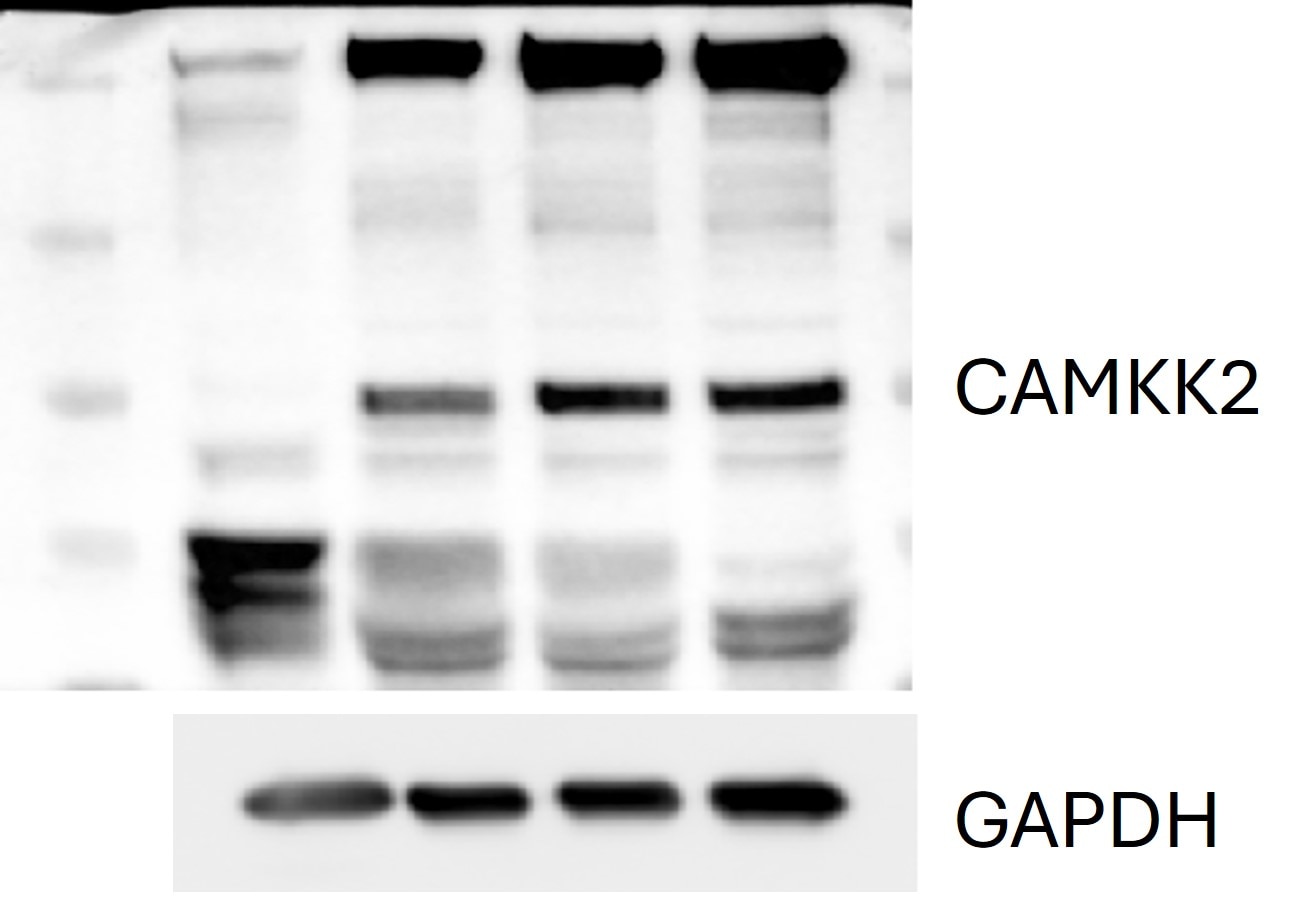
JIN-FENG (Verified Customer) (10-01-2025) | GAPDH-HRP works perfectly on my blot. I used it as my internal control and it performed very specific signal on the blot.
 |
STEVE (Verified Customer) (08-22-2025) | I really liked this antibody coupled with HRP, specific and reliable.
|
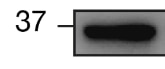
Moritz (Verified Customer) (09-12-2024) | The antibody worked very well at a dilution of 1:10k in WB using HEL293T cell lysate as a loading control.
 |
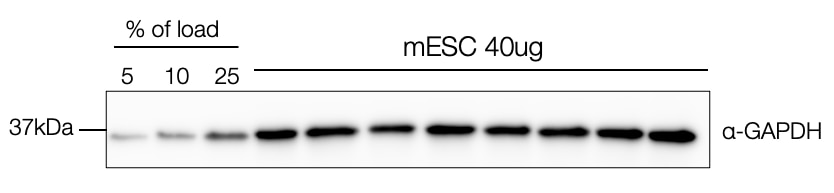
Julia (Verified Customer) (08-07-2024) | Really good antibody with specific band at the correct size. Conjugation with HRP allows quickworks great to get results quickly.
 |
T (Verified Customer) (03-20-2024) | Worked great with multiple tissue types. Highly recommend!
|
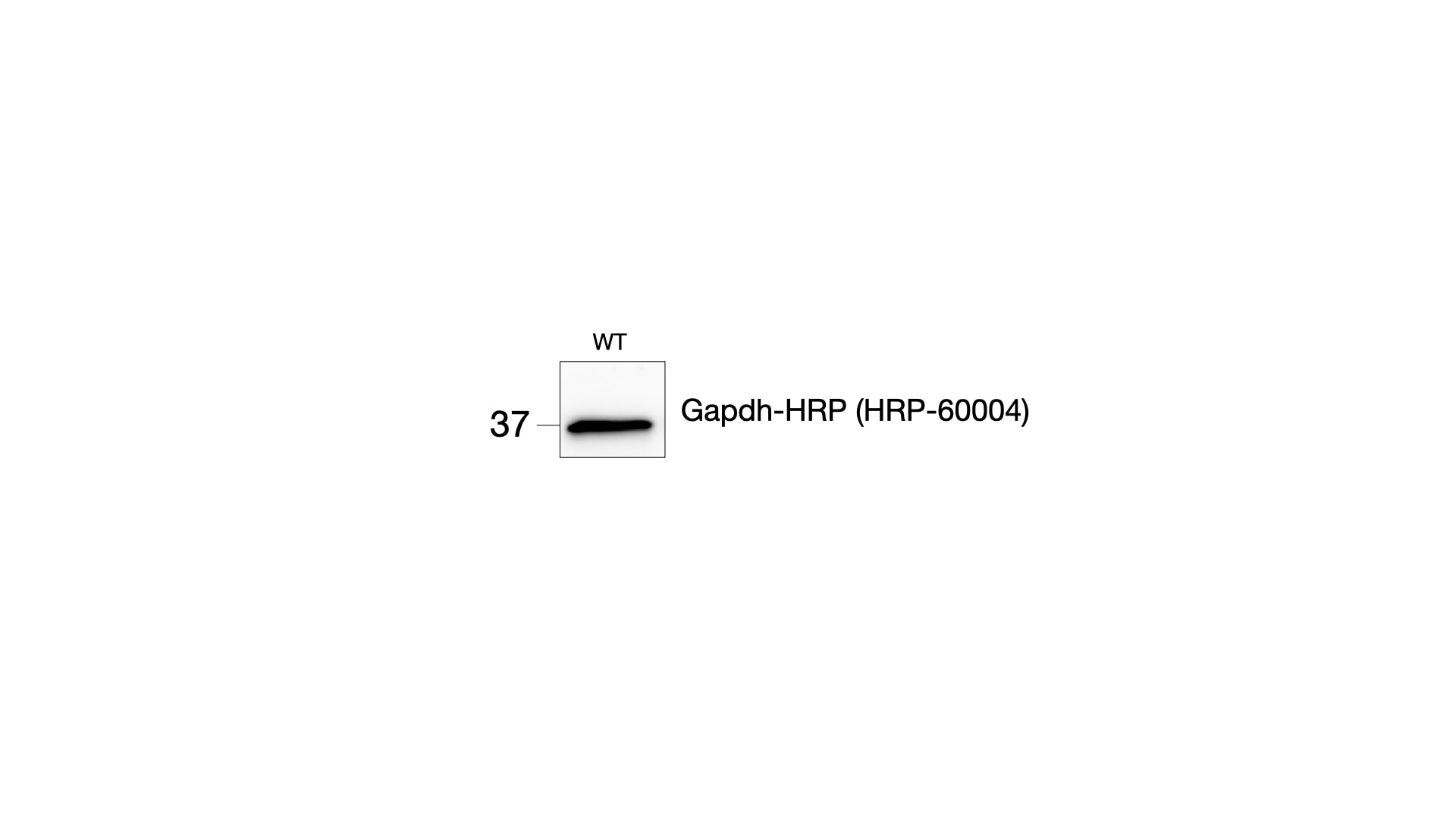
Tsimafei (Verified Customer) (07-15-2022) | 30µg of total protein were loaded on the gel. Antibodies were incubated ON at 4C.
 |
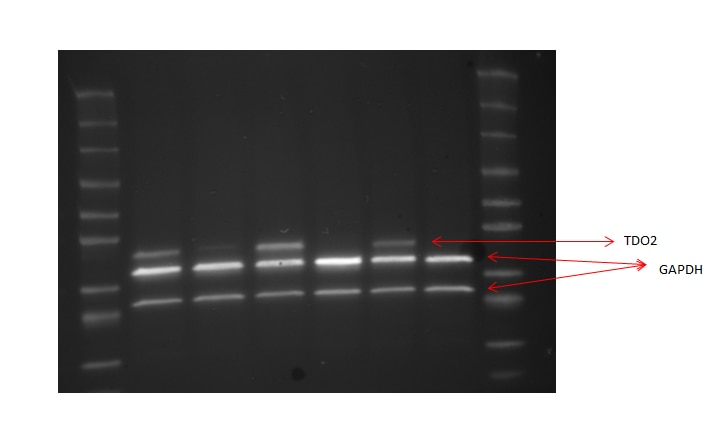
Hala (Verified Customer) (02-25-2022) | it works very good but i got an aspecific band around 30KDa
 |
Laura (Verified Customer) (01-10-2020) | Works well
|
Benjamin (Verified Customer) (01-07-2020) | Works really well with high sensitivity and removes the need for a secondary. Needs to be dilute as GAPDH bands will be too intense at higher dilutions.
|
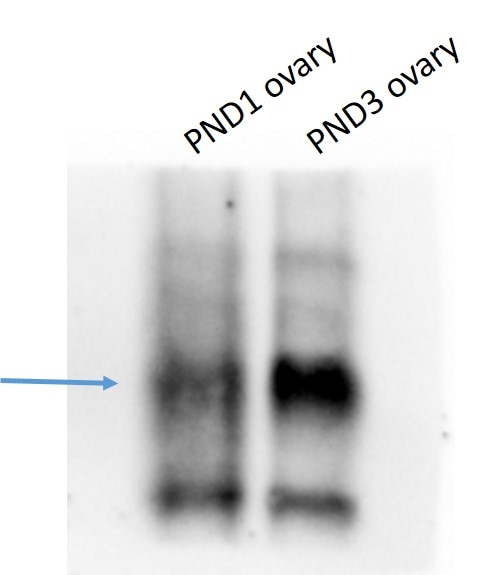
Kathryn (Verified Customer) (12-10-2019) | Used at 1:5000 in 5% BSA on a small amount of neonatal mouse ovary and worked beautifully.
 |





