

Tested Applications
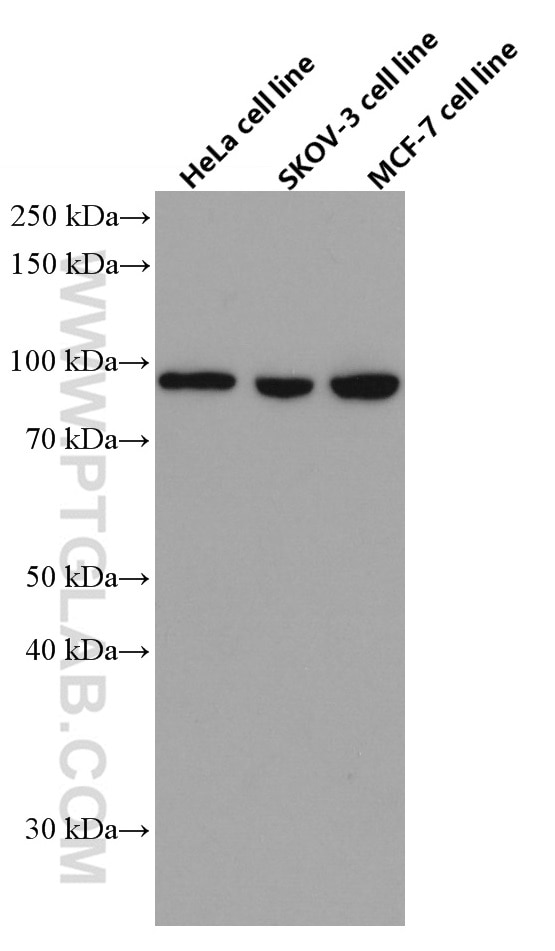
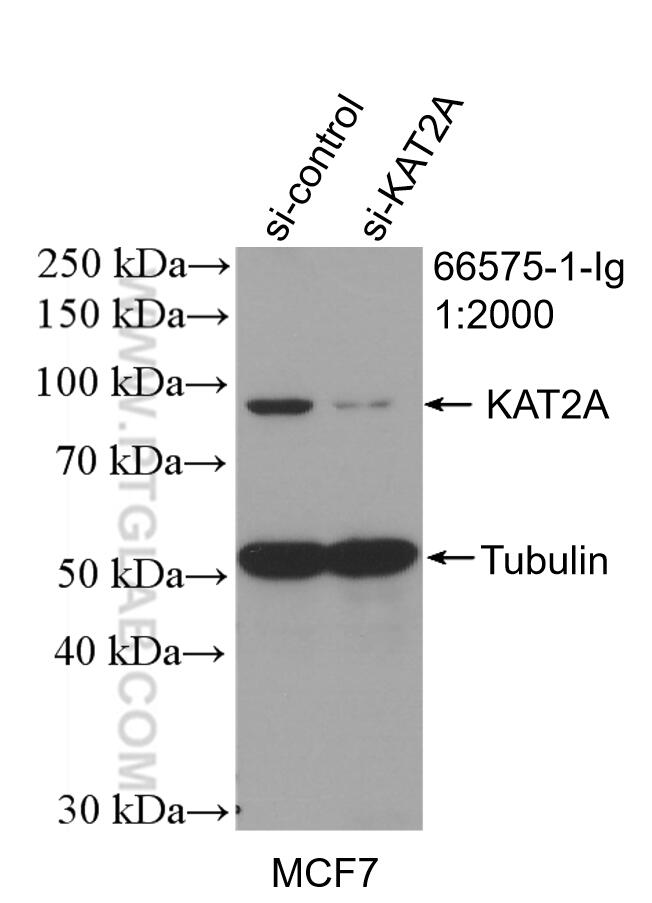
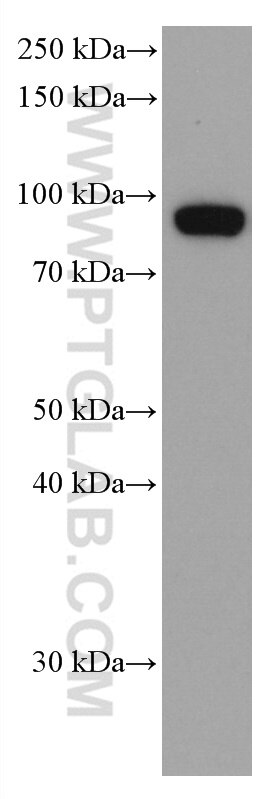
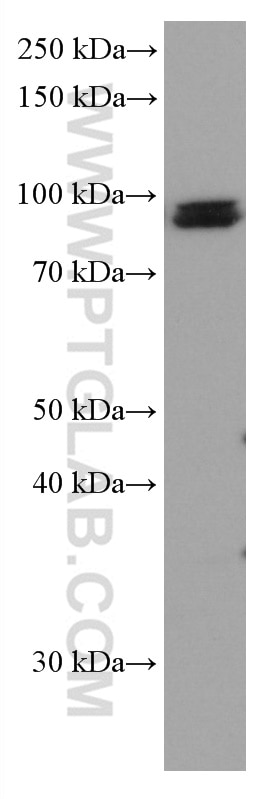
| Positive WB detected in | HeLa cells, MCF-7 cells, HSC-T6 cells, NIH/3T3 cells, SKOV-3 cells |
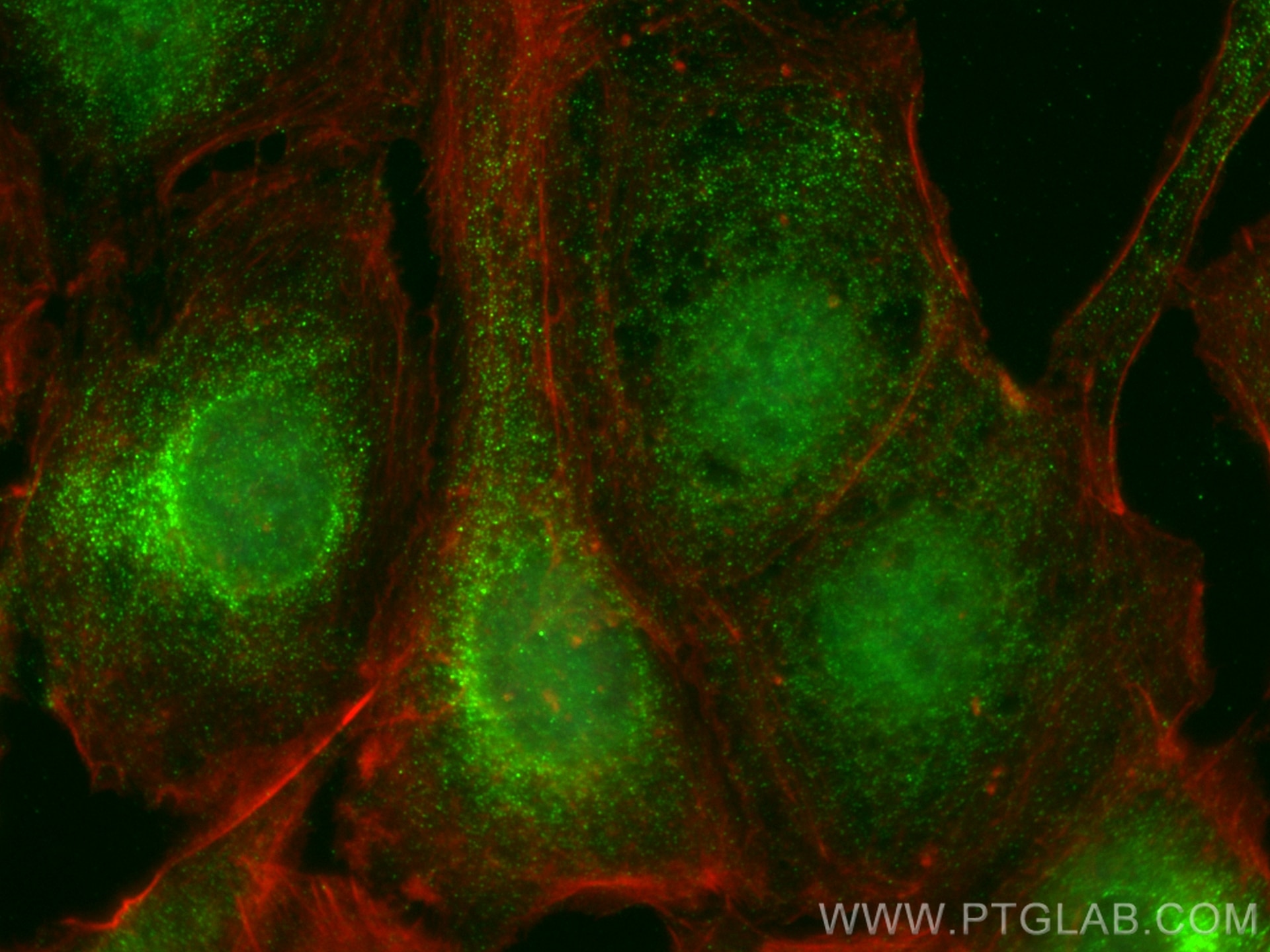
| Positive IF/ICC detected in | SKOV-3 cells |
This antibody may not be suitable for IHC test.
Recommended dilution
| Application | Dilution |
|---|---|
| Western Blot (WB) | WB : 1:2000-1:10000 |
| Immunofluorescence (IF)/ICC | IF/ICC : 1:200-1:800 |
| It is recommended that this reagent should be titrated in each testing system to obtain optimal results. | |
| Sample-dependent, Check data in validation data gallery. | |
Product Information
66575-1-Ig targets KAT2A/GCN5 in WB, IHC, IF/ICC, IP, CoIP, ELISA applications and shows reactivity with human, mouse, rat samples.
| Tested Reactivity | human, mouse, rat |
| Cited Reactivity | human, mouse, rat |
| Host / Isotype | Mouse / IgG2a |
| Class | Monoclonal |
| Type | Antibody |
| Immunogen |
CatNo: Ag6940 Product name: Recombinant human KAT2A protein Source: e coli.-derived, PET28a Tag: 6*His Domain: 537-837 aa of BC032743 Sequence: EYIARLVFDPKHKTLALIKDGRVIGGICFRMFPTQGFTEIVFCAVTSNEQVKGYGTHLMNHLKEYHIKHNILYFLTYADEYAIGYFKKQGFSKDIKVPKSRYLGYIKDYEGATLMECELNPRIPYTELSHIIKKQKEIIKKLIERKQAQIRKVYPGLSCFKEGVRQIPVESVPGIRETGWKPLGKEKGKELKDPDQLYTTLKNLLAQIKSHPSAWPFMEPVKKSEAPDYYEVIRFPIDLKTMTERLRSRYYVTRKLFVADLQRVIANCREYNPPDSEYCRCASALEKFFYFKLKEGGLIDK Predict reactive species |
| Full Name | K(lysine) acetyltransferase 2A |
| Calculated Molecular Weight | 94 kDa |
| Observed Molecular Weight | 94 kDa |
| GenBank Accession Number | BC032743 |
| Gene Symbol | KAT2A |
| Gene ID (NCBI) | 2648 |
| RRID | AB_2881935 |
| Conjugate | Unconjugated |
| Form | Liquid |
| Purification Method | Protein A purification |
| UNIPROT ID | Q92830 |
| Storage Buffer | PBS with 0.02% sodium azide and 50% glycerol, pH 7.3. |
| Storage Conditions | Store at -20°C. Stable for one year after shipment. Aliquoting is unnecessary for -20oC storage. 20ul sizes contain 0.1% BSA. |
Background Information
GCN5, encoded by KAT2A, is a member of nuclear A-type histone acetyltransferase (HAT) which has direct impact on gene transcription. Additionally, GCN5 has roles in cell cycle regulation, DNA replication, and DNA repair, highlighting it as key player in the maintenance of genome stability. GCN5 is a coactivator of c-MYC oncogene protein and has oncogenic roles in various cancers.
Protocols
| Product Specific Protocols | |
|---|---|
| IF protocol for KAT2A/GCN5 antibody 66575-1-Ig | Download protocol |
| WB protocol for KAT2A/GCN5 antibody 66575-1-Ig | Download protocol |
| Standard Protocols | |
|---|---|
| Click here to view our Standard Protocols |
Publications
What published studies show
KAT2A/GCN5 Monoclonal antibody (1F6G7), catalog number 66575-1-Ig, has 36 total citations appearing in journals such as Nature Communications, Cell Metabolism, Molecular Cell, Advanced Science, Signal Transduction and Targeted Therapy, International Journal of Biological Sciences, Cell Reports, Cancer Letters, and PLoS ONE. Associated research fields include epigenetics (histone acetylation, lactylation, succinylation), oncology (hepatocellular, pancreatic, breast, colorectal, lung cancers), neurology (cerebral ischemia, traumatic brain injury), metabolism, immunology, ferroptosis, and DNA repair.
| Species | Application | Title |
|---|---|---|
Signal Transduct Target Ther KAT2A-driven succinylation of SRSF11 enforces spliceosome-mediated RAD52 splicing to promote homologous recombination and radioresistance in hepatocellular carcinoma | ||
Cell Metab Cystine import and oxidative catabolism fuel vascular growth and repair via nutrient-responsive histone acetylation. | ||
Nat Commun Histone lactylation increases CXCL1 expression for neutrophil infiltration and immune escape in pancreatic cancer. | ||
Nat Commun Pyruvate metabolism enzyme Dlat induces mitochondria protein hyperacetylation to limit fatty acid oxidation in the HFpEF heart. | ||
J Adv Res Cadmium targeting transcription factor EB to inhibit autophagy-lysosome function contributes to acute kidney injury
| ||
Mol Cell MYO1F positions cGAS on the plasma membrane to ensure full and functional signaling |






