
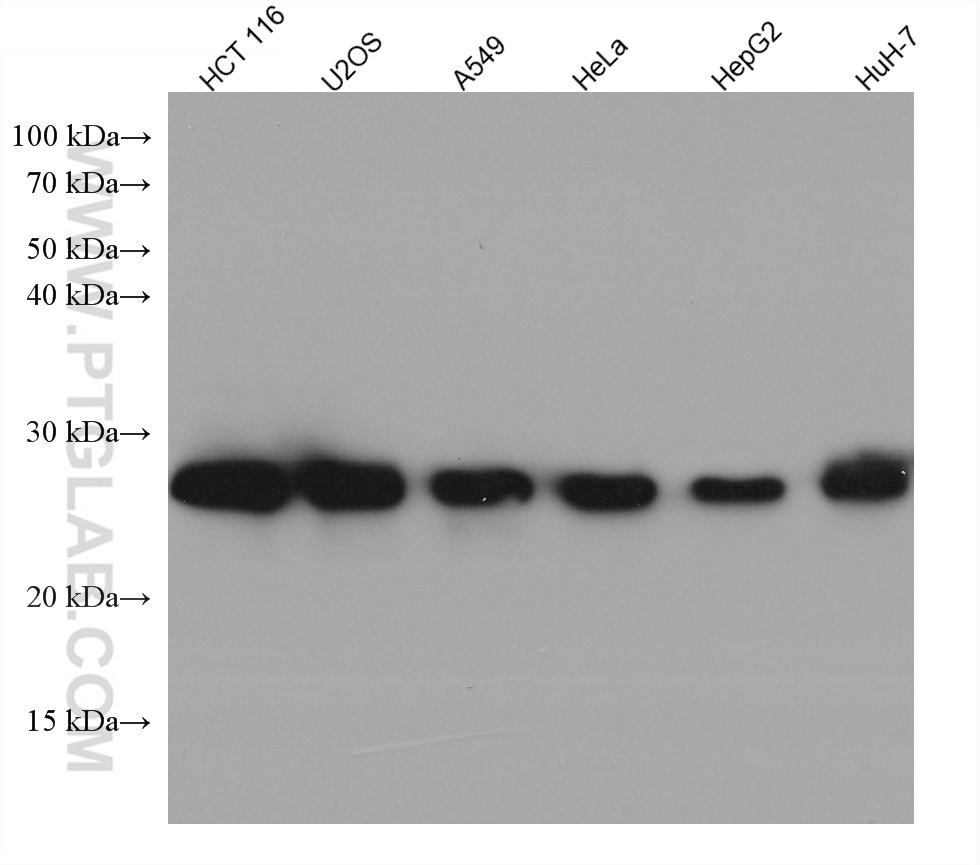
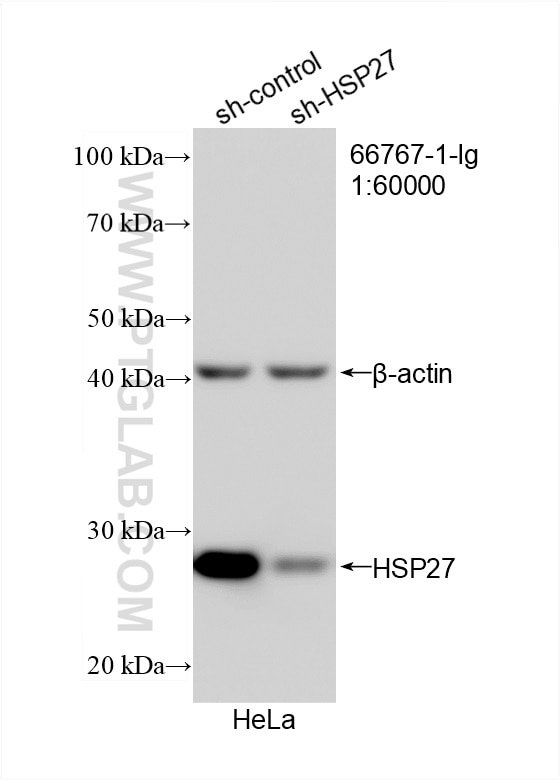
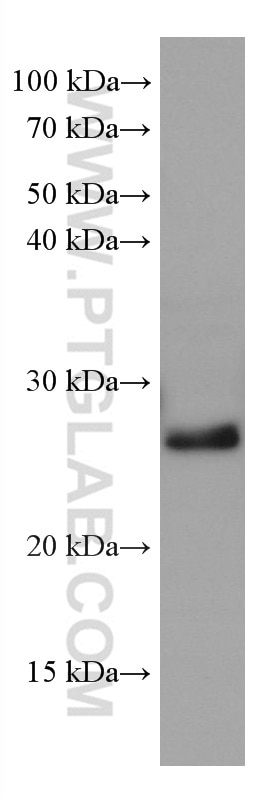
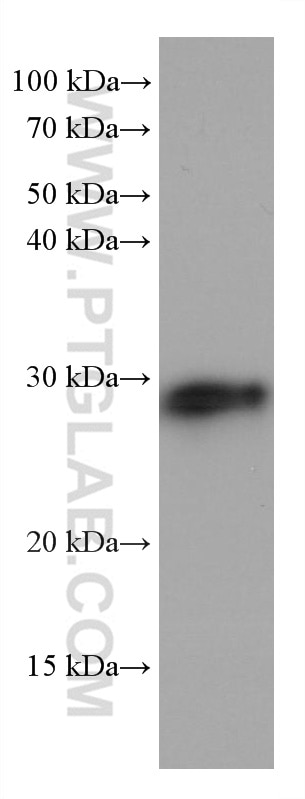


Tested Applications
| Positive WB detected in | HCT 116 cells, HeLa cells, HSC-T6 cells, mouse liver tissue, U2OS cells, A549 cells, HepG2 cells, HuH-7 cells |
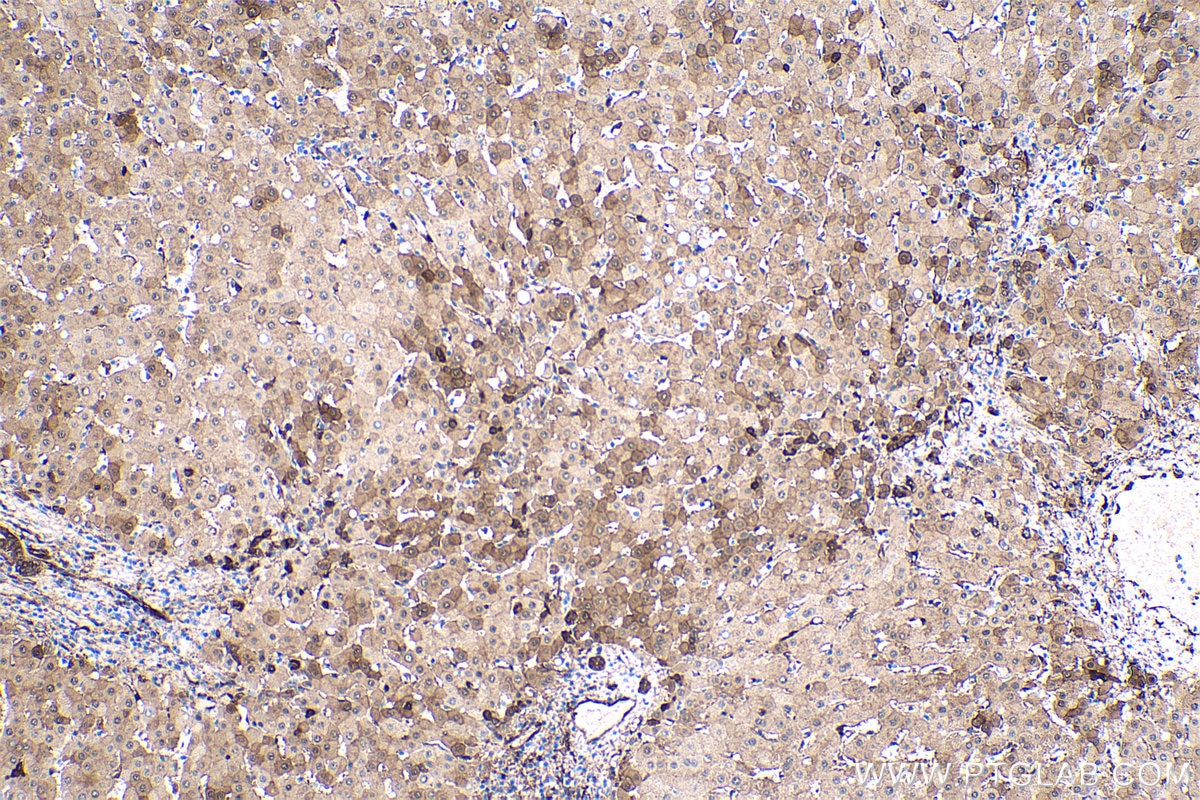
| Positive IHC detected in | human gliomas tissue, human liver tissue Note: suggested antigen retrieval with TE buffer pH 9.0; (*) Alternatively, antigen retrieval may be performed with citrate buffer pH 6.0 |
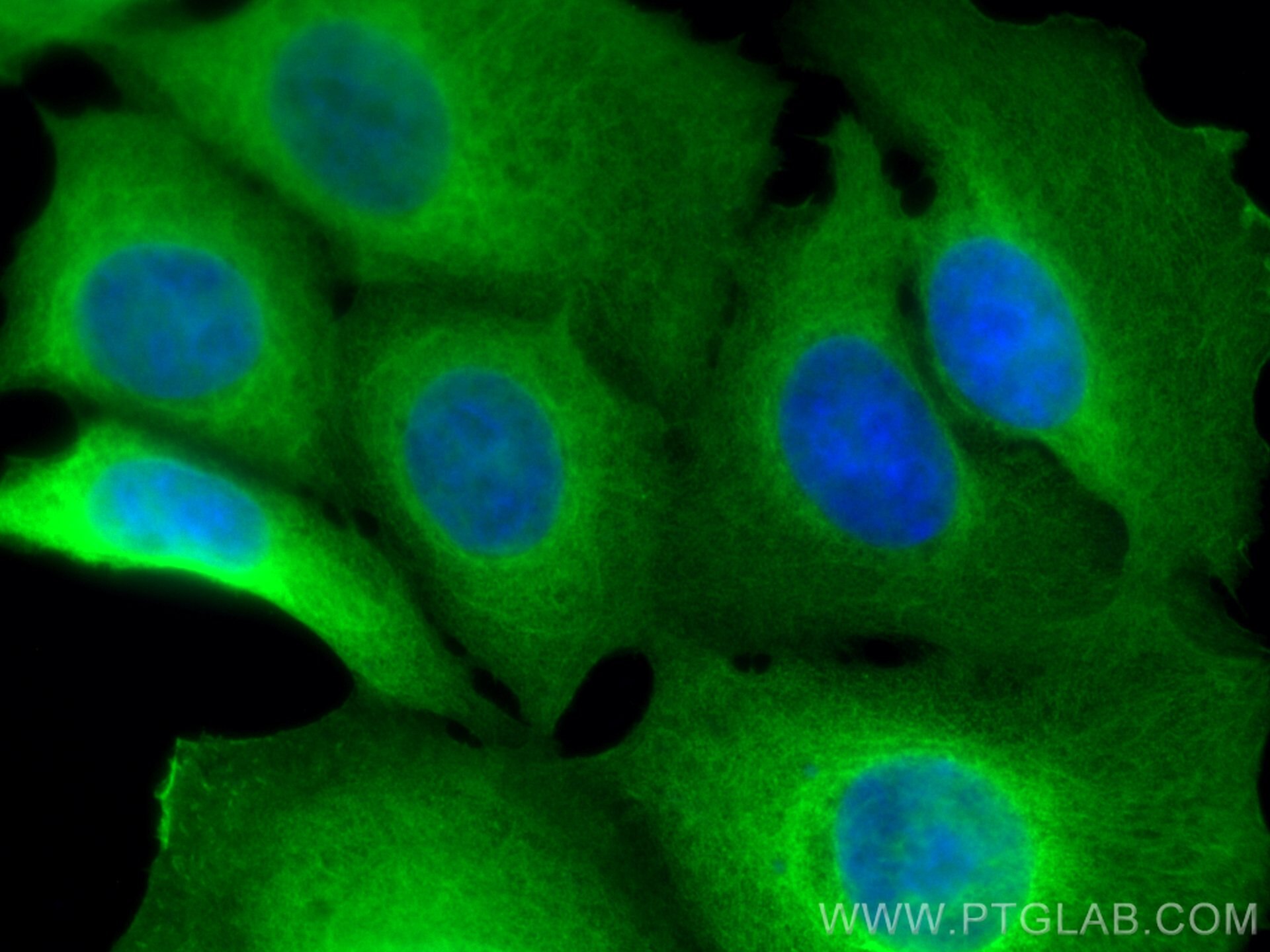
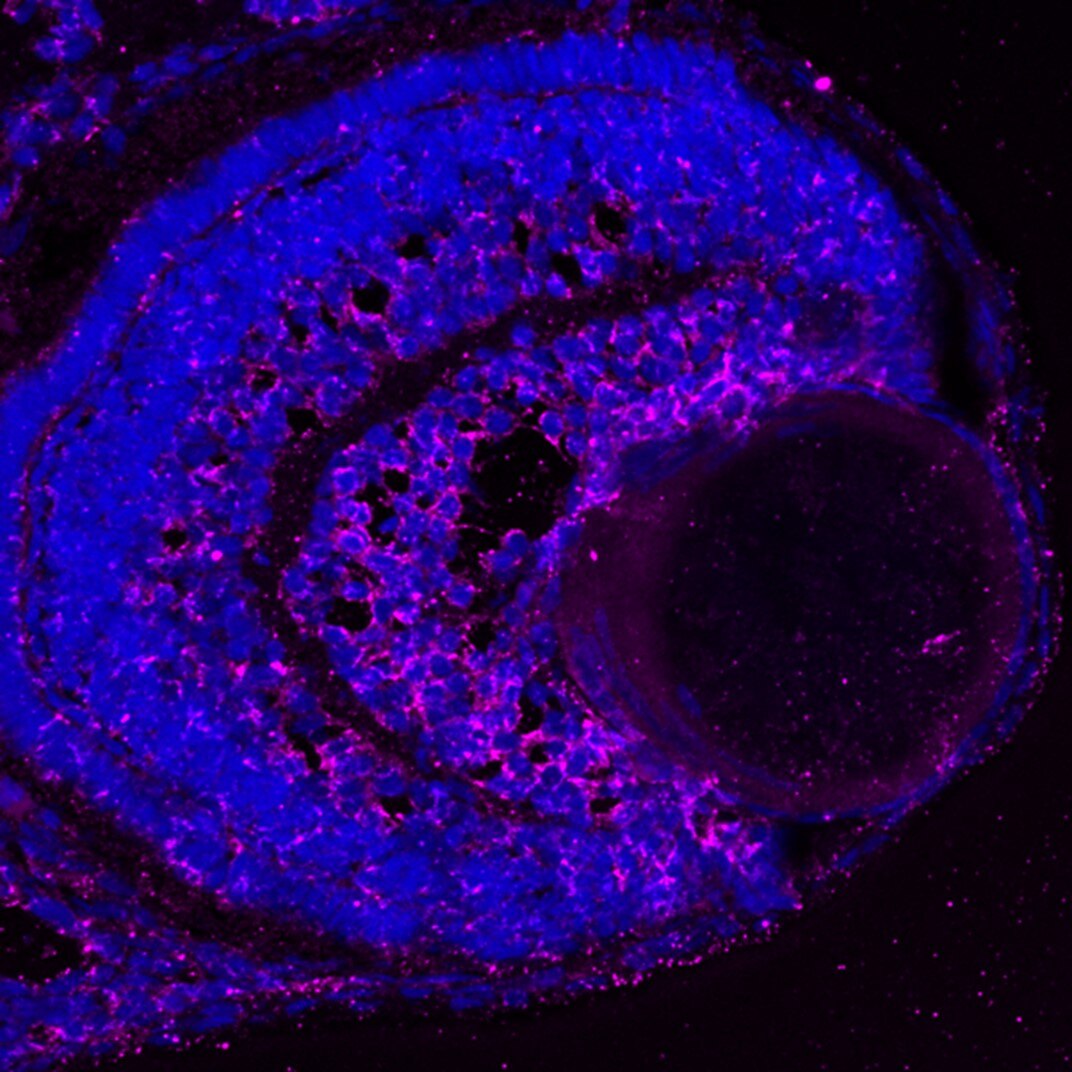
| Positive IF detected in | zebrafish retina, MCF-7 cells |
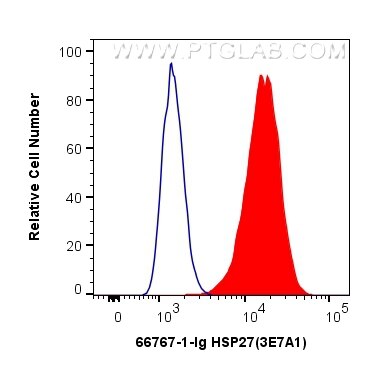
| Positive FC (Intra) detected in | HepG2 cells |
Recommended dilution
| Application | Dilution |
|---|---|
| Western Blot (WB) | WB : 1:20000-1:100000 |
| Immunohistochemistry (IHC) | IHC : 1:1000-1:4000 |
| Immunofluorescence (IF) | IF : 1:50-1:500 |
| Flow Cytometry (FC) (INTRA) | FC (INTRA) : 0.50 ug per 10^6 cells in a 100 µl suspension |
| It is recommended that this reagent should be titrated in each testing system to obtain optimal results. | |
| Sample-dependent, Check data in validation data gallery. | |
Product Information
66767-1-Ig targets HSP27 in WB, IHC, IF, FC (Intra), ELISA applications and shows reactivity with human, mouse, rat, zebrafish samples.
| Tested Reactivity | human, mouse, rat, zebrafish |
| Cited Reactivity | human, mouse, rat |
| Host / Isotype | Mouse / IgG1 |
| Class | Monoclonal |
| Type | Antibody |
| Immunogen |
CatNo: Ag27859 Product name: Recombinant human HSPB1 protein Source: e coli.-derived, PET28a Tag: 6*His Domain: 1-205 aa of BC012768 Sequence: MTERRVPFSLLRGPSWDPFRDWYPHSRLFDQAFGLPRLPEEWSQWLGGSSWPGYVRPLPPAAIESPAVAAPAYSRALSRQLSSGVSEIRHTADRWRVSLDVNHFAPDELTVKTKDGVVEITGKHEERQDEHGYISRCFTRKYTLPPGVDPTQVSSSLSPEGTLTVEAPMPKLATQSNEITIPVTFESRAQLGGPEAAKSDETAAK Predict reactive species |
| Full Name | heat shock 27kDa protein 1 |
| Calculated Molecular Weight | 19-23 kDa |
| Observed Molecular Weight | 27 kDa |
| GenBank Accession Number | BC012768 |
| Gene Symbol | HSPB1 |
| Gene ID (NCBI) | 3315 |
| RRID | AB_2882113 |
| Conjugate | Unconjugated |
| Form | Liquid |
| Purification Method | Protein G purification |
| UNIPROT ID | P04792 |
| Storage Buffer | PBS with 0.02% sodium azide and 50% glycerol, pH 7.3. |
| Storage Conditions | Store at -20°C. Stable for one year after shipment. Aliquoting is unnecessary for -20oC storage. 20ul sizes contain 0.1% BSA. |
Background Information
HSPB1, also known as heat shock protein 27 (Hsp27), belongs to the small heat shock protein family which is induced in response to environmental challenges or/and developmental transitions. It is also an anti-apoptotic protein that plays crucial roles in tumorigenesis and cell survival and is reported to be an independent prognosis marker for cancer. Recently HSPB1 has been found to be a valuable marker for melanoma. In addition to the predicted 27 kDa, an extra 50-55 kDa representing dimeric form of HSPB1 may also be observed (21353161).
Protocols
| Product Specific Protocols | |
|---|---|
| FC protocol for HSP27 antibody 66767-1-Ig | Download protocol |
| IF protocol for HSP27 antibody 66767-1-Ig | Download protocol |
| IHC protocol for HSP27 antibody 66767-1-Ig | Download protocol |
| WB protocol for HSP27 antibody 66767-1-Ig | Download protocol |
| Standard Protocols | |
|---|---|
| Click here to view our Standard Protocols |
Publications
What published studies show
Anti-HSPB1 (HSP27) antibody, catalog #66767-1-Ig, has 10 total citations published in journals including Nature Communications, Science Advances, Drug Resistance Updates, Human Molecular Genetics, Oncology Reports, Cancer Immunology & Immunotherapy, International Immunopharmacology, Human Reproduction, PLoS One, and Shock. Associated research fields span oncology (cholangiocarcinoma, glioblastoma, esophageal carcinoma), neuroprotection, tumor immunology, reproductive biology, mitophagy in ulcerative colitis, bone regeneration, and intestinal barrier function.
| Species | Application | Title |
|---|---|---|
Drug Resist Updat Targeting the USP5-HSPB1 axis overcomes ferroptosis resistance in intrahepatic cholangiocarcinoma. | ||
Hum Reprod T-cadherin inhibits invasion and migration of endometrial stromal cells in endometriosis. | ||
Cancer Immunol Immunother Integrative analysis of single-cell and bulk transcriptome data reveals age-related immune cell alterations in primary glioblastoma associated with prognosis. | ||
Int Immunopharmacol Targeting HSPB1 inhibits tumor growth and abrogates Treg-mediated tumor immunosuppression.
|










