
Cardiac Organoids in Research
Written By Anna Katharina Schrattel – University Hospital of Heidelberg, University of Heidelberg
Organoids have emerged as one of the most promising tools in biomedical research. They are 3D culture systems derived from induced pluripotent stem cells (iPSCs) which can mimic organ-specific structure and function, thus making them invaluable for modeling development and disease. In particular, cardiac organoids in their different forms offer great potential to examine heart development, congenital disease, cardiotoxicity, and regenerative medicine. Dr. Lisa Gölz from Heidelberg University provided Figure 1, showing a stained cardiac organoid made from human iPSCs.
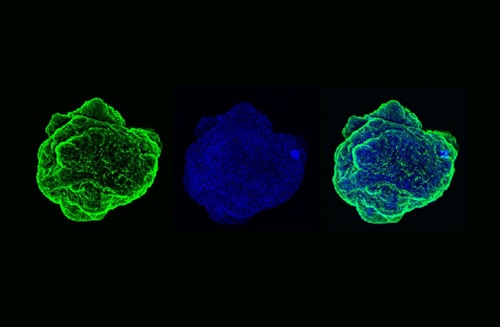
Figure 1: hiPSC-derived heart organoid. The organoid was stained with DAPI and alpha smooth muscle actin antibody and imaged with the thunder Imager Cell Spinning Disk System. The image was taken and kindly provided by Dr. Lisa Gölz from University of Heidelberg, Toxicology.
Which Types of Cardiac Organoids Exist?
The variety of organoids is steadily growing, including self-organizing cardiac organoids, engineered heart tissue (EHT), and organ-on-a-chip cardiac models. The cell source for the generation goes mainly back to stem cells, including induced pluripotent stem cells (iPSCs) or embryonic stem cells. Reprogrammed iPSCs can differentiate into various cell types, including iPSC-derived organoids [1]. Therefore, these cells are used to make up a wide range of organoids, making them a useful tool for examining developmental mechanisms and processes involved in diseases. They resemble the architecture and function of the human heart. Unlike traditional 2D monolayer cultures, cardiac organoids exhibit multicellular complexity, including cardiomyocytes, fibroblasts, and endothelial cells — and can even spontaneously contract, similar to a beating heart.
How Are Cardiac Organoids Generated?
Cardiac organoids exist in different forms, with multiple culturing protocols. What they have in common is a complex differentiation process that facilitates the manipulation of signaling pathways and often the incorporation of supportive cellular environments. Figure 2 describes a step-by-step guide from a recent publication to establish cardiac organoids from hiPSCs displaying self-organization of functional ventricular myocardium and epicardium, which they called “epicardioids” [2], and the protocol was adjusted according to the lab settings.
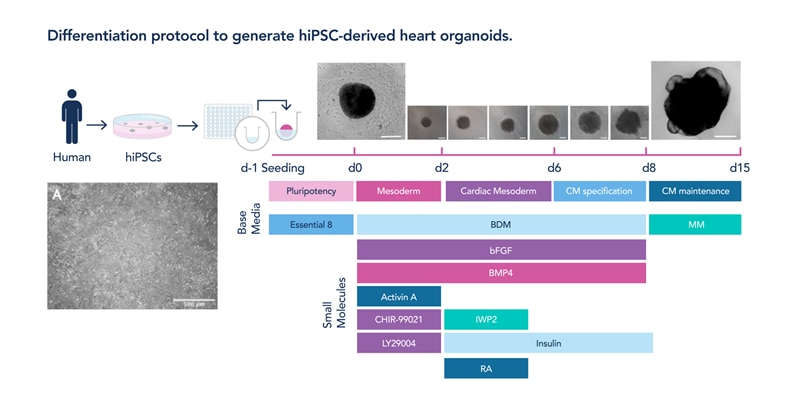
Figure 2: Schematic of the protocol used for 3D cadriac induction of hiPSCs to form organoids.
Required Materials
-
Human iPSCs
-
Plates: 96-well Clear Round Bottom Ultra-Low Attachment Microplate with covalently bonded hydrogel
-
Culture Media and Supplements: Essential 8 medium, Penicillin/Streptomycin, EDTA (0.5 mM), PBS−/−
-
Basal Differentiation Medium Components: DMEM/F-12 + GlutaMAX, IMDM, lipid concentrate, IMDM + 10% BSA, Transferrin, α-Monothioglycerol
-
Growth Factors and Small Molecules: BMP4, Activin A, bFGF, Insulin, LY-29004, CHIR-99021, IWP2, Retinoic Acid (RA), VEGF165
Step 1: Cell Preparation
-
Culture hiPSCs cultured in Essential 8 medium + 0.5% Pen/Strep until ~70–80% confluence.
-
Passage cells every 4 days using 0.5 mM EDTA in PBS−/−. Optional: Use 2 µM thiazovivin (ROCK inhibitor) during seeding to enhance cell survival after dissociation.
-
Day -1: Seed 10,000 hiPSCs per well into ultra-low attachment U-shaped 96-well plates in Essential 8 + 2 µM thiazovivin.
Step 2: Induction of Mesoderm
-
Prepare basal medium with DMEM/F-12 + GlutaMAX, IMDM, lipids, transferrin, BSA, and α-monothioglycerol.
-
Day 0: Supplement with BMP4 (10 ng/ml), Activin A (50 ng/ml), bFGF (30 ng/ml), LY-29004 (5 µM), CHIR-99021 (1.5 µM).
Step 3: Differentiation into Cardiac Mesoderm
-
Day 2: Use basal medium with insulin (10 µg/ml), BMP4 (10 ng/ml), bFGF (8 ng/ml), IWP2 (5 µM), ± RA (0.5 µM).
-
Days 6–7: Replace with basal medium + insulin, BMP4, and bFGF to promote epicardial and cardiac maturation.
-
From Day 8: Use maintenance medium + insulin (10 µg/ml), ± VEGF (100 ng/ml).
Side note: BMP4 and Activin A are supplemented to induce mesoderm and cardiac progenitor specification, bFGF for progenitor proliferation support, CHIR99021 for Wnt signaling activation to induce early mesoderm formation, LY-29004 to inhibit PI3K and fine-tune differentiation signals.
Step 4: Maintenance and Optional Angiogenic Stimulation
-
Switch to cardiomyocyte maintenance medium (CDM: BDM + insulin), optionally supplemented with VEGF (100 ng/ml) to stimulate vascular development. Cultures are maintained with half-medium changes and gentle rocking (40rpm) to enhance nutrient exchange and organoid growth.
Step 5: Functional Assessment and Applications
-
Use assays like immunofluorescence, qPCR, or transcriptomics to evaluate differentiation.
-
Apply organoids in disease modeling, drug screening, or developmental studies.
Culture Tips and Tools
-
Monitoring Organoid Formation and Passaging and Expansion
-
-
From Day 3 after embedding, observe structure and growth microscopically.
-
Change medium every 2–3 days with fresh maintenance medium.
-
When organoids reach proper size, ranging from 50µM up to 1,000µM (this can be very individual), cut into smaller fragments or detach mechanically.
-
Re-embed in fresh collagen and continue culture as before.
-
-
Growth Factors: Consistent supply of cardiac-specific signals is key. High-purity recombinant proteins such as HumanKine® VEGF, FGF2, or BMP4 support robust differentiation and vascular simulation.
-
Extracellular Matrix (ECM): Using ECM mimics like Matrigel or synthetic hydrogels tuned for stiffness promotes self-organization and proper tissue tension.
-
QC Checks:
Applications of Cardiac Organoids
So far, cardiac organoids have been employed for different purposes, such as modeling cardiogenesis [3], genetic and non-genetic heart disease modeling [4], drug screening and testing [5], and for regenerative medicine purposes [6]. In particular, they are used as sophisticated cardiac disease models such as myocardial infarction, myocardial fibrosis, congenital heart disease, and arrhythmias [7, 8].
Concluding remarks
To summarize, growth factors play a pivotal role in the generation of cardiac organoids by influencing the balance of cardiomyocytes and endothelial cells. For instance, the addition of FGF and VEGF leads to an increased endothelial and epicardial cell formation, yet a lower proportion of cardiomyocytes is observed in 3D organoid systems compared to 2D monolayers [4]. With the growing demand for improved cardiac disease modeling systems, it is crucial to fine-tune the individual signals for consistent organoid creation.
Table for HumanKine® Growth Factors for organoid generation + Antibodies for cardiac organoid characterization
|
Growth Factor |
Product |
Catalogue number |
|
Activin A |
HumanKine® Recombinant Human Activin A |
|
|
BMP‑4 |
HumanKine® Recombinant Human BMP‑4 |
|
|
Wnt3A |
HumanKine® Recombinant Human Wnt3A |
|
|
VEGF165 |
HumanKine® Recombinant Human VEGF165 |
|
|
bFGF |
HumanKine® Recombinant Human FGFbasic-TS protein |
|
Target |
Product & Catalogue Number |
Application |
|
cTnT |
IHC, IF, WB, ELISA |
|
|
cTnT |
WB, IHC, IF‑ICC |
|
|
cTnI |
WB, IHC, IF, IP, ELISA |
|
|
ACTN2 |
WB, IHC, IF/ICC, IF-P, IF-Fro, IP, ELISA |
References & further reading
- Rowe, R.G. and G.Q. Daley. Induced pluripotent stem cells in disease modelling and drug discovery. Nature Reviews Genetics, 2019. 20(7): p. 377-388.
- Meier, A.B., D. Zawada, M.T. De Angelis, L.D. Martens, G. Santamaria, S. Zengerle, M. Nowak-Imialek, J. Kornherr, F. Zhang, Q. Tian, C.M. Wolf, C. Kupatt, M. Sahara, P. Lipp, F.J. Theis, J. Gagneur, A. Goedel, K.-L. Laugwitz, T. Dorn, and A. Moretti. Epicardioid single-cell genomics uncovers principles of human epicardium biology in heart development and disease. Nature Biotechnology, 2023. 41(12): p. 1787-1800.
- Hofbauer, P., S.M. Jahnel, N. Papai, M. Geisshammer, A. Deyett, C. Schmidt, M. Penc, K. Tavernini, N. Grdseloff, C. Meledeth, L.C. Ginistrelli, C. Ctortecka, S. Ŝalic, M. Novatchkova, and S. Mendjan. Cardioids reveal self-organizing principles of human cardiogenesis. Cell, 2021. 184(12): p. 3299-3317.e22.
- Drakhlis, L., S. Biswanath, C.-M. Farr, V. Lupanow, J. Teske, K. Ritzenhoff, A. Franke, F. Manstein, E. Bolesani, H. Kempf, S. Liebscher, K. Schenke-Layland, J. Hegermann, L. Nolte, H. Meyer, J. de la Roche, S. Thiemann, C. Wahl-Schott, U. Martin, and R. Zweigerdt. Human heart-forming organoids recapitulate early heart and foregut development. Nature Biotechnology, 2021. 39(6): p. 737-746.
- Paik, D.T., M. Chandy, and J.C. Wu. Patient and Disease-Specific Induced Pluripotent Stem Cells for Discovery of Personalized Cardiovascular Drugs and Therapeutics. Pharmacological Reviews, 2020. 72(1): p. 320-342.
- Varzideh, F., S. Pahlavan, H. Ansari, M. Halvaei, S. Kostin, M.-S. Feiz, H. Latifi, N. Aghdami, T. Braun, and H. Baharvand. Human cardiomyocytes undergo enhanced maturation in embryonic stem cell-derived organoid transplants. Biomaterials, 2019. 192: p. 537-550.
- Lewis-Israeli, Y.R., A.H. Wasserman, M.A. Gabalski, B.D. Volmert, Y. Ming, K.A. Ball, W. Yang, J. Zou, G. Ni, N. Pajares, X. Chatzistavrou, W. Li, C. Zhou, and A. Aguirre. Self-assembling human heart organoids for the modeling of cardiac development and congenital heart disease. Nature Communications, 2021. 12(1): p. 5142.
- Ghosheh, M., A. Ehrlich, K. Ioannidis, M. Ayyash, I. Goldfracht, M. Cohen, A. Fischer, Y. Mintz, L. Gepstein, and Y. Nahmias. Electro-metabolic coupling in multi-chambered vascularized human cardiac organoids. Nature Biomedical Engineering, 2023. 7(11): p. 1493-1513.
Related Content
Tips and tricks for iPSC culture
Get the Most from Your iPSCs: Improved Cardiomyocyte Differentiation
How to choose your recombinant proteins, cytokines & growth-factors
Introduction to cerebral organoids in research
Related Webinars:
Tips and Tricks for Culturing Tumour Organoids
Support
Newsletter Signup
Stay up-to-date with our latest news and events. New to Proteintech? Get 10% off your first order when you sign up.