
You Shall Not Pass! - The Blood-Brain Barrier
Beatriz Achón Buil, PhD candidate in Neuroscience, Institute for Regenerative Medicine (University of Zürich)
Did you know that the human brain, though it makes up just 2% of our body weight, accounts for 20% of our energy consumption (Padamsey and Rochefort, 2023)? The brain functional tissue, known as brain parenchyma, is composed of neurons and glial cells (astrocytes, oligodendrocytes, and microglia), and like every organ, it gets nutrients and oxygen from the bloodstream. Nevertheless, blood vessels in the brain present a specialized vascular structure named the blood-brain barrier (BBB), that tightly regulates the exchange of molecules and cells between the peripheral blood and the brain parenchyma.
This blog will outline the structure and function of the BBB, as well as the BBB impairment under pathological conditions and recent strategies for delivering therapeutics across the BBB.
1. Structure of the Blood-Brain Barrier
The BBB is composed of a variety of cell types that are interconnected to maintain the barrier properties (Figure 1).
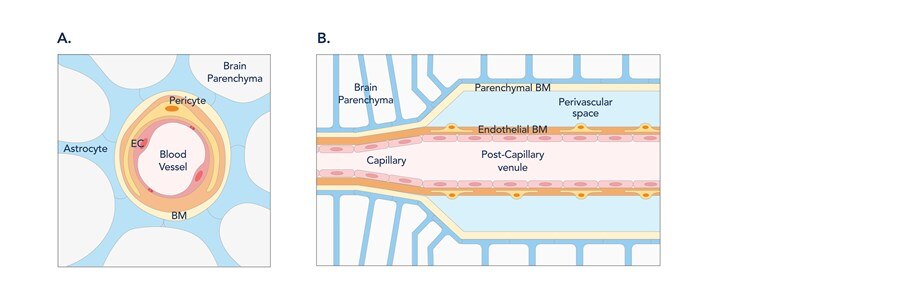
Figure 1: Transversal (A) and longitudinal (B) view of the blood-brain barrier.
Those include:
-
Endothelial cells (ECs) in the brain present unique properties compared to peripheral ECs. They are closely connected by tight junctions and adherens junctions, which significantly restrict the paracellular movement of molecules, necessitating the presence of specific transporters for the exchange of metabolites. Brain ECs also contain more mitochondria necessary for maintaining the tight junctions and the high metabolic rate of the BBB (Lacoste et al., 2025).
-
Mural cells include vascular smooth muscle cells (VSMCs) surrounding big vessels and pericytes covering around 80% of smaller vessels. Pericytes closely interact with ECs to maintain BBB integrity, regulate angiogenesis, and control the cerebral blood flow. Pericytes are also involved in the formation of the basement membrane (BM) and the removal of toxic metabolites and inflammatory mediators (Rust et al., 2025).
-
Astrocytes are the most abundant glial cells and present a complex and polarized morphology. Astrocytic end-feet cover the brain vasculature almost completely and provide an interface between ECs and neurons (Kadry et al., 2020).
Cellular components of the BBB can be distinguished by several antibodies (Table 1). If you are searching for a specific marker that is not listed here, check out Proteinech’s antibody product page, since our portfolio is constantly growing!
Table 1: Selection of Proteintech antibodies targeting BBB cellular components. H=human; Ms=mouse; Rt= Rat; Rb=rabbit; P=pig; Mk=Monkey; +=other species including canine, chicken, goat, hamster, duck, or zebrafish. E=ELISA (Enzyme-Linked Immunosorbent Assay); F=FC (Flow cytometry); IF=IF/ICC (Immunofluorescence/ Immunocytochemistry); IH=IHC (Immunohistochemistry); IP=IP (Immunoprecipitation); W=WB (Western Blot).
|
Cell type |
Marker |
Antibody |
Host |
Reactivity |
Applications |
||||||||||||
|
H |
Ms |
Rt |
Rb |
P |
Mk |
+ |
E |
F |
IF |
IH |
IP |
W |
|||||
|
EC |
CLDN5 |
Rb |
✅ | ✅ | ✅ |
|
|
|
|
✅ |
|
✅ | ✅ |
|
✅ | ||
|
PECAM1 |
Rb |
✅ |
|
|
✅ | ✅ | ✅ | ✅ | ✅ |
|
✅ | ✅ | ✅ | ✅ | |||
|
Ms |
✅ |
|
|
✅ |
|
|
|
✅ |
|
✅ | ✅ |
|
✅ | ||||
|
Rb |
✅ | ✅ |
|
|
|
|
|
✅ |
|
✅ | ✅ |
|
✅ | ||||
|
VWF |
Rb |
✅ | ✅ | ✅ |
|
✅ | ✅ |
|
✅ |
|
|
|
✅ | ✅ | |||
|
Ms |
✅ | ✅ | ✅ |
|
|
|
|
✅ |
|
✅ | ✅ |
|
|
||||
|
Rb |
✅ |
|
✅ |
|
|
|
|
✅ |
|
✅ | ✅ |
|
✅ | ||||
|
Pericyte |
PDGFRB |
Rb |
✅ | ✅ | ✅ |
|
|
|
|
✅ |
|
|
✅ | ✅ | ✅ | ||
|
Rb |
✅ | ✅ |
|
|
|
|
|
✅ |
|
|
✅ |
|
✅ | ||||
|
CSPG4 |
Rb |
✅ | ✅ | ✅ |
|
|
|
|
✅ |
|
|
✅ |
|
✅ | |||
|
Rb |
✅ | ✅ |
|
|
|
|
|
✅ |
|
|
✅ |
|
✅ | ||||
|
ANPEP |
Rb |
✅ | ✅ | ✅ | ✅ | ✅ | ✅ | ✅ | ✅ |
|
✅ | ✅ | ✅ | ✅ | |||
|
Ms |
✅ | ✅ | ✅ |
|
|
|
|
✅ |
|
✅ | ✅ |
|
✅ | ||||
|
Ms |
✅ |
|
|
|
|
|
|
|
✅ | ✅ |
|
|
|
||||
|
Astrocyte |
S100B |
Rb |
✅ | ✅ | ✅ |
|
|
|
|
✅ | ✅ | ✅ | ✅ |
|
✅ | ||
|
Ms |
✅ |
|
✅ |
|
|
|
|
✅ |
|
✅ | ✅ |
|
✅ | ||||
|
Rb |
✅ |
|
✅ |
|
|
|
|
✅ | ✅ | ✅ | ✅ |
|
✅ | ||||
|
GFAP |
Rb |
✅ | ✅ | ✅ | ✅ | ✅ | ✅ | ✅ | ✅ |
|
✅ | ✅ |
|
✅ | |||
|
Ms |
✅ | ✅ | ✅ | ✅ | ✅ | ✅ |
|
✅ |
|
✅ | ✅ | ✅ | ✅ | ||||
|
Rb |
✅ | ✅ | ✅ |
|
✅ |
|
|
✅ |
|
✅ | ✅ |
|
✅ | ||||
|
AQP4 |
Rb |
✅ | ✅ | ✅ |
✅ |
✅ |
|
✅ | ✅ |
|
✅ | ✅ | ✅ | ✅ | |||
|
Ms |
✅ | ✅ | ✅ | ✅ |
|
|
✅ |
|
|
✅ |
|
✅ | |||||
|
Rb |
✅ | ✅ | ✅ |
|
|
|
|
✅ |
|
✅ | ✅ |
|
✅ | ||||
2. Function of the Blood-Brain Barrier
The BBB protects the brain parenchyma against endogenous and exogenous neurotoxins and prevents immune cell infiltration.
These barrier properties also allow the maintenance of a controlled microenvironment in the brain parenchyma. The presence of specific transporters ensures ionic homeostasis, nutrient acquisition, and waste product removal (Kadry et al., 2020).
The components of the BBB interact with neurons and microglia to form the neurovascular unit (NVU). The NVU enables increased blood flow in activated brain areas by regulating VSMCs in arterioles and pericytes in capillaries. This process allows a rapid supply of oxygen and nutrients to the required brain regions (McConnell and Mishra, 2022).
3. Disruption of the Blood-Brain Barrier
BBB impairment occurs under several pathological conditions, such as stroke, traumatic brain injury, Alzheimer’s disease, Parkinson's disease, multiple sclerosis, amyotrophic lateral sclerosis, or epilepsy (Chen et al., 2024; Segura-Collar et al., 2022). Aging is accompanied by BBB breakdown, and instead of being region-specific as in neurological diseases (e.g., hippocampus in Alzheimer’s disease), it is zonation-specific (capillaries are more affected than other vessel types) (Zhao et al., 2020).
The initiation of BBB disruption can be direct, for example, due to an infection, or can be triggered by the activation of neuroinflammatory pathways following brain damage. The presence of inflammatory molecules and reactive oxygen species triggers the upregulation of matrix metalloproteinases that disrupt tight junctions, degrade the BM, and damage cellular components of the NVU. Not only is the physical barrier compromised, but also the transcytosis and transporter composition are altered, leading to a disturbance of brain microenvironment and homeostasis (Patabendige and Janigro, 2023).
BBB disruption can result in immune cell infiltration, pathogen entry, neuroinflammation, and oedema. The impairment can be a transient opening with little consequences or can result in a chronic breakdown leading to neuronal dysregulation and eventually irreversible degeneration (Patabendige and Janigro, 2023). Therefore, novel therapeutic approaches aim to maintain the BBB integrity to slow the progression of neurological disorders.
4. Delivery of therapeutics across the BBB
The unique properties of the BBB maintain brain homeostasis, but at the same time pose an obstacle for the delivery of therapeutic molecules and cells. In fact, it has been estimated that 98% of small molecules cannot cross the BBB, and this percentage is even higher for larger molecules and cells (Pandit et al., 2020). Therefore, several techniques have been developed for increasing the homing of therapeutic products to the brain parenchyma (Figure 2).
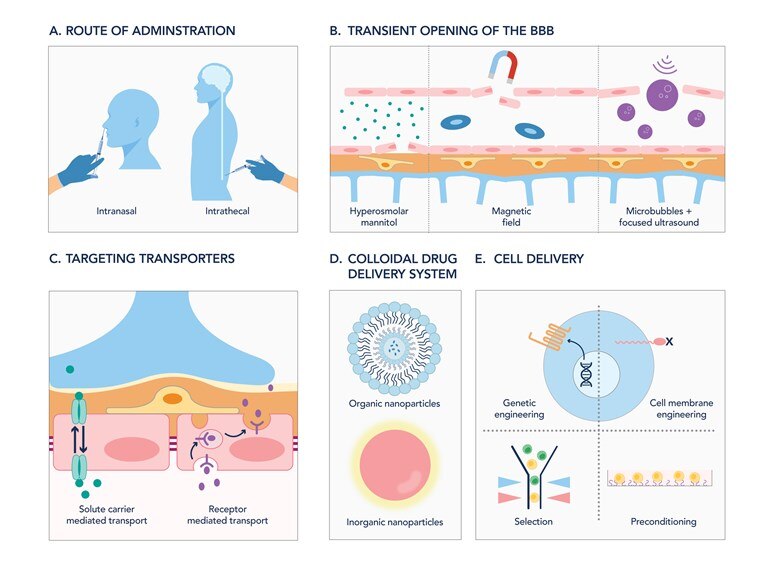
Figure 2: Techniques for the delivery of therapeutics to the brain.
Route of administration to bypass the BBB: Intrathecal administration of drugs enables the delivery of therapeutic products to the cerebrospinal fluid, which can be distributed throughout the ventricular system and eventually enter the brain parenchyma. However, it is a quite invasive technique, and there is still a lot of uncertainty about the uptake by the brain, which might depend on brain states (e.g., awake vs anesthetized), the hydrophobicity of the compound, or its interaction with efflux transporters (Abbott et al., 2018). The emerging intranasal delivery stands as a promising and less invasive technique. Drugs can reach the brain through the nose along the olfactory or trigeminal nerves via intracellular and extracellular pathways. Nevertheless, differences in the olfactory system between humans and animal models need to be considered to ensure clinical translation (Keller et al., 2022).
Transient opening of the BBB: Therapeutics injected endovascularly can improve their homing to the brain by temporarily disrupting the BBB. Intra-arterial infusion of hyperosmolar mannitol can shortly disrupt the BBB by disturbing the osmotic homeostasis. However, it is nonspecific and can give rise to adverse secondary effects. A more targeted technique involves the use of magnetic fields to induce electrical fields in specific brain regions that increase the BBB permeability. Another novel approach is to use focused ultrasound together with microbubbles for a transient opening of the BBB. This technique can be combined with imaging techniques such as magnetic resonance imaging (MRI) to target specific brain regions more precisely (Niazi, 2023).
Targeting transporter systems: As paracellular transport is tightly restricted, the BBB presents several transport mechanisms, including water and ion channels, solute carrier-mediated transport, and receptor-mediated transcytosis. In Parkinson’s disease, the solute carrier transporter of long neutral amino acids SLC7A5 is exploited to transport the precursor of dopamine (levodopa) to restore the levels of this neurotransmitter in the brain parenchyma (Rust et al., 2025). Regarding the receptor-mediated transcytosis, the most studied targets are transferrin receptors (TFRC), insulin receptors (INSR), low-density lipoprotein receptors (LDLR), and folate receptors (FOLR) (Wu et al., 2023). For example, bi-specific antibodies against the transferrin receptor and beta-amyloid have been designed to clear out this aggregate in Alzheimer’s disease patients (Zhou et al., 2011).
Colloidal Drug Delivery System: Therapeutic molecules can be encapsulated in nanoscale drug carriers that can be inorganic (gold, magnetic, or carbon-based nanoparticles) or organic (micelles, dendrimers, liposomes, niosomes, microemulsions, polymeric solid nanoparticles) (Ayub and Wettig, 2022). Encapsulated drugs are protected from metabolic degradation, which increases their bioavailability. These nanocarriers can be combined with other techniques, such as application of an external magnetic field in the case of magnetic nanoparticles or focused ultrasound in general, to further improve their passage across the BBB. Drugs can also be surrounded by membrane coatings of different cell types, such as red cells, brain tumor cells, and immune cells, or the neurotropic variant of adeno-associated virus (AAV9) (Wu et al., 2023). Moreover, nanoparticles can be designed to target specific receptors present in the BBB.
Delivery of therapeutic cells: Cells can be modified via genetic engineering, cell membrane engineering, or selection and preconditioning to increase their extravasation to the region of interest. One revolutionary technique is to mimic the immune cell extravasation molecular pattern, since leukocytes can enter the brain parenchyma under pathological conditions (Achón Buil et al., 2023). Furthermore, in acute neurological damage such as stroke, the opening of the BBB and the release of inflammatory factors can be used to our advantage. The BBB can be transiently opened via focused ultrasound, which further increases cell delivery to the brain.
The maintenance of the BBB is crucial for the proper functioning of the central nervous system. Therefore, advancing our understanding of how to safely deliver therapeutics to the brain parenchyma without interfering with the BBB remains a priority in neuroscience research. At the same time, innovative therapies are being developed to restore the BBB integrity, offering new hope for treating a wide range of neurological disorders and combating the effects of aging on the brain.
Bibliography
Abbott, N.J., Pizzo, M.E., Preston, J.E., Janigro, D., Thorne, R.G., 2018. The role of brain barriers in fluid movement in the CNS: is there a ‘glymphatic’ system? Acta Neuropathol. (Berl.) 135, 387–407. https://doi.org/10.1007/s00401-018-1812-4
Achón Buil, B., Tackenberg, C., Rust, R., 2023. Editing a gateway for cell therapy across the blood–brain barrier. Brain 146, 823–841. https://doi.org/10.1093/brain/awac393
Ayub, A., Wettig, S., 2022. An Overview of Nanotechnologies for Drug Delivery to the Brain. Pharmaceutics 14, 224. https://doi.org/10.3390/pharmaceutics14020224
Chen, T., Dai, Y., Hu, C., Lin, Z., Wang, S., Yang, J., Zeng, L., Li, S., Li, W., 2024. Cellular and molecular mechanisms of the blood–brain barrier dysfunction in neurodegenerative diseases. Fluids and Barriers in the CNS 21, 60. https://doi.org/10.1186/s12987-024-00557-1
Kadry, H., Noorani, B., Cucullo, L., 2020. A blood-brain barrier overview on structure, function, impairment, and biomarkers of integrity. Fluids and Barriers in the CNS 17, 69. https://doi.org/10.1186/s12987-020-00230-3
Keller, L.-A., Merkel, O., Popp, A., 2022. Intranasal drug delivery: opportunities and toxicologic challenges during drug development. Drug Deliv. and Transl. Res. 12, 735–757. https://doi.org/10.1007/s13346-020-00891-5
Lacoste, B., Prat, A., Freitas-Andrade, M., Gu, C., 2025. The Blood–Brain Barrier: Composition, Properties, and Roles in Brain Health. Cold Spring Harb. Perspect. in Biol. 17, a041422. https://doi.org/10.1101/cshperspect.a041422
McConnell, H.L., Mishra, A., 2022. Cells of the Blood-Brain Barrier: An Overview of the Neurovascular Unit in Health and Disease. Methods in Mol. Biol. Clifton, NJ 2492, 3–24. https://doi.org/10.1007/978-1-0716-2289-6_1
Niazi, S.K., 2023. Non-Invasive Drug Delivery across the Blood-Brain Barrier: A Prospective Analysis. Pharmaceutics 15, 2599. https://doi.org/10.3390/pharmaceutics15112599
Padamsey, Z., Rochefort, N.L., 2023. Paying the brain’s energy bill. Curr. Opin. in Neurobiol. 78, 102668. https://doi.org/10.1016/j.conb.2022.102668
Pandit, R., Chen, L., Götz, J., 2020. The blood-brain barrier: Physiology and strategies for drug delivery. Adv. Drug Deliv. Rev. 165–166, 1–14. https://doi.org/10.1016/j.addr.2019.11.009
Patabendige, A., Janigro, D., 2023. The role of the blood-brain barrier during neurological disease and infection. Biochem. Soc. Trans. 51, 613–626. https://doi.org/10.1042/BST20220830
Rust, R., Yin, H., Achón Buil, B., Sagare, A.P., Kisler, K., 2025. The blood–brain barrier: a help and a hindrance. Brain 148, 2262-2282. https://doi.org/10.1093/brain/awaf068
Segura-Collar, B., Mata-Martínez, P., Hernández-Laín, A., Sánchez-Gómez, P., Gargini, R., 2022. Blood-Brain Barrier Disruption: A Common Driver of Central Nervous System Diseases. The Neuroscientist 28, 222–237. https://doi.org/10.1177/1073858420985838
Wu, D., Chen, Q., Chen, X., Han, F., Chen, Z., Wang, Y., 2023. The blood–brain barrier: Structure, regulation and drug delivery. Signal Transduct. and Target. Ther. 8, 217. https://doi.org/10.1038/s41392-023-01481-w
Zhao, L., Li, Z., Vong, J.S.L., Chen, X., Lai, H.-M., Yan, L.Y.C., Huang, J., Sy, S.K.H., Tian, X., Huang, Y., Chan, H.Y.E., So, H.-C., Ng, W.-L., Tang, Y., Lin, W.-J., Mok, V.C.T., Ko, H., 2020. Pharmacologically reversible zonation-dependent endothelial cell transcriptomic changes with neurodegenerative disease associations in the aged brain. Nat. Commun. 11, 4413. https://doi.org/10.1038/s41467-020-18249-3
Zhou, Q.-H., Fu, A., Boado, R.J., Hui, E.K.-W., Lu, J.Z., Pardridge, W.M., 2011. Receptor-Mediated Abeta Amyloid Antibody Targeting to Alzheimer’s Disease Mouse Brain. Mol. Pharm. 8, 280–285. https://doi.org/10.1021/mp1003515
Related Content
Blood-Brain Barrier Research | Proteintech Group
Neuronal Marker Antibodies | Proteintech Group
Cerebral Organoids | Proteintech Group
How to culture mouse primary cerebral microvascular endothelial cells | Proteintech Group
Support
Newsletter Signup
Stay up-to-date with our latest news and events. New to Proteintech? Get 10% off your first order when you sign up.